

The short answer
Sometimes, but usually not when the work is good. Appraisers rely on paint depth gauges, reflections, jamb overspray and fastener condition — checks aimed at filler, paint and replaced panels, none of which paintless repair uses. A poor repair is detectable: tool marks, a high spot, glue haze, or liners left unclipped behind the panel. And an insurance claim is a separate data trail from any repair record.
 Written by the DentPicks Editorial Team
Technically reviewed by Vytas Kucinskas, Founder & Master PDR Technician
Written by the DentPicks Editorial Team
Technically reviewed by Vytas Kucinskas, Founder & Master PDR Technician
Published: Aug 19, 2026 · Last reviewed: Aug 19, 2026 · 9 min read
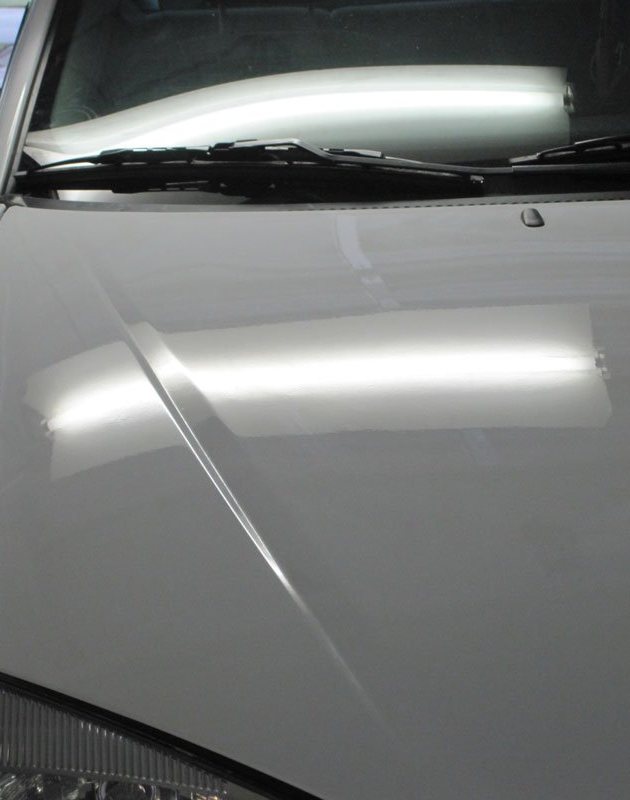
People ask this for two different reasons. Some want reassurance that a repair will be invisible at trade-in. Others are buying a used car and want to know what a seller could be hiding. The honest answer serves both: a dealer can often tell that a panel has been worked, and what they find depends almost entirely on how well the work was done.
The important distinction is between detecting a repair and detecting a problem. A properly executed paintless dent repair leaves the factory finish intact and the panel geometry correct. There may be nothing to find on the surface at all, and even if an appraiser suspects the panel was touched, they are looking at original paint on straight metal — which is not a deduction. A poor repair is a different story, and it announces itself.
What a dealer appraiser actually checks
Trade-in appraisals are fast, and appraisers work from a short list of high-yield checks rather than a forensic teardown. In roughly the order they happen:
- A walk at a shallow angle. They stand at the corner of the car and sight down the length of each panel, using whatever overhead lighting exists. Waviness, low spots and high spots show up in the reflection long before they show up head-on.
- A paint depth gauge. A handheld meter reads coating thickness in mils. Factory paint falls in a consistent band across a vehicle, and a refinished or filled panel usually reads noticeably thicker. This is the single most informative tool in an appraiser's pocket.
- Panel-to-panel color and texture. Gloss level, orange-peel texture and metallic flake orientation are hard to match perfectly. A repainted door beside a factory fender is visible in the right light.
- Jambs, seals and edges. Overspray on weatherstripping, tape lines inside a door jamb, or masking edges under a hood lip are dead giveaways of refinishing.
- Fasteners and gaps. Marked bolt heads, disturbed sealant beads and uneven panel gaps point to a panel that was removed or replaced.
- A history report lookup. Separate from anything on the car itself, and worth understanding on its own terms.
Read that list again with paintless dent repair in mind. No filler, so the gauge reads factory. No paint, so texture and gloss match. No masking, so no tape lines. No panel removal on most jobs, so fasteners and sealant are untouched. Nearly every check an appraiser runs is a check on paint and parts — and a paintless repair involves neither.
What can still give a repair away
That is the case for a good repair. Here is what a knowledgeable inspector can genuinely find:
- Surface texture in the repair area. A rushed job can leave faint tooling marks, a slightly rippled surface, or a "crown" where the metal was pushed a touch too far. Under a reflection board these read immediately.
- Micro-cracking or dulled clear coat. Aggressive work on aged or thin paint, or heat used carelessly, can leave the finish looking slightly different in that spot even though it was never resprayed.
- Glue residue or lifted clear. Glue-pull techniques leave adhesive to be removed. Poor cleanup leaves haze; a bad pull can lift clear coat outright.
- Evidence from behind. Removed liners not reclipped, missing plugs, bent brackets, or drilled access holes left unsealed. This is where an inspector who knows the trade looks, and it is the most reliable tell of all.
- A repair on a panel the report already flags. If the vehicle has a claim or prior body work on record, an appraiser inspects that area far more closely.
Does it matter if they can tell?
Less than most sellers assume. An appraiser deducts for two things: damage that still exists, and repairs that compromise the vehicle. A panel with original factory paint and correct geometry is neither.
The deductions that actually hurt are visible unrepaired damage and refinished or replaced panels. Unrepaired dents are deconditioned at retail rates, meaning the appraiser subtracts what a body shop would charge to fix them, not what you could have paid. Refinished panels raise the question of what caused the damage, which is usually a bigger conversation than the dent itself was.
Between those two poles, a competent paintless repair is the outcome that costs you the least — which is the same conclusion our guide on repairing dents before selling or trading in reaches from the appraisal side.
What shows on the paperwork, separately
A dealer runs a history report regardless of what the panels look like, and that data trail is independent of the repair itself. Three things are worth keeping straight:
| Event | Creates a repair record? | Notes |
|---|---|---|
| Paintless dent repair, cash paid | No | No parts, no paint, no reporting mechanism. Nothing generates a history entry. |
| Insurance claim, repaired entirely by PDR | The claim is its own data trail | Claim history is reported through insurance databases separately from any repair record. |
| Adjuster-required panel replacement | It can be reported | A claim with parts replaced is exactly the kind of event these reports are built to capture. |
So a dealer may see a claim and find nothing at all on the panels. That combination is normal and easy to explain if you kept your paperwork — "comprehensive hail claim, all panels repaired by paintless dent repair, original finish retained" is a sentence that answers the question before it gets asked.
How to make sure there is nothing to find
If the goal is a panel that survives an appraiser's flashlight, the variable is the technician, not the technique. Things worth asking before work starts:
- Will anything be drilled? Some access approaches involve drilling. Ask whether it applies to your panel and how the hole is sealed if so.
- How is the panel accessed? Removing a liner or trim panel for proper tool access is normal and better than forcing a bad angle. What matters is that everything goes back with the right clips.
- What lighting is used to check the work? A repair judged in ambient shop light is judged badly. Reflection boards or line lights are the standard.
- What happens if the panel does not come all the way back? Honest shops tell you the likely ceiling before starting. Repairability depends on paint condition, metal stretch, panel access and prior repairs.
At our Plano shop, panels are read under LED reflection boards from more than one angle before the car is called finished, and the final check includes confirming that any liners, trim and clips removed for access are properly reinstalled — the backside detail an experienced inspector goes looking for. That sign-off is done by whoever runs quality control and is visible in your customer portal, which means you have a documented record of the panel's condition on delivery day. If you want to see how that check is structured, our guide on how paintless dent repair works follows the process from access to final read.
Common mistakes
- Choosing the cheapest quote before trade-in. The savings are small and the failure mode is permanent. A stretched panel cannot be un-stretched.
- Using a driveway operator with no address. If the panel is wrong a week later there is nobody to go back to — our guide on storm-chaser operations covers the pattern.
- Trying a suction cup or hot-glue kit first. A failed DIY attempt can stretch metal and turn a repairable dent into a refinish job, which is exactly the outcome an appraiser penalizes. See why DIY dent kits fail.
- Assuming a repaint is more thorough. A repaint is more detectable, not less. Sometimes a panel genuinely needs refinishing and we say so — but it should be a decision, not a default.
- Hiding a claim you could simply explain. Buyers and dealers respond far better to documentation than to a surprise on the report.
What to do next
If you are prepping a car for trade-in or private sale, get the panels assessed while you still have time to choose. Send photos and we will usually come back with a verbal range in about 30 minutes; an in-person look under proper lighting gives you the real answer on which dents will disappear completely and which will not.
You can see finished panels in our before and after gallery, or read how the process runs at our Plano dent repair shop. Every job carries a written lifetime warranty for as long as you own the vehicle — worth noting that it does not transfer to the next owner, so it protects you rather than the buyer.
Frequently asked questions
Will a paint depth gauge show a paintless repair?
Generally no. The gauge measures coating thickness, and paintless repair adds no filler or paint, so readings stay in the factory band. That is why it is the tool appraisers reach for first — it finds refinished and filled panels, not repaired metal.
Do I have to disclose a paintless repair when I sell the car?
Disclose what you know honestly. A repair that restored a panel to original shape with the factory finish intact is not damage, but volunteering an itemized invoice showing method by panel tends to build more trust than saying nothing and having a buyer wonder.
Can a pre-purchase inspection find it when a dealer cannot?
A thorough independent inspection is more likely to, because it includes looking behind panels — liner clips, plugs, brackets and any sealed access holes. That backside evidence is the most reliable tell, which is why reinstallation quality matters as much as the surface.
Does a bad paintless repair hurt value more than the original dent?
It can. A stretched or over-crowned panel may no longer be repairable without filler and paint, converting a cosmetic dent into a refinish job. That is the deduction appraisers actually penalize, along with visible unrepaired damage.
Will the dealer see the repair on a vehicle history report?
Paintless dent repair itself creates no record — there is no reporting mechanism for it. An insurance claim can appear through insurance data independently, and an adjuster-required panel replacement can be reported because parts were replaced.
Should I repair dents before trading in or let the dealer deduct?
Appraisers decondition visible damage at retail body-shop rates, which is typically well above what paintless repair costs. Get an assessment first: if the panels qualify for paintless work, repairing usually costs less than the deduction it prevents.
Sources and methodology
Repair, cost and timing statements that are not tied to a listed source come from DentPicks' own quoting and repair history at the Plano, TX shop. They are typical ranges and shop-floor observations, not industry statistics or promises — your vehicle, its condition, your policy language and your insurer determine your specific outcome.
Prepping a car for trade-in or sale?
Send photos and we will tell you which dents will disappear completely and which will not. No pressure either way — knowing before the appraisal is the point.