The short answer
Push-to-paint is a repair where a PDR technician works the dent back into shape from behind, then the panel is primed and refinished rather than keeping the original paint. It is better than full PDR when the finish is already cracked or chipped, when the crease is too sharp for paint to follow, or when the metal is badly stretched. Its advantage over a filler-first body repair is that the metal is straightened first, so little or no filler is needed.
 Written by the DentPicks Editorial Team
Technically reviewed by Vytas Kucinskas, Founder & Master PDR Technician
Written by the DentPicks Editorial Team
Technically reviewed by Vytas Kucinskas, Founder & Master PDR Technician
Published: Aug 19, 2026 · Last reviewed: Aug 19, 2026 · 9 min read
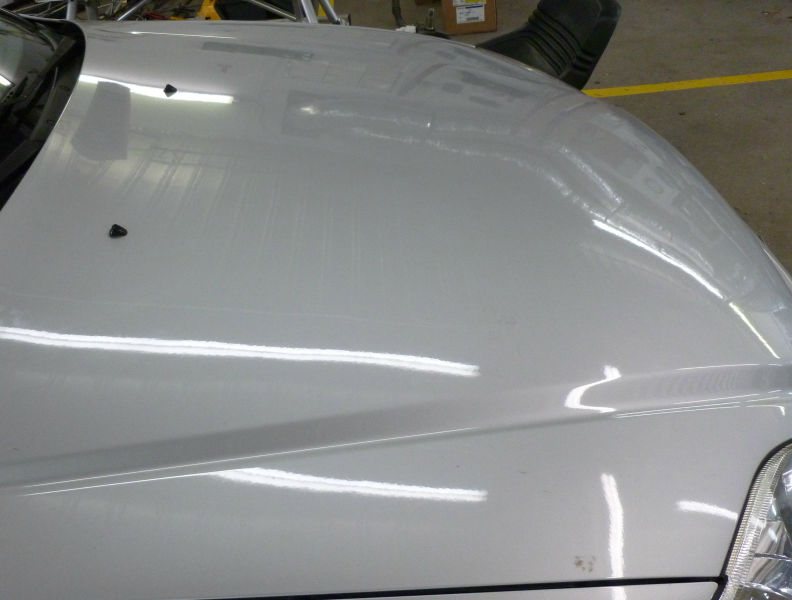
Most people arrive at a dent repair shop thinking there are two possible answers: paintless dent repair, or a body shop repaint. There is a third route that sits between them, and on the right damage it produces a better result than either one alone. In the trade it is called push-to-paint — sometimes written "push for paint."
It matters to you because it is often the difference between a panel that gets skimmed with filler and sprayed, and a panel that gets straightened properly first and then sprayed. The visible result may look the same on delivery day. Five Texas summers later, it usually does not.
What push-to-paint actually is
Push-to-paint means a PDR technician works the dent from behind, bringing the metal back as close to its original contour as the panel will allow, and then hands the panel to the refinish side to be primed, blocked and painted. The paintless work is not the finished repair — it is the metalwork stage of a paint repair.
The goal is different from full PDR. In full PDR the technician is chasing a perfect surface under a reflection board, because that surface is what the customer will see. In push-to-paint the technician is chasing straightness and minimum filler. Nobody needs a mirror finish in the metal if primer and paint are going over it — what they need is metal that is back in shape, with no low spots deep enough to require a thick skim of filler.
When push-to-paint is the better answer
There are a handful of situations where full PDR is off the table but a full traditional body repair would be doing more than necessary.
- The paint is already broken. A chip, a crack, a scuff down to primer or bare metal. Once the finish is compromised, keeping it is not an option, so the only question left is how well the metal underneath gets straightened before it is resprayed.
- The dent is too sharp for the paint to follow. A hard crease from a door edge or a shopping cart concentrates stress at the fold. Pushing it fully out on original paint risks cracking the clearcoat along the line. If the panel is being painted anyway, the technician can push harder and finish the shape properly.
- The metal is significantly stretched. Where a dent contains too much material to sit flat under a reflection board, PDR alone will leave a read. Working it as far as it will go and then refinishing gives a genuinely flat panel.
- Body-line damage. A dent that runs through a character line is difficult to restore invisibly on factory paint. As a push-to-paint job it becomes a straightforward metal-shaping exercise.
- The panel already carries filler or a poor prior respray. Nothing is being preserved, so preserve nothing — straighten the metal and start the finish over.
Why it beats a filler-first repair
A conventional body repair on a dented panel can be done two ways. The metal can be pulled and worked back into shape and then given a thin skim of filler to level the last fraction of a millimetre — or the metal can be left largely as it is and a thicker layer of filler used to build the shape back.
The second approach is faster and cheaper on the day. It is also where most long-term paint failures come from. Thick filler is rigid, it has different thermal behaviour from the steel or aluminum it sits on, and North Texas panels cycle through big temperature swings every summer day. Over years, the boundary between filler and metal is where cracking, edge-lifting and telegraphing show up. We wrote about that pattern in our guide on what Texas heat does to filler-based dent repairs.
Push-to-paint is the first approach done deliberately, by someone whose whole skill set is moving metal precisely. The refinish side receives a panel that needs a skim rather than a build.
How the three routes compare
| Full PDR | Push-to-paint | Conventional body repair | |
|---|---|---|---|
| Factory paint kept | Yes | No | No |
| Filler used | None | Minimal skim, if any | Varies — can be substantial |
| Best for | Intact paint, hail, dings, moderate dents | Broken paint, sharp creases, stretched metal, body-line damage | Torn metal, structural damage, panels beyond shaping |
| Typical time | Hours to a few days | Metalwork plus refinish and cure time | Longest of the three |
| Relative cost | Lowest | Middle | Highest |
| Color match risk | None — nothing is sprayed | Real; blending into adjacent panels manages it | Real, same as push-to-paint |
Repairability depends on paint condition, metal stretch, panel access and prior repairs, so the route for your specific panel is decided at the inspection rather than from a photo. Our broader comparison of PDR versus a traditional body shop goes further into where each one belongs.
How the job runs in the shop
- Read the panel. Under LED line boards at our Plano shop, the technician maps the low, the high ring around it, and any body-line involvement. Paint depth is checked to reveal prior work or filler.
- Decide the route and say so. If push-to-paint is the recommendation, you hear why before anything starts — including that the panel will be refinished and that color blending will be involved.
- Gain access. Trim, liners or interior panels may need to come off to reach the back. Where wiring, sensors or airbag components run near a removal path, they are protected and the manufacturer's documented procedure is followed. Manufacturer procedures vary by model year and configuration.
- Push the metal. Many small controlled pressures, working the perimeter inward, until the panel is straight rather than merely improved.
- Hand off to refinish. Prep, minimal skim if required, primer, blocking, base and clear, with blending into adjacent panels for color match.
- Quality control. The finished panel is checked under the same lighting used to read the original damage, and signed off by whoever runs quality control — visible in your customer portal.
What changes the cost and the timeline
Push-to-paint costs more than PDR and generally less than a full conventional repair on the same panel, because the metalwork stage is faster and cleaner than pull-and-fill. What moves the number is panel access, whether adjacent panels need blending, and whether trim, glass or sensors must come out to reach the back of the dent.
Timeline is driven by paint, not by the pushing. Refinishing brings prep, spray and cure time into the schedule, so a push-to-paint panel typically adds days that a pure PDR job would not. For context, full-vehicle hail repair at our shop runs about 5–10 business days in the shop, and a mix of PDR panels and one push-to-paint panel usually sits at the longer end of that. Our PDR cost guide and the guide on how long hail repair takes set out the ranges.
Common misunderstandings
- "Push-to-paint means the PDR failed." No — it means the paint was never savable, so the metalwork was done the better way.
- "If it is getting painted, the metalwork does not matter." It matters more, not less. Metalwork quality is what decides whether the repair still looks right in year five.
- "A good shop always keeps it paintless." Panels sometimes do need refinishing or replacement. The right answer is what is best for the vehicle, not what fits a marketing claim.
- "I will not be able to tell the difference." On delivery, often true. Ask instead how much filler was used and whether the metal was straightened first — that is the question that predicts the outcome years out.
What to do next
If your dent has broken paint, a sharp crease, or sits across a body line, ask specifically whether push-to-paint is on the table and what the alternative would involve. A shop that can do both the metalwork and the refinishing has no reason to steer you to one or the other.
At DentPicks in Plano we read the panel under PDR lighting, tell you which of the three routes genuinely suits it, and give you a verbal estimate — usually from photos, in about 30 minutes — before anything is committed. Our repairs carry a written lifetime warranty for as long as you own the vehicle. See finished examples in our before and after gallery or read how our dent repair process works.
Frequently asked questions
Is push-to-paint the same as a normal body shop repair?
No. Both end with the panel being painted, but push-to-paint uses PDR tools and technique to bring the metal back into shape first, so the refinish stage needs a thin skim at most. A filler-first repair builds the missing shape out of filler instead of moving the metal.
Will the new paint match the rest of my car?
That is what blending is for — the color is carried into adjacent panels so the eye never sees a hard edge. Match quality depends on the color, age and condition of the surrounding finish. Metallics and pearls are harder than solids, and a sun-faded panel is harder than a garage-kept one.
Does push-to-paint show up on a vehicle history report?
Refinishing a panel is not automatically reported the way a panel replacement can be. PDR itself creates no record at all, while an adjuster-required panel replacement can be reported. If resale history matters to you, ask which route is being written into the estimate before work starts.
How much more does push-to-paint cost than PDR?
More than PDR on the same panel, generally less than a full conventional repair. The difference is refinishing: prep, materials, spray, cure time and blending into adjacent panels. Access is the other variable — trim, glass or liners that must come out to reach the back of the dent add labour.
Can push-to-paint be used on a whole hail-damaged car?
It is normally applied panel by panel rather than to a whole vehicle. On a hail claim most panels go through PDR and one or two problem panels — a hood with cracked paint, a creased roof edge — take the push-to-paint route. Mixed jobs sit at the longer end of the usual repair window.
How do I know the metal was really straightened and not just filled?
Ask directly how much filler was used, and ask to see the panel before primer if timing allows. A shop doing the metalwork properly has no reason to avoid that question. Straightness in the metal is what decides whether the repair still reads flat several Texas summers later.
Sources and methodology
Repair, cost and timing statements that are not tied to a listed source come from DentPicks' own quoting and repair history at the Plano, TX shop. They are typical ranges and shop-floor observations, not industry statistics or promises — your vehicle, its condition, your policy language and your insurer determine your specific outcome.
Wondering whether your panel needs paint at all?
Send photos or bring the car to our Plano shop. We read the panel under PDR lighting and tell you honestly whether it is a paintless repair, a push-to-paint job, or something else.