

The short answer
By deciding how far the door has to come apart, then following a set sequence. Many door dents are glue pulled from the outside with nothing internal touched. When access is needed, power is isolated with the manufacturer's stand-down time before restraint-adjacent connectors are handled, wiring is unclipped and routed clear, and the vapor barrier is resealed with fresh adhesive. Ask which method your door needs before work starts.
 Written by the DentPicks Editorial Team
Technically reviewed by Vytas Kucinskas, Founder & Master PDR Technician
Written by the DentPicks Editorial Team
Technically reviewed by Vytas Kucinskas, Founder & Master PDR Technician
Published: Aug 19, 2026 · Last reviewed: Aug 19, 2026 · 9 min read
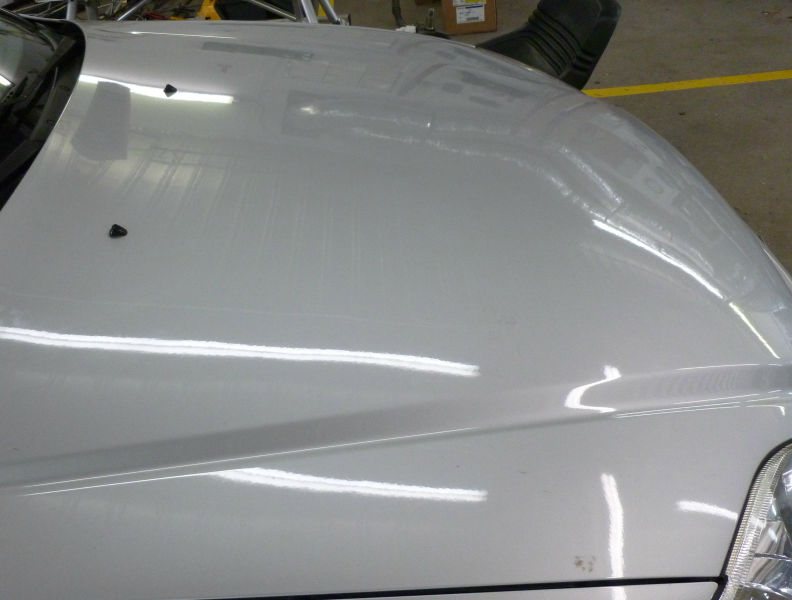
A door looks like a simple box of sheet metal, and the outer skin genuinely is thin, accessible metal that paintless dent repair handles well. What sits inside it is the complicated part: a window regulator and motor, glass on tracks, a lock actuator, speaker, mirror harness, an intrusion beam, sound deadening, a sealed vapor barrier, and on most modern vehicles at least one restraint-system component — a side impact sensor, and on some models a door-mounted side airbag.
None of that makes door dent repair risky. It makes it a job with an order of operations. The difference between a shop that protects those components and one that hopes for the best is not skill with a rod; it is what happens in the first fifteen minutes before any tool touches metal.
What is actually inside a door
Working outward from the cabin: trim panel, then a vapor barrier (a plastic or foam sheet sealed to the door with butyl adhesive), then the wet side of the door cavity holding the regulator, glass, wiring loom, latch and actuator, then the intrusion beam running diagonally or horizontally across the door, and finally the outer skin folded over the door frame at a hem flange.
Restraint components vary a lot. Many vehicles put the side airbag in the seat back rather than the door, but almost all carry a side impact sensor somewhere in the door cavity or at the base of the B-pillar — sometimes an accelerometer bolted to the inner structure, sometimes a pressure sensor that reads the sealed air volume inside the door. That second type matters for a practical reason: a pressure sensor depends on the door cavity staying sealed, which means the vapor barrier is a safety component, not just a water shield.
How the door gets opened — and when it does not
Not every door dent requires taking the door apart. The access route is chosen from the dent's position:
- Glue pull from the outside. Nothing inside is touched. This is the default for shallow hail damage across the middle of the skin and for dents sitting over the intrusion beam, where a rod cannot reach anyway.
- Through the window slot. With the glass lowered and the outer belt weatherstrip released, a rod can reach a surprising amount of the upper skin without removing the trim panel.
- Through factory access holes. Door frames have service openings behind the trim; some are reachable once the panel is off, without disturbing the barrier's sealed edge.
- Full trim and barrier removal. Needed for lower-skin damage, sharp dents that require precise tool control, and anything near the hem flange.
The judgement is not "how do we get in fastest" — it is "what is the least amount of disassembly that still lets us finish this dent properly." Both errors cost the customer. Too much disassembly adds risk to clips, sensors and seals; too little forces a technician to work at a bad angle, which is how tool marks and high spots appear. Our guide on how paintless dent repair works covers that trade-off across other panels too.
The protection sequence
- Identify what the door actually contains. Door-mounted airbag or not, sensor type and location, and whether the vehicle requires a scan-tool step. Manufacturer procedures vary by model year and configuration, so this is looked up, not assumed.
- Isolate power where restraint components are involved. Battery disconnected, then the manufacturer's stand-down period observed before restraint-adjacent connectors are touched.
- Release, do not pull. Connectors are unlatched at the tab. A harness tugged out of a door is how intermittent window and lock faults are born.
- Support the trim panel. It is heavy, it hangs on cables, and dropping it strains the very connectors just released.
- Peel the barrier at its adhesive line. Not through the middle of the sheet. It is meant to come off and go back on.
- Route and shield the loom. Wiring is clipped clear of the working area, and the glass edge is protected before rods pass the belt line.
- Reseal, refit, reconnect, verify. New butyl on the barrier, every clip accounted for, then windows, locks, mirror and speakers cycled and the dash checked for restraint warnings before the car moves.
Where a rod must not go
Inside a door the tool has to travel between the glass and the outer skin, or below the regulator, without loading anything it should not. The zones a technician works around are the regulator cable and its guides, the loom running from the jamb boot across the inner panel, the latch and its rods, the speaker cone, the sensor and its bracket, and the glass edge itself. Bracing a tool against a wiring clip or a sensor mount to gain leverage is the mistake that turns a cosmetic job into an electrical one.
This is why door work is done with the panel lit properly, not by feel. In the Plano shop the door is read under an LED line board while the tool is behind it, so the technician watches the reflection move rather than guessing at pressure.
When a door dent is not a PDR job
| Situation | Honest answer |
|---|---|
| Shallow hail across the skin, paint intact | PDR, usually from the outside |
| Door ding with a small paint chip at the center | PDR removes the dent; the chip still needs paint attention |
| Cracked or flaking paint in the damage | Push to paint or refinish — metal work alone will not restore coating |
| Sharp crease along the body line | Assess in person; body lines are the least forgiving area on a door |
| Damage on the hem flange or door edge | Double-layer metal with sealer between it — often body shop work |
| Dent with the intrusion beam deformed behind it | Structural; not a paintless repair |
| Door skin torn, punctured or previously filled | Skin replacement or refinishing |
Panels sometimes do need replacement and refinishing, and saying so early is cheaper for you than discovering it halfway through. We do what is best for the vehicle rather than defending one method. Our comparison of PDR versus a traditional body shop and the guide to deep creases and large dents both go further into where the line sits.
Red flags on the finished door
- Any new restraint or airbag warning light. This is the one item that should stop delivery. Report it immediately.
- Window that hesitates, drops, or lost its auto-up. Often a regulator connector or a re-learn step, not a failure — but it should be fixed before you leave.
- Wet carpet or a musty smell after rain. Classic sign of a barrier resealed with tape instead of butyl.
- Rattle inside the door over bumps. A clip, a loose loom, or a fastener left in the cavity.
- Trim panel not flush, or a broken clip cap. Small, but it signals the pace the rest of the job was done at.
- Waviness across the repair under a line light. Read the panel yourself before you sign anything.
At DentPicks the door is checked with the window cycled, the locks and mirror operated and the dash read after a restart, and the job is signed off by whoever runs quality control before delivery — that sign-off is visible in your customer portal along with live updates during the repair. Every repair carries a written lifetime warranty for as long as you own the vehicle; it is not transferable.
What to do next
Before authorizing door work, ask three questions: does this door have to come apart at all, what restraint components does it contain, and how is the vapor barrier resealed. A shop that does doors regularly will answer without hesitating.
We inspect door damage free of charge at the Plano shop, and quotes are usually verbal, from photos, in about 30 minutes. If the honest answer is refinishing rather than paintless work, you will hear that at the inspection rather than later. See finished panels in our before and after gallery, or read how dent repair in Plano runs from first look to hand-back.
Frequently asked questions
Is the side airbag in the door or the seat?
It depends on the vehicle. Many models put the side airbag in the seat back and keep only a sensor in the door, while others are door mounted. Nearly all carry some side impact sensor in or near the door cavity. Manufacturer procedures vary by model year and configuration, so it is confirmed per car.
Does the door trim panel have to come off for every dent?
No. Shallow hail across the skin, and dents sitting over the intrusion beam, are usually finished by glue pulling from the outside. Trim removal is for lower-skin damage, sharp dents needing precise tool control, and anything near the door edge.
Can dent repair cause a window or lock to stop working?
It can if a harness is pulled rather than unlatched, or a connector is not fully reseated. That is why windows, locks, mirror and speakers are cycled and the dash re-read before the vehicle is handed back. Report any hesitation or lost auto-up straight away.
What is the vapor barrier and why does it matter?
It is the plastic or foam sheet sealed to the door with butyl adhesive behind the trim panel. It keeps water out of the cabin, and on vehicles with pressure-based side impact sensors it maintains the sealed air volume the sensor reads. It should be resealed with new adhesive, not taped.
Will an airbag light come on after door dent repair?
It should not. If a restraint warning appears after a door repair, treat it as a stop-and-return item rather than something to watch. It usually points at a connector that is not fully seated, and it needs to be diagnosed, not cleared and ignored.
Why can't a dent right on the body line be repaired paintlessly?
Sometimes it can, but body lines are the least forgiving part of a door. The metal there is work-hardened by its own shape, so it resists moving and then moves suddenly. Repairability depends on paint condition, metal stretch, panel access and prior repairs, which is why body-line dents are quoted in person.
My door was repaired and now the carpet gets damp — what happened?
Most likely the vapor barrier was not resealed properly, or a drain was blocked or dislodged during reassembly. Water tracking down the inner door and past a torn barrier lands on the sill and carpet. It is straightforward to fix, and worth reporting quickly before it soaks the padding.
Sources and methodology
- Vehicle safety information — National Highway Traffic Safety Administration.
Repair, cost and timing statements that are not tied to a listed source come from DentPicks' own quoting and repair history at the Plano, TX shop. They are typical ranges and shop-floor observations, not industry statistics or promises — your vehicle, its condition, your policy language and your insurer determine your specific outcome.
Not sure whether your door dent needs the panel opened?
Send a photo or bring the car to the Plano shop. We will tell you which access method it needs, what is behind the dent, and whether paintless repair is genuinely the right call.