

The short answer
Trim comes off for three reasons: it opens a genuine path to the back of the panel so a rod can reach the dent, it lets the whole panel including its hidden edges be read under reflection lighting, and it keeps tools, adhesive and warmth away from parts that would be damaged. Disassembly is also the alternative to drilling access holes. It adds real hours to the job, which is part of why full-vehicle hail repair takes days rather than an afternoon.
 Written by the DentPicks Editorial Team
Technically reviewed by Vytas Kucinskas, Founder & Master PDR Technician
Written by the DentPicks Editorial Team
Technically reviewed by Vytas Kucinskas, Founder & Master PDR Technician
Published: Aug 19, 2026 · Last reviewed: Aug 19, 2026 · 9 min read
Customers are sometimes surprised to collect a car mid-repair and find the headliner down, both door cards off and the tail lamps sitting on a bench. It looks like far more disassembly than a few dents should need. It usually is not — it is the difference between reaching the damage properly and working around it.
Trim removal in paintless dent repair serves three purposes: it opens a path to the back of the panel, it lets the technician read the whole panel including its edges, and it keeps tools and adhesive away from parts that would be damaged by either. All three are about doing the repair correctly rather than quickly.
Reason one: getting to the back of the panel
Rod work is still the most precise way to move metal, and it requires a genuine path to the underside of the dent. Manufacturers did not design panels around dent repair, so the paths that exist are the ones left over from assembly — and reaching them usually means something has to come off.
- Doors: the door card, the moisture barrier and often the glass lowered or removed, giving access through the window channel and the factory openings in the inner door skin.
- Roof: the headliner dropped, along with grab handles, visors, lighting and pillar trim, so a rod can work the roof skin between the braces.
- Quarter panels: tail lamps out, trunk or cargo-area trim off, sometimes the wheel-arch liner, because a quarter panel is largely a boxed structure with only a handful of ways in.
- Hood: the insulation blanket removed, and on many vehicles the cowl trim, so the technician can work between the inner frame sections.
- Fenders: the liner out, sometimes the fender loosened, since the top edge is otherwise unreachable.
Where no path exists at all — over a bonded brace, inside a sealed section — the technician works from the outside with glue tabs instead. What should never happen is a hole drilled to create access. Disassembly is the alternative to drilling, which is exactly why a shop's willingness to do it matters.
Reason two: reading the whole panel
A dent hiding under a piece of molding is still a dent, and it will be the one you notice in a parking lot two weeks after collecting the car.
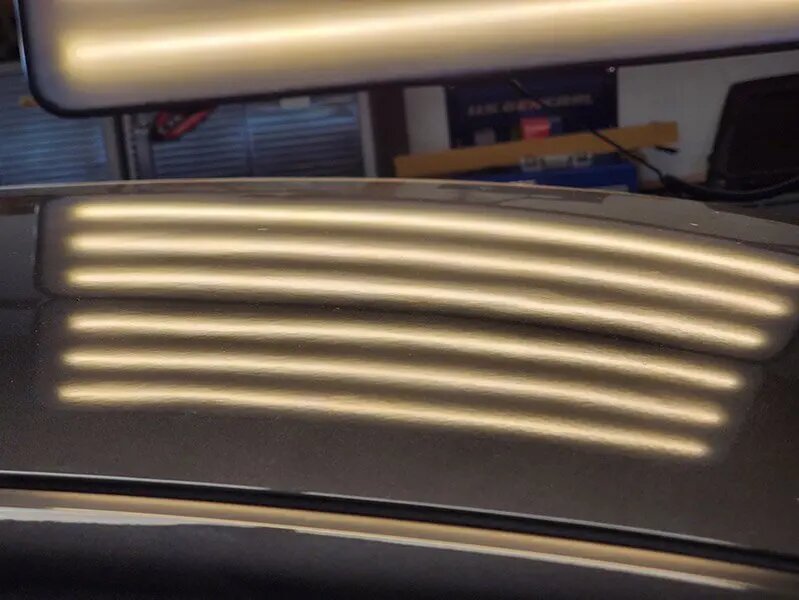
Roof rails, drip moldings, belt-line trim, window surrounds, badges and rub strips all conceal strips of panel that a hailstorm hit just as hard as the open areas. On a hail vehicle, the count of dents almost always goes up once trim comes off — sometimes considerably. Removing it lets the panel be read end to end under LED line boards, including the hem flanges and edges where damage is hardest to see and hardest to correct.
This is also why hail estimates change. An initial estimate written with the trim in place cannot include damage nobody could see, and the removal and installation labour itself is a line item that is frequently underwritten at first pass. When the true count comes out on the shop floor, the correct route is a documented supplement — which is normal and expected, not a sign of anything going wrong. Our guide on how hail repair supplements work explains the process. The customer files the claim; we help with photos, adjuster meetings, supplements and paperwork, and walk alongside you through it.
Every piece of trim on a car covers a strip of panel. The hailstorm did not skip those strips just because you cannot see them.
Reason three: protecting the parts that do not need repairing
The third reason is defensive. Rods, tap-down tools, glue tabs and release alcohol all belong on bare painted metal and nowhere else. Working a dent right up against a molding risks scuffing it; releasing a glue tab near a rubber seal risks marking it; heating a panel next to a plastic trim piece risks distorting it.
Taking the part off removes the risk entirely, and it also lets the technician inspect what was underneath — corroded clips, brittle seals, water paths and previous repair work all show up when trim comes off, and it is better to find them on the bench than to discover them later.
What comes off, and what it costs you in time
| Panel repaired | Typically removed | Why |
|---|---|---|
| Roof | Headliner, handles, visors, lamps, pillar trim, sometimes roof rails | Only way to reach the roof skin between braces |
| Door skin | Door card, moisture barrier, sometimes the glass | Access through the window channel and inner panel openings |
| Quarter panel | Tail lamp, cargo trim, sometimes wheel-arch liner | Boxed structure with very few entry points |
| Hood | Insulation blanket, cowl trim | Working room between the inner frame sections |
| Fender | Liner, sometimes the fender itself loosened | Top edge and upper radius are otherwise unreachable |
| Trunk lid or tailgate | Inner trim panel, handle trim, lamp assemblies | Access and full-panel reading including the edges |
Disassembly and reassembly are real hours. On a full-vehicle hail repair they are one of the reasons the job takes about 5–10 business days in the shop rather than an afternoon — a typical range, not a guarantee. Our guide on how long hail repair takes breaks down where the time actually goes.
Doing it without collateral damage
Disassembly is where careless shops leave their fingerprints. What proper practice looks like:
- Correct tools. Nylon trim tools rather than screwdrivers, so nothing gets levered against paint or plastic.
- Clips replaced, not reused. Clips break during normal removal and many are single-use. They should be on the shelf before the panel comes off, not ordered afterwards.
- Moisture barriers resealed. The plastic sheet behind a door card is a water management part. Reinstalled badly, it becomes a wet carpet in the next storm.
- Care around safety and sensor components. Pillar and roof-rail trim sits near curtain airbag paths on many vehicles; mirrors, glass surrounds and bumper areas carry cameras and radar. Manufacturer procedures vary by model year and configuration, so these are confirmed rather than assumed.
- Fasteners returned to specification. Torque-sensitive fasteners are not "snug enough."
- Reassembly checked as its own step. Every switch, lamp, handle, speaker and window is operated again before sign-off.
Red flags around disassembly
- "We can do it without taking anything off." On some single small dents, true. On a hail vehicle, not true.
- Repairs done in a parking lot or driveway. Trim removal needs tools, a clean bench, replacement clips and somewhere for the parts to live. None of that fits in a mobile setup.
- Rattles, wind noise or loose trim afterwards. That is reassembly done in a hurry, and it is worth raising immediately.
- New water inside the car after the repair. Almost always a moisture barrier or seal that went back wrong.
- A shop that will not tell you what comes off. A technician who has read the panels can answer that question in one sentence.
What you can do before you drop the car off
A few minutes of preparation makes disassembly cleaner. Clear personal items out of door pockets, the trunk and the headliner area. Point out aftermarket additions — dash cams, toll tags, wraps, paint protection film, aftermarket speakers, alarm wiring — because those change what can be removed and how. Mention any trim that was already loose, cracked or previously repaired, so it is documented before anyone touches it. Our guide on preparing for a PDR appointment covers the rest.
What to do next
When you get a quote, ask what has to come off the vehicle and how long the job will take with that disassembly included. A shop that has read your panels will have a specific answer, and it tells you a lot about how the work will be done.
We inspect free of charge at the Plano shop, plan the disassembly from the panel reading rather than guessing, and put the car back together as a job of its own. You can see finished roofs, doors and quarter panels in our before and after gallery, or read how the full process runs on our hail repair page and our dent repair page.
Frequently asked questions
Will removing my headliner or door cards damage anything?
Not when it is done with the right tools and the right parts on hand. Clips break during normal removal and many are single-use, so they should be on the shelf before disassembly starts. Moisture barriers behind door cards must be resealed properly, and trim near curtain airbag paths and sensors is handled to manufacturer procedure, which varies by model year and configuration.
Why did my dent count go up after the shop started work?
Because trim covers panel. Roof rails, drip moldings, belt-line trim and window surrounds all hide strips of metal the hailstorm hit just as hard as the open areas, and none of it can be counted from outside. When the true count comes out on the shop floor, the correct route is a documented supplement to the insurer — normal and expected on hail work.
Does trim removal require ADAS recalibration afterwards?
Usually not for the trim itself, but it depends entirely on what was disturbed. Cameras, radar units and their mounts have their own procedures, and those procedures vary by model year and configuration. If a sensor or its bracket has to be moved for a repair, calibration requirements are checked rather than assumed.
Can PDR be done without removing anything?
On a single accessible dent, sometimes yes. On a hail vehicle, no. A shop that promises a full hail repair with nothing coming off is either planning to skip the panel edges under the trim or planning to work through openings that do not reach the damage.
Will I hear rattles or wind noise after the car goes back together?
You should not. Rattles, wind noise and loose trim are reassembly done in a hurry, and they are worth raising immediately rather than living with. Reassembly is checked as its own step — switches, lamps, handles, speakers and windows are all cycled before the vehicle is signed off by whoever runs quality control, visible in your customer portal.
Does all this disassembly show up on my insurance estimate?
It should. Removal and installation labour is a legitimate line item and it is frequently underwritten on a first-pass estimate, especially when the estimate was written with the trim still in place. Coverage depends on the language of your policy, and your insurer or licensed agent can confirm your specific coverage.
Should I tell the shop about my wrap, dash cam or toll tag?
Yes, before the appointment. Wraps and paint protection film change what can be worked from the outside, and aftermarket wiring, alarms, dash cams and speakers change what can be safely removed. Also mention any trim that was already loose or previously repaired so it is documented before anyone touches it.
Sources and methodology
Repair, cost and timing statements that are not tied to a listed source come from DentPicks' own quoting and repair history at the Plano, TX shop. They are typical ranges and shop-floor observations, not industry statistics or promises — your vehicle, its condition, your policy language and your insurer determine your specific outcome.
Ask what comes off the car
A shop that has actually read your panels can answer that in one sentence. Bring the vehicle to the Plano shop and we will read it under PDR lighting and tell you the plan before anything is touched.