

The short answer
No. Paintless dent repair works because metal is displaced but retains its original shape and can be guided back. Carbon fiber and composite panels do not deform that way — they flex within their limits and then crack or delaminate, so there is nothing for the tool to push back. Composite damage needs a composite repair specialist or panel replacement. On a mixed-material vehicle, the metal panels can still be repaired paintlessly.
 Written by the DentPicks Editorial Team
Technically reviewed by Vytas Kucinskas, Founder & Master PDR Technician
Written by the DentPicks Editorial Team
Technically reviewed by Vytas Kucinskas, Founder & Master PDR Technician
Published: Aug 19, 2026 · Last reviewed: Aug 19, 2026 · 9 min read
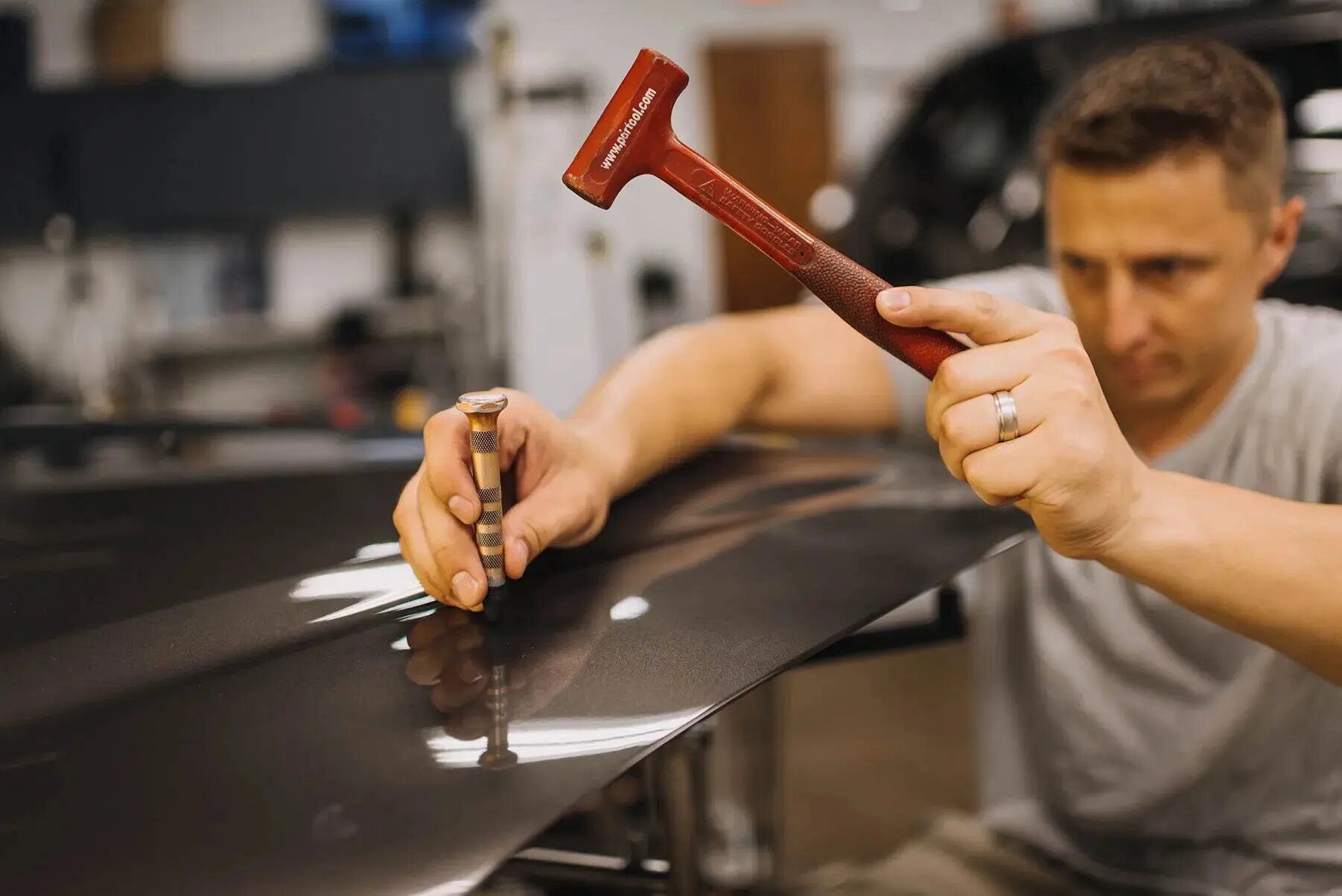
This is one of the few questions in dent repair with a clear answer, and it is not the answer people want. Paintless dent repair does not work on carbon fiber, and it does not work on composite body panels. Not "works less well" — the technique is built on a property those materials do not have.
That is worth understanding rather than just accepting, because it also explains what does happen to composite panels when they are hit, why the damage often looks smaller than it is, and what the sensible next step is when a car has a mix of metal and composite panels — which is most performance and luxury vehicles now.
Why paintless repair works on metal and not on composite
Paintless repair depends on elastic memory. When steel or aluminum is dented, the metal is displaced but not destroyed, and it retains a strong tendency to return to the shape it was pressed into. A technician's job is to release the stresses holding it out of shape, working the metal back along the path it travelled on the way in. The panel does much of the work itself; the tool guides it.
Composites do not behave that way. A carbon-fiber panel is stiff fibers held in a cured resin matrix, and a fiberglass or SMC-type panel is the same idea with different fibers. Within their elastic range these materials flex and return with no damage at all. Push them past that range and they do not take a permanent dent the way metal does — they fail. The resin cracks, the fibers break, or the layers separate from each other.
What composite damage actually looks like
Because composites fail rather than dent, the visible damage often understates what happened. Things worth knowing:
- Delamination is invisible from outside. Layers can separate internally while the painted surface still looks nearly intact. A panel that sounds different when tapped across the impact area is telling you something.
- Star cracks in the finish radiating from an impact point usually mean the resin below has cracked too.
- Clear-coated exposed weave is a finish in its own right. Damage to that clear coat over a visible carbon weave cannot be sanded and blended like ordinary paint without disturbing the appearance of the weave underneath.
- A gel-coat or paint crack over a repaired composite can reappear if the underlying laminate was never properly restored.
Composite damage is therefore a job for a body shop with composite repair experience, or a panel replacement, depending on the extent. It is assessed by someone who works on the material, not by a paintless technician with a rod.
Which panels on your car are actually composite
This matters more than the theory, because most vehicles that use composite use it selectively. A car can have a carbon-fiber roof, an SMC hood and steel doors. Common cases:
| Material | Where it typically appears | Repair path for impact damage |
|---|---|---|
| Carbon-fiber reinforced plastic | Roofs, hoods, spoilers, mirror caps, aero parts on performance vehicles | Composite repair specialist or replacement; not paintless |
| SMC / fiberglass composite | Hoods, fenders, bed panels and body panels on some models | Composite or conventional body repair; not paintless |
| Thermoplastic body panels | Fenders and door skins on some vehicles | Plastic repair techniques; not paintless |
| TPO / polypropylene bumper covers | Front and rear bumper covers on nearly every modern car | Plastic repair or replacement; not paintless |
| Aluminum | Hoods, doors, fenders, tailgates, whole bodies on some vehicles | Paintless repair is possible with the right technique |
| Steel | Most outer skins on most vehicles | The standard paintless case |
Identifying them is quick. A magnet sticks to steel and to nothing else on that list. Composite and plastic panels feel noticeably lighter, sound duller under a knuckle, and often have visibly different panel gaps and fastener styles from the metal panels beside them. Aluminum is non-magnetic like composite, so weight and sound are what separate those two — and getting it wrong matters, which is why our guide on aluminum dent repair exists.
The mixed-material vehicle is the normal case
On a hail-damaged performance or luxury car, the useful outcome is usually not "yes" or "no" but a split. The steel and aluminum panels — doors, quarters, often the roof and hood — come out with paintless repair, keeping the factory finish. The carbon or composite parts get quoted separately as a composite repair or a replacement.
That split is worth getting right on an insurance estimate. A composite roof panel written as a paintless line item is an estimate that will need correcting, and correcting it later usually means a supplement. You file the claim and we walk alongside you — photos, the adjuster meeting, supplements and paperwork — and getting the material of each panel right at the inspection stage is the cheapest way to avoid a supplement fight later. Our guide on how supplements work covers the process.
A related point for owners of high-value cars: the shop you choose should be willing to say which panels it is not going to touch. Our guide to choosing a dent repair shop near you goes into what to ask.
Bumper covers deserve their own paragraph
Nearly every modern car has plastic bumper covers, and they are the panels people most often expect a dent technician to fix. Plastic behaves differently again from both metal and composite: it has some ability to relax back toward its molded shape, so a very shallow push-in from a parking bump occasionally recovers on its own or with warmth from a sunny day.
But that is not paintless dent repair, and it is not something to force. A crease that has taken a set, a crack, a tear at a mounting tab or a broken sensor bracket behind the cover are plastic-repair and replacement issues. On covers with parking sensors or radar behind them, the bracket alignment matters to more than appearance, and manufacturer procedures vary by model year and configuration.
What we do when a composite panel comes in
- Identify the material before quoting anything. Magnet, weight, sound and fastener style, panel by panel.
- Read the metal panels under LED line boards and quote those properly.
- Assess the composite panels visually and by tap for cracking and delamination, and photograph what we find.
- Say plainly which panels we are not the right shop for. Composite repair is a different discipline and pretending otherwise damages the car and the customer.
- Document the split for the estimate so the paintless portion and the composite portion are separate line items from the start.
- Quality control on the work we do perform is signed off by whoever runs quality control and is visible in your customer portal, along with live updates while the car is with us.
Common mistakes and red flags
- Anyone offering to "pop out" a carbon-fiber dent. There is no such repair. Walk away.
- Assuming light weight means aluminum. Both aluminum and composite are non-magnetic, and the repair paths are completely different.
- Treating a cracked finish over composite as cosmetic. It is often the visible end of internal damage.
- Heat guns and DIY tricks on plastic and composite. Uncontrolled heat distorts panels and damages finishes, and there is no home version of a laminate repair. See why DIY dent repair does not work.
- Accepting an estimate that does not name the materials. If the estimate does not distinguish the composite panels, it has not been inspected properly.
What to do next
If you know or suspect a damaged panel is carbon fiber or composite, the useful step is an inspection that separates the panels rather than a quote for the whole car. Bring it to the Plano shop or send photos, including a close shot of the impact area and one of the panel edge or underside where the material is often visible.
We will quote the metal panels honestly, tell you clearly which panels are outside paintless repair, and help you document the difference for a claim if there is one. That is a more useful outcome than a promise nobody can keep. You can see the kind of metal work we do in our before and after gallery, or read how dent repair in Plano runs from inspection to delivery. Repairability depends on paint condition, metal stretch, panel access and prior repairs.
Frequently asked questions
How can I tell whether a panel is carbon fiber, composite or metal?
A magnet sticks to steel and nothing else on the list. Composite and plastic panels are noticeably lighter and sound duller under a knuckle, and often use different fasteners than the metal panels beside them. Aluminum is also non-magnetic, so weight and sound are what separate aluminum from composite.
My carbon-fiber panel looks only lightly marked. Is that good news?
Not necessarily. Composites can delaminate internally while the painted surface still looks close to intact, and star cracks in the finish usually mean the resin below has cracked as well. A panel that sounds different when tapped across the impact area deserves a proper composite assessment.
Can a clear-coated exposed carbon weave be repaired?
It is a specialist finish, not ordinary paint. The clear coat over a visible weave cannot simply be sanded and blended without disturbing how the weave reads underneath, and matching a repair into an exposed weave is difficult work. This belongs with a shop that does that specific finish.
What about a dent in a plastic bumper cover?
Different material again. Plastic covers have some tendency to relax back toward their molded shape, so a very shallow push-in occasionally recovers. A crease that has set, a crack, or a torn mounting tab is a plastic repair or a replacement. Covers with parking sensors or radar behind them also need correct bracket alignment.
If my car has both metal and composite panels, is it worth bringing in?
Yes. The usual outcome is a split: the steel and aluminum panels get repaired paintlessly and keep their factory finish, while the composite panels are quoted separately as a composite repair or a replacement. Getting that split right at the inspection stage avoids an estimate correction later.
Will an insurance estimate cover a composite panel differently?
It should be written as a different kind of repair, because it is one. A composite panel written as a paintless line item is an estimate that will need correcting, which usually means a supplement. Coverage depends on the language of your policy, and your insurer or licensed agent can confirm your specific coverage.
Can heat be used to relax a composite or plastic panel?
Not as a home remedy. Uncontrolled heat distorts panels and damages finishes, and there is no home version of a laminate repair. Plastic and composite work in a shop follows manufacturer and material-specific procedures, which vary by model year and configuration.
Sources and methodology
- Automobile insurance guide — Texas Department of Insurance.
Repair, cost and timing statements that are not tied to a listed source come from DentPicks' own quoting and repair history at the Plano, TX shop. They are typical ranges and shop-floor observations, not industry statistics or promises — your vehicle, its condition, your policy language and your insurer determine your specific outcome.
Get the panels sorted by material first
We will quote the metal panels honestly and tell you plainly which ones are outside paintless repair, so nothing gets promised that cannot be delivered.