
The short answer
Partly. Bed sides and many tailgates repair well without paint when there is a tool path behind the skin or the paint is sound enough for outside pulling. Sealed tailgate cavities, boxed bed rails, composite beds and spray-in liner areas are much harder or not paintless jobs at all. Aluminum panels need slower, smaller technique. An in-person look settles which panels are which.
 Written by the DentPicks Editorial Team
Technically reviewed by Vytas Kucinskas, Founder & Master PDR Technician
Written by the DentPicks Editorial Team
Technically reviewed by Vytas Kucinskas, Founder & Master PDR Technician
Published: Aug 19, 2026 · Last reviewed: Aug 19, 2026 · 10 min read
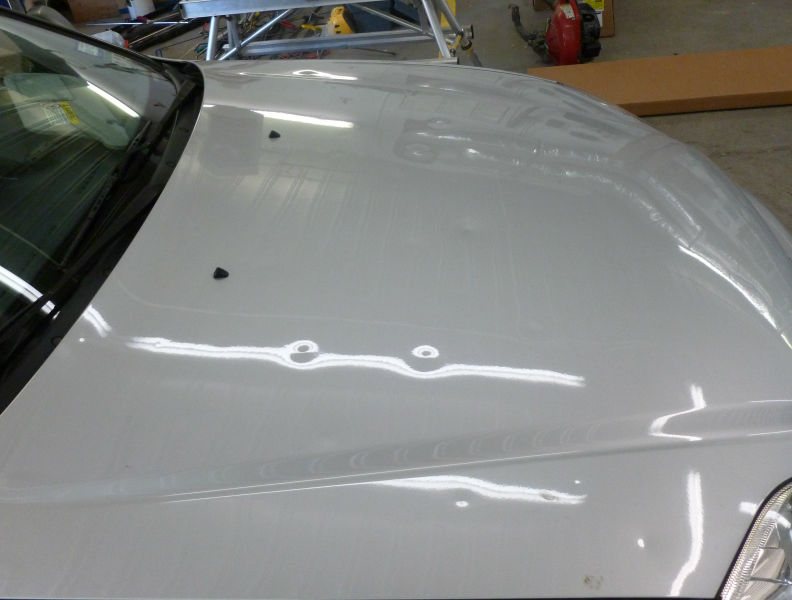
Trucks are the most common vehicle in North Texas parking lots, and the tailgate is the panel that takes the most abuse on one. Loading damage, a hitch swinging up, a ladder rack shifting, and above all hail — the tailgate and bed rails sit almost horizontal to the sky and catch everything a storm drops.
The answer to whether paintless repair works here is genuinely split. Some parts of a pickup bed are among the easiest panels on any vehicle to repair without paint. Other parts, six inches away, have no access whatsoever and are made of a material that behaves nothing like the rest of the truck. Knowing which is which is the whole job.
A truck bed is four different repair problems
| Area | Construction | Paintless repair outlook |
|---|---|---|
| Bed side outer panel | Single skin over the wheel house in places, double-walled elsewhere | Good where the inner wall allows a tool path; limited where it does not |
| Bed rail / top of the bed side | Folded and boxed section, often capped with a plastic rail protector | Difficult — stiff folded metal, restricted access |
| Tailgate outer skin | Outer skin over an inner structure, usually with a sealed cavity | Depends entirely on whether there is an opening into the cavity |
| Bed floor | Ribbed and stamped for stiffness | Ribs resist reshaping; dents in the flats sometimes come out |
| Composite bed (where fitted) | Molded composite rather than steel or aluminum | Not a paintless repair — no metal memory to work with |
Two more construction facts change things on modern trucks. Some full-size pickups use aluminum body panels, including the tailgate and bed. Aluminum is repairable, but it work-hardens quickly, has much less elastic memory than steel, and needs smaller, slower increments — the same technique differences we cover in our guide to aluminum dent repair. And some manufacturers use molded composite for the bed instead of metal. Composite does not spring back. There is nothing behind the surface to push against and nothing in the material that wants to return to shape.
Why tailgates are the hardest part
A tailgate looks like a simple flat panel and is anything but. It is a sealed box: an outer skin bonded and hemmed to an inner structure, with the latch mechanism, the rods, the handle, the wiring for a camera or lights, and on many trucks power-assist hardware inside. Once it is assembled at the factory, the cavity behind the outer skin is mostly closed.
That means a technician's options are:
- Go in through an existing opening. Some tailgates give useful access once the handle assembly, the camera, an access cover or the inner trim panel is removed. Where that opening leads somewhere useful, the repair proceeds normally.
- Work from the outside. Adhesive tabs on the face of the panel, pulling the low area up in stages. This is the standard approach on sealed tailgates and it works well on shallow hail damage with sound paint.
- Accept that some areas cannot be reached. Behind an internal brace or a bonded reinforcement, neither pushing nor pulling gives a clean result. That should be said before the job starts, not after.
Paint condition governs the outside route completely. Adhesive grips the clear coat, so a tailgate that has been resprayed after a previous knock, or one with a chalky, sun-baked finish after several Texas summers, is a much riskier candidate for glue work than a factory-fresh panel.
Bed liners are a real complication
This surprises people. Spray-in bed liner is a thick applied coating, and it does two things to a dent repair. It hides the damage — you cannot read a textured surface under reflection lighting the way you can read paint — and it prevents adhesive from grabbing the panel properly. Where a spray-in liner covers the bed rails and the inner faces, dents in those areas are essentially invisible until you feel them, and the coating itself does not reshape neatly with the metal.
Drop-in plastic liners are easier: they lift out, and they often protected the metal underneath. The catch is that a drop-in liner that has been in place for years may have trapped grit that scuffed the paint beneath it, so what looks like a clean panel under the liner is occasionally not.
Hail on a truck: what usually happens
Hail on a pickup concentrates on the horizontal surfaces: hood, roof, bed rails, tailgate and the bed floor if the truck was uncovered. In our experience the hood and roof are usually the most straightforward panels — good access underneath the hood, and a roof reachable once the headliner edge or the interior lights are moved on many trucks. Bed rails and the tailgate are where the estimate gets more careful.
This is one reason a full-vehicle inspection on a pickup takes longer than on a sedan. There are simply more separate access problems to work through. A full-vehicle hail repair on a truck at our Plano shop typically runs about 5–10 business days in the shop, and we will tell you up front which panels we expect to come out fully and which ones we expect to improve rather than disappear.
Trucks are also the vehicles most often targeted by temporary operations after a storm — a big truck means a big estimate. Our guide on spotting storm-chaser operations covers what to watch for when someone knocks on your door offering to fix the bed in your driveway.
Where paintless repair is the wrong tool on a pickup
- Composite bed panels. Molded composite has no elastic memory. Pushing it does not restore shape and forcing it can crack the material. Damage here is a repair-or-replace conversation with a body shop, not a paintless one.
- Plastic bumper covers and rear step bumper caps. Plastic behaves differently again — some shallow deformations relax, sharp ones do not, and cracked plastic needs plastic repair or replacement.
- Creased bed rails. A folded, boxed section with a hard crease is stiffer than any technique can gently persuade.
- Broken paint in the low point of a dent. Common on trucks because impacts here are often from hard objects rather than hail. Bare metal in a bed that carries wet loads and road salt is the one part of the damage that genuinely gets worse.
- Sealed tailgate cavities with a deep crease. Shallow damage pulls; a crease usually does not, and honesty about that up front saves everyone time.
Panels sometimes need refinishing or replacement, and on a tailgate that is occasionally the sensible outcome. We do what is best for the vehicle rather than defending a single technique — the trade-offs are set out in our comparison of PDR and a traditional body shop.
How a truck panel gets read in the shop
- Wash the horizontal surfaces. Bed rails carry more road film than any other panel and it scatters the reflection.
- Line-board reading, panel by panel. LED reflection boards across the tailgate, rails, hood and roof. On a truck we read the bed floor too if the vehicle sat uncovered through a storm.
- Paint depth mapping. Tailgates are the panel most often replaced or resprayed on a used truck, and the readings show it.
- Access survey. What opens up with the handle or camera out, what needs the inner trim panel, and what has no path at all.
- Honest panel-by-panel plan. Which panels we expect to finish invisibly, which we expect to improve, and which need paint.
- Quality control sign-off by whoever runs quality control, visible in your customer portal along with live updates while the truck is with us.
Common mistakes with truck dents
- Assuming a truck is "just bigger sheet metal." The access problems are different in kind, not just in scale.
- Not knowing whether the bed is metal or composite. A magnet answers it in seconds and it changes the entire conversation.
- Getting a quote for the tailgate from a photo alone. Photos cannot show whether the cavity opens up. Photo quotes are a good first filter; a tailgate deserves an in-person look.
- Ignoring dents under a tonneau cover or liner. They still count on an insurance estimate and they still cost you on a trade-in appraisal.
What to do next
Send photos of each damaged panel at a low angle with a straight reflection running across the surface, and tell us the year and configuration of the truck plus whether it has a liner or a cover. We give a verbal quote from photos, usually in about 30 minutes, and we will flag the panels that need to be seen in person.
If the truck took hail, bring it in for a free inspection under PDR lighting — bed rails and tailgates are exactly the panels that outdoor light hides. On insurance-approved hail claims we arrange complimentary pickup across DFW, waive the deductible up to $1,000 on many approved claims, and walk alongside you through the claim while you file it. You can see completed work in our before and after gallery, or read how hail repair in Plano runs from inspection to delivery. Repairability depends on paint condition, metal stretch, panel access and prior repairs.
Frequently asked questions
Is my truck bed steel, aluminum or composite?
A magnet answers it in seconds: it sticks to steel and not to aluminum or composite. Several full-size pickups use aluminum body panels and a few use a molded composite bed. The distinction matters because composite has no elastic memory, so pushing it does not restore its shape the way pushing steel does.
Can a spray-in bed liner be worked through?
Not really. A spray-in liner is a thick textured coating: it hides the damage from reflection reading and it stops adhesive from gripping the panel. Where a liner covers the rails and inner faces, dents underneath are hard to assess and the coating does not reshape neatly with the metal.
Why is a tailgate harder than a door?
A tailgate is a sealed box. The outer skin is hemmed to an inner structure with the latch, rods, wiring and sometimes power-assist hardware inside, and the cavity is mostly closed. Access depends on whether removing the handle, camera or inner panel opens a useful path. Where it does not, the work happens from outside with adhesive tabs.
Can dents in the bed floor be repaired?
Sometimes. The floor is stamped with ribs for stiffness, and dents in the flat sections between ribs occasionally come out. Damage that runs across a rib is much harder, because the rib is the stiffest part of the pressing and it holds the deformation.
Does hail on a truck cost more than on a car?
It usually involves more panels and more separate access problems, so the estimate is larger and the inspection takes longer. The horizontal surfaces on a pickup — hood, roof, bed rails, tailgate and an uncovered bed floor — are all exposed. Pricing depends on panel count and dent count, which is why an inspection matters more than a rule of thumb.
Do dents under a tonneau cover still matter?
Yes. They appear on an insurance estimate and they show up in a trade-in appraisal, even if nobody sees them day to day. A cover is worth having, but it is not a reason to skip inspecting what is underneath after a storm.
Can a plastic rear bumper cover be fixed the same way?
No. Plastic bumper covers are a separate discipline. Some shallow deformations relax on their own, sharp ones do not, and cracked plastic needs plastic repair or replacement rather than a paintless push. Treat it as a separate item on the estimate.
Sources and methodology
- After hail or windstorms: consumer tips — Texas Department of Insurance.
Repair, cost and timing statements that are not tied to a listed source come from DentPicks' own quoting and repair history at the Plano, TX shop. They are typical ranges and shop-floor observations, not industry statistics or promises — your vehicle, its condition, your policy language and your insurer determine your specific outcome.
Bring the truck in for a panel-by-panel read
Bed rails and tailgates are exactly the panels outdoor light hides. Inspection under PDR lighting at the Plano shop is free, and we will tell you which panels we expect to finish invisibly.