

The short answer
Broken paint means the dent can still be reshaped, but the repair no longer ends there. Depth decides the path: clear-coat haze often polishes out, damage into color or primer usually needs the affected area refinished, and bare metal starts a corrosion clock in Texas humidity. Repairability depends on paint condition, metal stretch, panel access and prior repairs, so have the panel read under proper lighting.
 Written by the DentPicks Editorial Team
Technically reviewed by Vytas Kucinskas, Founder & Master PDR Technician
Written by the DentPicks Editorial Team
Technically reviewed by Vytas Kucinskas, Founder & Master PDR Technician
Published: Aug 19, 2026 · Last reviewed: Aug 19, 2026 · 9 min read
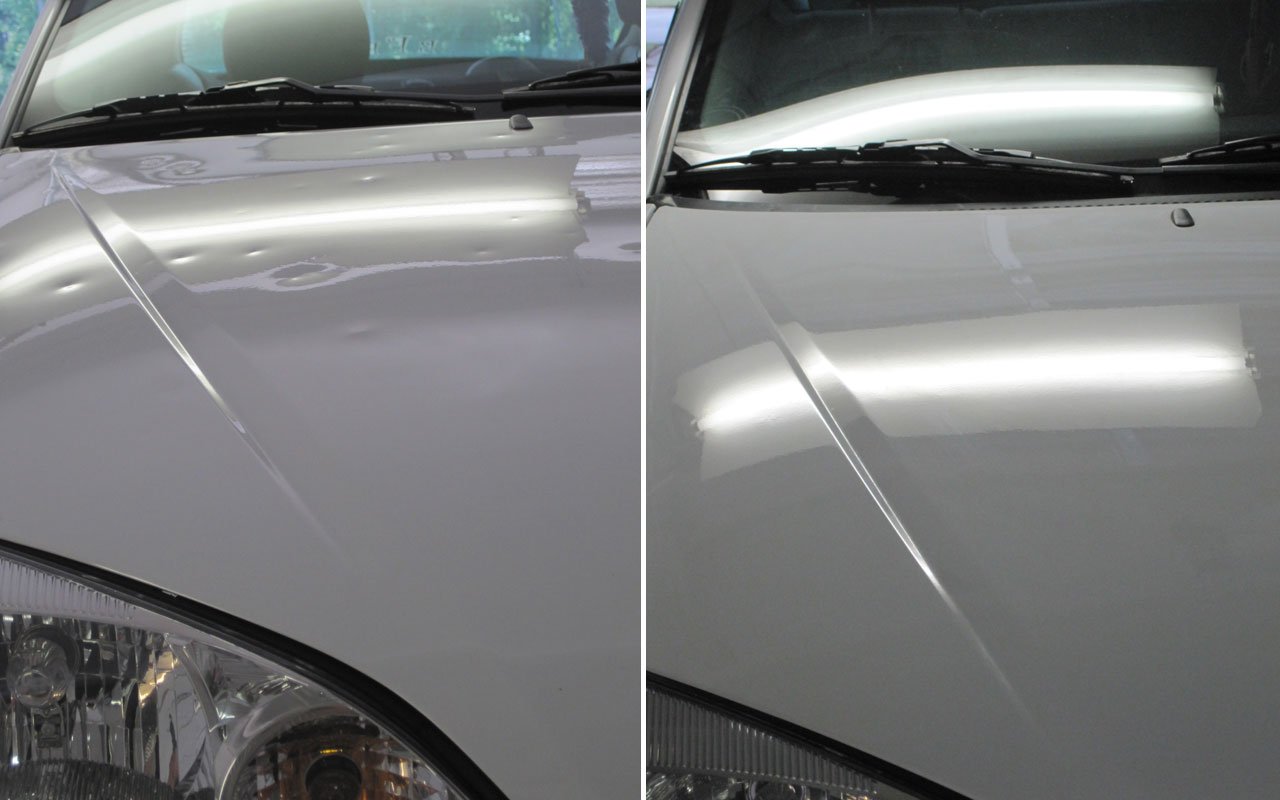
Every paintless repair rests on one assumption: the factory finish is still whole. The metal moved, the coating stretched with it, and if the shape is relieved carefully enough the paint goes back to sitting flat and looking untouched. The moment there is a chip, a crack or bare substrate inside the dent, that assumption is gone — and the conversation changes from "how do we get this out" to "what is the right repair for this panel."
This comes up constantly on hail vehicles, on door dings from a car park, and on anything that was hit by something with a hard edge. It is worth understanding, because broken paint is the one form of dent damage that genuinely gets worse if you leave it, and because it is the point where shops start giving noticeably different answers.
Four levels of paint damage, and how to tell them apart
"Chipped paint" covers four quite different situations. Factory finish on most vehicles is layered — primer over treated metal, color coat, then clear on top — and how deep the damage goes decides everything that follows.
- Clear coat only. A dull, hazy or slightly white patch where the gloss has been scuffed but the color underneath is untouched. Often polishable.
- Into the color coat. The gloss is gone and the color looks thin, lighter or scratched through in places, but no grey or white primer shows.
- Down to primer. A patch of grey, white, black or body-color-adjacent material that is clearly not the paint. Protected for now, but not sealed the way the factory intended.
- Bare metal or substrate. Bright silver, dull grey or, on plastic, the raw color of the molding. On steel, this is the one that starts a clock.
The reliable way to check is not to stare at it. Wipe the area clean, then sight along the panel with a light held almost parallel to the surface. Depth reads as a shadow edge; a scuff reads as haze. If you can catch a fingernail in it, the damage has depth, not just gloss loss.
What paintless repair can still do — and what it cannot
Broken paint does not make the metalwork pointless. Shape and finish are two separate problems, and a technician can still relieve the dent so the panel reads flat. What changes is that the repair no longer ends there.
The realistic outcomes are:
- Shape corrected, flaw left visible. The dent is gone, the chip remains. Sometimes the right call on an older vehicle where nobody wants to open a paint job.
- Shape corrected, then touched in. A chip filled with matched touch-up is a sealing measure, not a cosmetic one. It stops the corrosion clock; it does not disappear under close light.
- Shape corrected, then the affected area refinished. The panel is worked flat first, then prepped and painted so the finish matches. This is common on a single door ding with a chip and is often the sensible answer.
- Panel refinished or replaced conventionally. Where the paint damage is extensive, where the metal is stretched, or where a crease has gone past what relieving can fix. Panels sometimes do need replacement and refinishing, and pretending otherwise does the vehicle no favors.
There is no version of paintless repair that restores missing coating. Anyone who tells you a chip inside a dent will "close up" once the metal comes back is describing something that does not happen. Our explanation of how paintless dent repair works lays out why the technique depends on an intact film in the first place.
Why broken paint gets worse in North Texas
A dent with intact paint is stable. The metal has been displaced, not opened, and it can sit that way for years without changing. That is why hail damage from three seasons ago is often still perfectly repairable.
Exposed substrate is a different object. Bare steel in humid heat begins oxidizing, and once corrosion starts under the edge of the surrounding coating it lifts the paint film from below — which is why a chip the size of a pinhead can become a flaking patch the size of a coin. North Texas adds daily thermal cycling on top: panels expand in afternoon sun and contract overnight, and the working edge of that movement is exactly the boundary of the damaged coating. Aluminum panels corrode differently rather than not at all, and the residue formed there is its own problem for a later repair.
The practical consequence is a difference in urgency. Intact-paint dents are a scheduling decision. Broken-paint dents are a "do something about this in weeks, not seasons" decision — even if that something is only sealing the chip until a proper repair is convenient. Our guide on what Texas heat does to unrepaired dents goes further into the heat side of that.
How the answer changes by situation
| What is inside the dent | Repair path | How urgent |
|---|---|---|
| Haze or scuff, clear coat only | Paintless shape correction, then polish | Normal — no corrosion path |
| Scratched into color, no primer showing | Shape correction; polish or spot refinish depending on depth | Low, but it will not improve |
| Primer visible | Shape correction, then refinish the affected area | Moderate — the factory seal is compromised |
| Bare metal in a steel panel | Shape correction, then refinish; seal it in the meantime | High in Texas humidity |
| Cracked paint along a sharp crease | Expect refinishing; relieving the crease will move the cracked film further | High |
| Chips over a previous repair or filler | Assessment first — what is underneath decides the method | High; hidden filler changes everything |
If this is a hail claim
On a hail vehicle, chipped paint inside dents is not an obstacle to a claim — it is a line item. Estimates commonly separate the paintless portion from panels that need refinishing, and it is normal for the initial estimate to miss damage that only becomes visible under proper shop lighting. That is what supplements exist for, and our guide on how hail repair supplements work explains the process without the jargon.
Two things are worth knowing. Paintless repair itself creates no vehicle history record, but an adjuster-required panel replacement can be reported — so if a panel is going to be replaced, it is worth understanding why before it is agreed. And coverage depends on the language of your policy; your insurer or licensed agent can confirm your specific coverage. The Texas Department of Insurance publishes plain-language consumer guidance on what to do after a hail or windstorm event.
Common mistakes
- Assuming a chip means the panel is written off. It usually does not. A door ding with a chip is a routine combined repair, not a new door.
- Treating touch-up paint as a repair. It is a seal. Useful, cheap, worth doing on a bare-metal chip today — but it is not the finished job, and a thick blob of it makes later refinishing harder.
- Polishing hard at a chip edge. Aggressive compounding around broken paint thins the film exactly where it is already weakest.
- Letting someone pull the dent without discussing the paint first. Relieving metal under cracked coating will move that crack. It should be a decision, not a surprise.
- Waiting for the whole car to need work. Corrosion does not wait for your schedule to clear.
- Believing a shop that says everything can be done paintless. The comparison in our guide on PDR versus a traditional body shop exists because both are legitimate answers to different damage.
What to do next
Do the wet test and the fingernail test today — they take a minute and they tell you whether you have a cosmetic issue or an open panel. If bare metal is showing and a proper repair is weeks away, seal the chip with matched touch-up in the meantime. Then get the panel read properly.
At the Plano shop we assess panels under LED reflection boards, where the difference between clear-coat haze and a chip into primer is unmistakable, and we tell you which of the four repair paths above actually fits the vehicle. Sometimes that answer is paint, and we will say so. Repairability depends on paint condition, metal stretch, panel access and prior repairs, which is why this is an in-person judgment rather than a phone one. You can see finished panels in our before and after gallery or read how our dent repair process runs from assessment to quality-control sign-off in your customer portal.
Frequently asked questions
How can I tell whether the paint is really broken or just scuffed?
Wet the area. Surface scuffing in the clear largely disappears under water because the water fills and refracts it the same way polish does. Damage that is still obvious with water sitting on it has gone into the color coat or deeper. If a fingernail catches in it, there is depth.
Will touch-up paint fix a chip inside a dent?
It seals it, which is worth doing on bare metal while you wait for a proper repair. It does not make the flaw disappear, and a thick application makes later refinishing harder. Treat it as a stopgap, applied thinly.
How long can I leave bare metal showing before it becomes a problem?
There is no fixed number, but North Texas humidity and daily heat cycling work against you. Corrosion that starts in a chip lifts the surrounding paint film from underneath, which turns a pinhead chip into a flaking patch. Weeks is reasonable; a season is not.
Does chipped paint mean the whole panel gets repainted?
Not usually. A single ding with a chip is commonly reshaped and then the affected area refinished. Full panel refinishing or replacement is reserved for extensive paint damage, stretched metal or creases past what relieving can correct.
Will an insurance estimate cover the paint work as well as the dents?
Estimates commonly separate paintless line items from panels needing refinishing, and damage first visible under shop lighting is normally handled through a supplement. Coverage depends on the language of your policy, and your insurer or licensed agent can confirm your specific coverage.
Does a repair with paint show up on a vehicle history report?
Paintless dent repair itself creates no record. An adjuster-required panel replacement can be reported, which is one reason it is worth understanding why a panel is being replaced before agreeing to it.
Can the technician pull the dent without making the crack worse?
Relieving metal under a cracked film will move that crack — that is physics, not technique. It should be a decision made with you beforehand, with a clear plan for refinishing the affected area, rather than something you discover at pickup.
Sources and methodology
- After hail or windstorms: consumer tips — Texas Department of Insurance.
Repair, cost and timing statements that are not tied to a listed source come from DentPicks' own quoting and repair history at the Plano, TX shop. They are typical ranges and shop-floor observations, not industry statistics or promises — your vehicle, its condition, your policy language and your insurer determine your specific outcome.
Not sure how deep the chip goes?
Send a photo taken with a light held along the panel, or bring the car to the Plano shop. We will tell you whether this is a polish, a spot refinish or a paint job before you commit to anything.