

The short answer
Ask whether the dent can be repaired without paint, how the technician will access it, and whether anything is drilled. Then confirm the effect on your factory paint warranty, whether it touches a vehicle history report, what result is realistic, who signs off on the finished work, and exactly what the written warranty covers. On a new car the paint is flexible and the metal unworked, so most dings come out completely.
 Written by the DentPicks Editorial Team
Technically reviewed by Vytas Kucinskas, Founder & Master PDR Technician
Written by the DentPicks Editorial Team
Technically reviewed by Vytas Kucinskas, Founder & Master PDR Technician
Published: Aug 19, 2026 · Last reviewed: Aug 19, 2026 · 7 min read
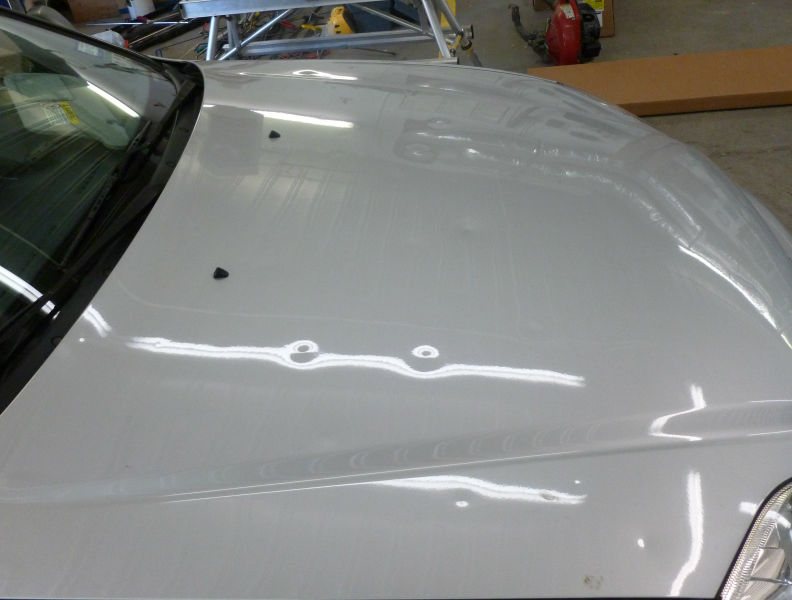
The first dent on a new car stings more than it should. Financially it is a small event; emotionally it feels like the car has been permanently altered. The good news is that on a vehicle this young, almost everything is working in your favour: the paint is fresh and flexible, the metal has never been worked, and there is no previous repair hiding under the surface. Those are exactly the conditions paintless dent repair was designed for.
What you want from the shop is not enthusiasm. It is a clear plan and a short list of honest answers.
Why a new car is usually the easiest case
- Flexible, undamaged paint. Modern two-stage finishes at this age tolerate the metal moving beneath them far better than aged single-stage paint does.
- Virgin metal. Nothing has been pushed, filled or stretched before, so the panel returns toward its original shape more predictably.
- Nothing hidden. No previous filler, no earlier respray, no surprises in the paint-thickness readings.
- Parts availability. Clips and trim are in current production, so removal for access carries far less risk than on an older vehicle.
This is why we routinely recommend paintless dent repair on newer vehicles: it keeps the factory finish, which is the single most valuable thing on the car after the drivetrain.
The questions worth asking
- "Can this be repaired without paint?" Ask directly. The answer depends on paint condition inside the dent, how far the metal is stretched, panel access from behind, and whether the dent sits on a body line or a panel edge. A shop that answers before looking under proper lighting has not answered.
- "How will you access it?" The route matters. Existing openings and trim removal are normal; drilling a new access hole is not something we do, because a new opening in a warranted panel is an avoidable corrosion path.
- "Does this affect my factory paint or corrosion warranty?" The honest answer: paintless repair leaves the original coating untouched, so the panel keeps whatever coverage it had. A refinished panel is different. Warranty terms vary by manufacturer and model year, so check your own booklet.
- "Will anything show up on a vehicle history report?" PDR itself creates no collision record because nothing is filled or refinished. Panel replacement is a different matter, and an insurance claim is its own separate data trail.
- "What is the realistic outcome?" Most dings on a new panel come out completely. Deep, sharp dents and creases across body lines are harder — you want that stated before the work starts, not after.
- "What could go wrong?" Paint cracking is rare on new finishes, but on a very deep or sharp dent it is not impossible. A good shop raises the risk in advance rather than discovering it with you.
- "Who signs off on the finished work?" The technician who finishes a panel should not be the only person approving it. At our shop the job is signed off by whoever runs quality control, and that sign-off is visible in your customer portal.
- "What does the warranty actually say?" Ours is a written lifetime warranty on the repair for as long as you own the vehicle. It is not transferable — we say that plainly rather than letting the word "lifetime" do the work.
Insurance, or pay it yourself?
For a single door ding on a new car, most owners pay out of pocket: the repair often costs less than a comprehensive deductible, and there is no reason to open a claim for it. In DentPicks' own quoting history, small door dings have typically run in the range of $75 to $200 and mid-size panel dents $150 to $450, with larger or more complex work above that. Those are shop ranges rather than industry figures, and the final number depends on size, depth, location, panel material and access.
Hail is the exception. Full-vehicle hail damage on a new car is usually a comprehensive claim, and on approved hail claims we waive the deductible up to $1,000, arrange complimentary pickup across DFW and handle the shop side while you file. Most full-vehicle hail repairs take about 5–10 business days in the shop — a typical range rather than a guarantee. If a claim is in play, our insurance and deductible guide covers how it works in Texas.
What to avoid in the first week
- DIY kits, plungers and boiling water. On a new finish these are the fastest route from "repairable ding" to "needs a repaint" — the reasons are in our guide on why DIY dent methods fail.
- Driveway offers after a storm. Temporary operations move quickly through DFW neighbourhoods and are gone before a warranty matters; see our guide on spotting storm chasers.
- Booking a repaint for a repairable dent. Once a panel is refinished, the factory coating on it is gone for good — worth avoiding while PDR is still on the table.
- Waiting because the paint looks fine. It usually is fine, and dents with intact paint are stable. But if the paint is chipped inside the dent, that is the one part of the damage that genuinely gets worse.
What to do next
Send three photos — one straight on, one at a low angle showing how a reflection bends across the dent, and one wide shot for context — and you will get a verbal assessment quickly, usually within about 30 minutes. If the dent is more than a simple ding, bring the car to the Plano shop so the panel can be read under LED line boards before anyone commits to a method or a price.
You will get a straight answer about whether the factory finish can be kept, including on the rare occasion when the honest recommendation is that the panel needs paint. See finished work in our before and after gallery, or read more about our paintless dent repair service.
Frequently asked questions
Will dent repair affect my new car's factory warranty?
Paintless repair leaves the original coating untouched, so the panel keeps whatever paint and corrosion coverage it already had — the technique does not add or extend coverage, it simply avoids replacing factory paint with aftermarket paint. Warranty terms vary by manufacturer and model year, so check your own warranty booklet.
Should I claim it on insurance or pay myself?
For a single door ding, most owners pay out of pocket because the repair often costs less than a comprehensive deductible. Hail is the exception: full-vehicle damage is usually a comprehensive claim, and on approved hail claims we waive the deductible up to $1,000.
Does paintless dent repair show up on Carfax?
PDR itself creates no collision record because nothing is filled or refinished. Two things can appear separately: an adjuster-required panel replacement, and the insurance claim itself, which is its own data trail independent of the repair method.
Can every dent on a new car be fixed without paint?
Most can, but not all. Repairability depends on paint condition inside the dent, how far the metal is stretched, panel access from behind, and whether the dent crosses a body line or sits on a panel edge. Some panels genuinely need refinishing, and a shop should tell you that before starting.
Do you drill holes to reach the dent?
No. We reach dents through existing openings and by removing trim where needed. Creating a new hole in a nearly new panel adds a corrosion path and an avoidable warranty argument later.
Could the paint crack during the repair?
It is rare on a new finish, but on a very deep or sharp dent it is not impossible. The risk is assessed under proper lighting before work starts and raised with you in advance — never discovered together afterwards.
How fast can a new-car ding be repaired?
Single dings are frequently same-day, and you usually get a verbal quote from photos in about 30 minutes. Full-vehicle hail repair is different — plan for roughly 5–10 business days in the shop, which is a typical range rather than a guaranteed delivery date.
Sources and methodology
Repair, cost and timing statements that are not tied to a listed source come from DentPicks' own quoting and repair history at the Plano, TX shop. They are typical ranges and shop-floor observations, not industry statistics or promises — your vehicle, its condition, your policy language and your insurer determine your specific outcome.
First dent on a new car?
Send three photos for a quick verbal assessment, or bring it to the Plano shop. We will tell you honestly whether the factory finish can be kept — and what the realistic result looks like.