
The short answer
Yes, in most cases. Hail on a Chevrolet, GMC or Ram truck usually lands on the cab roof, hood and bed rails, and paintless dent repair handles that damage when the paint is unbroken. Two things change the answer: bed sides and tailgates are double-walled, so they are glue-pull work rather than rod work, and some panels are aluminum, which takes longer and tolerates less depth. Have the panels read under proper lighting before deciding.
 Written by the DentPicks Editorial Team
Technically reviewed by Vytas Kucinskas, Founder & Master PDR Technician
Written by the DentPicks Editorial Team
Technically reviewed by Vytas Kucinskas, Founder & Master PDR Technician
Published: Aug 19, 2026 · Last reviewed: Aug 19, 2026 · 11 min read
Full-size pickups are the most common vehicle on North Texas roads, and they are also the shape hail likes least. A crew cab presents a large, nearly flat roof and a wide, nearly flat hood to a storm that is falling close to straight down. Where a sedan's curved surfaces deflect part of the impact, a truck takes it square. The result is usually a lot of dents spread over a lot of panel area — which sounds worse than it is, because most of that damage is exactly the kind paintless dent repair was built for.
The honest answer is yes, PDR repairs most hail damage on Chevrolet, GMC and Ram trucks. The interesting question is not whether, but which panels, and why a pickup's construction makes the estimate look different from a car's. Manufacturer procedures vary by model year and configuration, so everything below is about how trucks are built in general, not a rule for a specific VIN.
A pickup is not one body — it is several bolted together
Most full-size trucks are body-on-frame. The cab, the bed, the fenders and the hood are separate assemblies mounted to a ladder frame rather than welded into a single unibody shell. That single fact changes several things about hail repair.
A hail-damaged truck panel is usually a bolt-off item rather than a cut-and-weld one, so replacing a fender, hood or tailgate is mechanical work rather than structural bodywork. The panels are also large and lightly crowned — good for how they respond to a rod, unforgiving of a leftover low spot. And the gaps between assemblies are factory-set with shims and slotted bolts, so anything removed has to go back with the gaps re-set.
For the storm itself, this means the estimate tends to concentrate on three surfaces: the cab roof, the hood, and the tops of the bed rails. Vertical panels — doors, bed sides, the tailgate face — often come through a straight-down hailstorm with far less damage than the horizontal ones. When a storm arrives with wind behind it, that changes, and the vertical panels start collecting damage on the windward side only.
Steel, aluminum, and why nobody should guess
Truck bodies are no longer all one material. Across the segment, manufacturers have moved individual panels to aluminum — hoods and tailgates most often, sometimes doors or bed components — while keeping steel elsewhere on the same vehicle. Which panels are aluminum depends on the brand, the model year, the cab configuration and sometimes the trim level. There is no safe shortcut here, and any shop that tells you what your truck is made of without looking at the truck is guessing.
The distinction matters because the two metals behave differently under a PDR tool. Steel has more spring-back: it wants to return toward its original shape, and a technician can work it in stages, letting the metal help. Aluminum is less forgiving. It work-hardens faster, holds the shape it is pushed into, and is far less tolerant of being over-pushed and pulled back. Aluminum panels generally take longer per dent, need more controlled heat, and have a lower ceiling on how deep a dent can be before paintless repair stops being the right answer. Our guide on what changes on aluminum panels goes through that in detail.
On the estimate this shows up as different labor time for panels that look identical from outside. A steel roof and an aluminum hood on the same truck are not the same job.
The bed is the hardest part of the truck to reach
Paintless repair works from behind the panel wherever it can. A technician runs a rod through an existing opening, finds the back of the dent, and pushes it out in small increments while reading the reflection on the front. Where there is no path to the back, the alternative is glue pulling from the outside — a tab bonded to the paint, lifted, then the high spot knocked back down.
A pickup bed is where that choice gets forced. Bed sides are double-walled: an outer skin you can see and an inner wall that forms the cargo box, with structure and sometimes wiring between them. There is no service opening into that cavity on most trucks. The same is true of a tailgate, which is a sealed clamshell with a latch mechanism, wiring and often a camera inside it.
A spray-in bedliner adds another wrinkle. On the rails and inner walls, sprayed liner material sits over the metal and cannot be worked through — a dent under liner on a bed rail cap is not a paintless repair candidate on the lined surface. Drop-in plastic liners are different: they come out, and the metal underneath is often untouched by the storm because the liner absorbed it.
Truck-only complications worth flagging early
- Racks, toolboxes and cargo covers. Anything mounted over the bed shadows the metal beneath it. That is good — but it also means the estimate cannot be completed until it comes off, and the mounting feet themselves sometimes hide damage or scratching.
- Roof-mounted lamps and antennas. Clearance lamps, sharkfin antennas and roof-rack rails all sit on the panel most likely to be hit, and each is a potential leak path if the surrounding metal moved.
- Cab roofs with curtain airbags. Roof access on a crew cab may involve lowering headliner edges near airbag curtains and pillar hardware. That is normal work, but it is done to manufacturer sequence, and manufacturer procedures vary by model year and configuration.
- Sensors in the tailgate and mirrors. Cameras, blind-spot modules and trailer-assist hardware live in places hail lands. Removing and refitting them is routine; skipping the check is not.
Where paintless repair is the wrong tool
Trucks bring a few situations where the honest answer is paint or replacement, and a shop that will not say so is not doing you a favor.
- Cracked or chipped paint in the dent. PDR moves metal; it does not restore a finish. A hailstone that broke the clear coat leaves a repair that needs refinishing regardless of how well the metal comes back.
- Dents on a panel edge, a bed rail cap or a body-line crown. Metal at a fold is already stretched. A hit right on that fold is the classic case for a body shop rather than a rod — see our guide on deep creases and large dents.
- Very high dent counts on a low-crown roof. There is a point where the metal in a flat roof has been worked so extensively that a repaint or a replacement roof skin gives a better long-term result. That is a judgment call made under lighting, not from a photo.
- Damage on top of prior filler. An older repair under the paint moves differently than metal does. It usually has to be uncovered and redone properly.
Panels sometimes genuinely do need replacement and refinishing, and on a body-on-frame truck that is often less disruptive than on a car. The goal is what is best for the vehicle, not what keeps the job paintless. Our comparison of PDR versus a traditional body shop covers where the line usually falls.
Panel-by-panel expectations on a full-size truck
| Panel | Typical access | What usually decides the outcome |
|---|---|---|
| Cab roof | Behind, via headliner edges or existing openings | Dent count and how flat the panel is; airbag and trim sequence adds time |
| Hood | Behind, between the outer skin and inner frame | Whether the panel is steel or aluminum; inner bracing blocks some areas |
| Bed sides and rails | Glue pull from outside (double-walled) | Dent depth; sprayed liner on the surface rules out the lined areas |
| Tailgate | Glue pull, or partial disassembly | Internal hardware, cameras and wiring; badges and spoilers come off first |
| Doors | Behind, through window and access openings | Usually the easiest panels on the truck unless wind drove the storm sideways |
| Front fenders | Behind, through the wheel arch and engine bay | Bolt-off panels, so replacement is a realistic option when PDR runs out |
How a truck moves through our shop
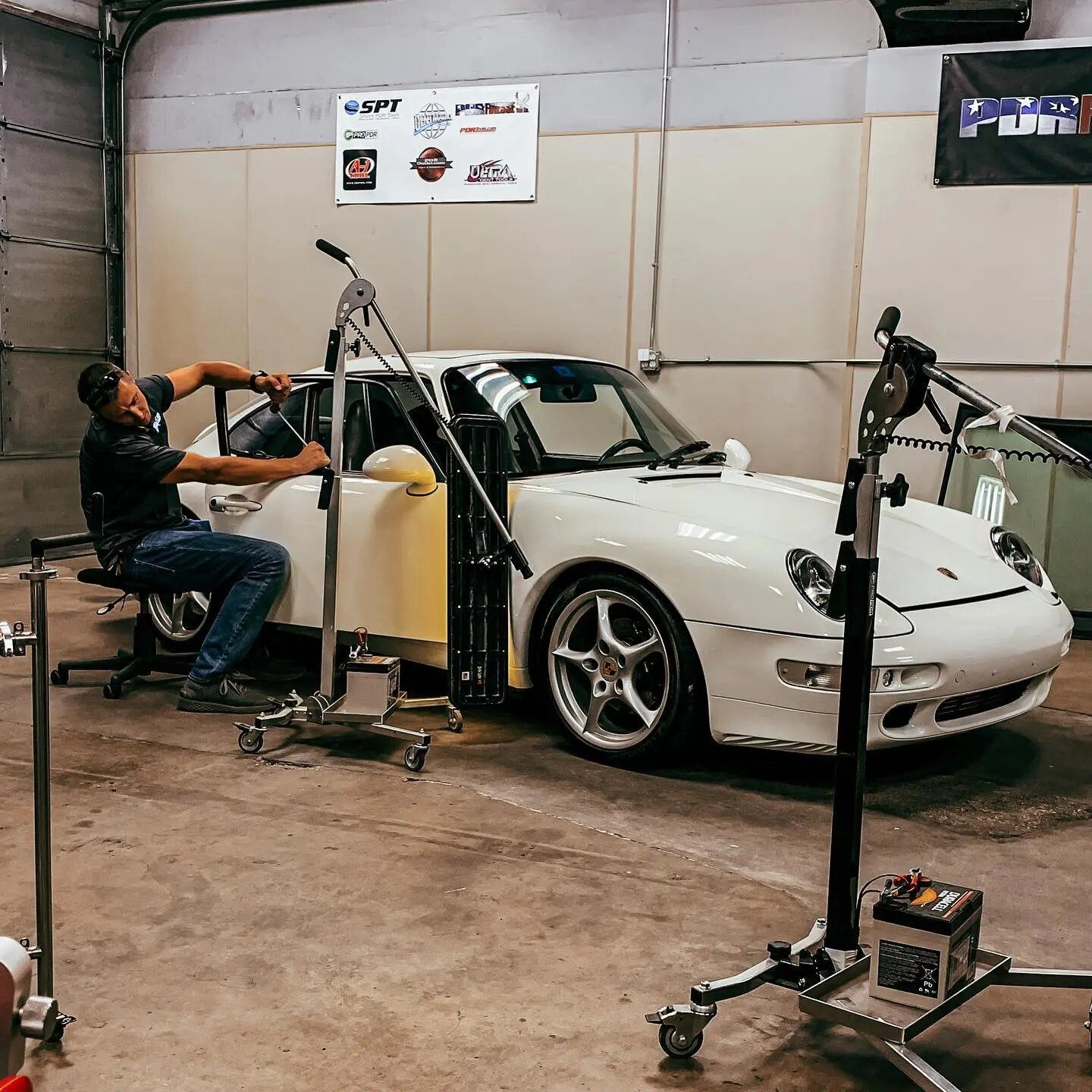
At the DentPicks shop in Plano, a hail-damaged truck is read under LED line boards rather than in daylight, because outdoor light on a flat truck roof hides a large share of shallow dents. The roof of a crew cab is high enough that it also gets read from a platform — reading a roof by standing on tiptoe is how dents get missed and supplements get filed later.
Panel access is planned before any tool touches the vehicle: what can be reached from behind, what is glue-pull only, and what needs trim or hardware removed, in what order. Racks and toolboxes come off at that stage. The finished truck is signed off by whoever runs quality control, visible in your customer portal alongside live updates. Full-vehicle hail repair typically runs about 5–10 business days, with a crew cab and long bed at the longer end.
More panel area is not more difficulty — it is more hours. That is the single biggest difference between a truck estimate and a car estimate.
Common mistakes with truck hail damage
- Estimating from the ground. Nobody can see a crew cab roof from standing height. If the estimate does not include the roof read from above, it is incomplete.
- Leaving the rack and toolbox on for the inspection. The estimate will be wrong in both directions — missed damage under the mounts, counted damage on panels that were shadowed.
- Letting a parking-lot crew "pop out" bed sides. There is no rod access to that cavity. Whatever they are doing, it is not what they said it was.
What to do next
Photograph the truck now, note the storm date, and report the damage to your insurer promptly — the Texas Department of Insurance recommends prompt notice after a hail or windstorm event, and most policies require it. You file the claim; a good shop helps you through it rather than doing it behind your back.
Then get the panels read properly. Bring the truck in, or send photos for a verbal quote — most take about 30 minutes. We will tell you which panels are paintless work, which are glue-pull work, which need paint, and whether anything genuinely needs replacing. You can see finished panels in our before and after gallery, or read how dent repair at our Plano shop is scheduled and delivered.
Frequently asked questions
Are hail repairs on a truck more expensive than on a car?
Usually, but for a simple reason: there is more panel area. A crew cab roof, a full-width hood and long bed rails add up to more square footage than a sedan, and PDR is priced largely by dent count and panel time. The work is not harder per dent — there is just more of it.
Can dents in a pickup bed side really be fixed without paint?
Often yes, using glue pulling from outside, because bed sides are double-walled with no service access to the back. Glue pulling has a lower ceiling on dent depth than working from behind, so deeper hits on a bed side are more likely to need refinishing or a replacement panel.
Does a spray-in bedliner stop hail repair?
On the surfaces it covers, yes. Sprayed liner material sits over the metal and cannot be worked through, so a dent under liner on a bed rail cap is not a paintless candidate on that surface. Drop-in plastic liners are different — they lift out, and they often shielded the metal underneath.
How do I know whether my truck's hood is steel or aluminum?
Not from a chart. Manufacturers mix materials across panels, and which ones are aluminum depends on brand, model year, cab configuration and trim. A shop should confirm it on your actual vehicle before quoting, because aluminum panels take more time per dent and tolerate less depth.
Do I need to remove my ladder rack or toolbox before an estimate?
Yes, or plan for it to come off at the shop. Anything mounted over the bed shadows the metal under it, so an estimate written with the rack on will be wrong in both directions — hidden damage under the feet and counted damage on panels that were actually protected.
Will hail repair on a truck show up on a vehicle history report?
Paintless dent repair itself creates no record. What can be reported is a panel replacement that an adjuster required — for example a bed side or tailgate that could not be repaired. That is one more reason to know early which panels are PDR work and which are not.
My truck is a work vehicle with existing scratches. Is repair still worth it?
Usually. Unrepaired hail is deconditioned at appraisal and trade-in valuation regardless of the truck's working history, and dents on flat panels read clearly to any appraiser. Pre-existing scratches are handled separately — they are not hail damage and should not be written into a hail claim.
Sources and methodology
- After hail or windstorms: consumer tips — Texas Department of Insurance.
Repair, cost and timing statements that are not tied to a listed source come from DentPicks' own quoting and repair history at the Plano, TX shop. They are typical ranges and shop-floor observations, not industry statistics or promises — your vehicle, its condition, your policy language and your insurer determine your specific outcome.
Get your truck's panels read properly
Send photos or bring the truck to the Plano shop. We will tell you which panels are paintless work, which are glue-pull only, and where paint or replacement is the better answer.