
The short answer
Usually yes. Most BMW dents sit on outer skin panels, and both aluminum and high-strength steel skins are repairable with paintless dent repair when the paint is intact and the back of the panel can be reached. Aluminum takes longer and forgives less; high-strength steel resists correction. Dents across body lines, near panel edges, or with stretched metal or cracked paint may need refinishing instead. An in-person assessment under proper lighting settles it.
 Written by the DentPicks Editorial Team
Technically reviewed by Vytas Kucinskas, Founder & Master PDR Technician
Written by the DentPicks Editorial Team
Technically reviewed by Vytas Kucinskas, Founder & Master PDR Technician
Published: Aug 19, 2026 · Last reviewed: Aug 19, 2026 · 9 min read
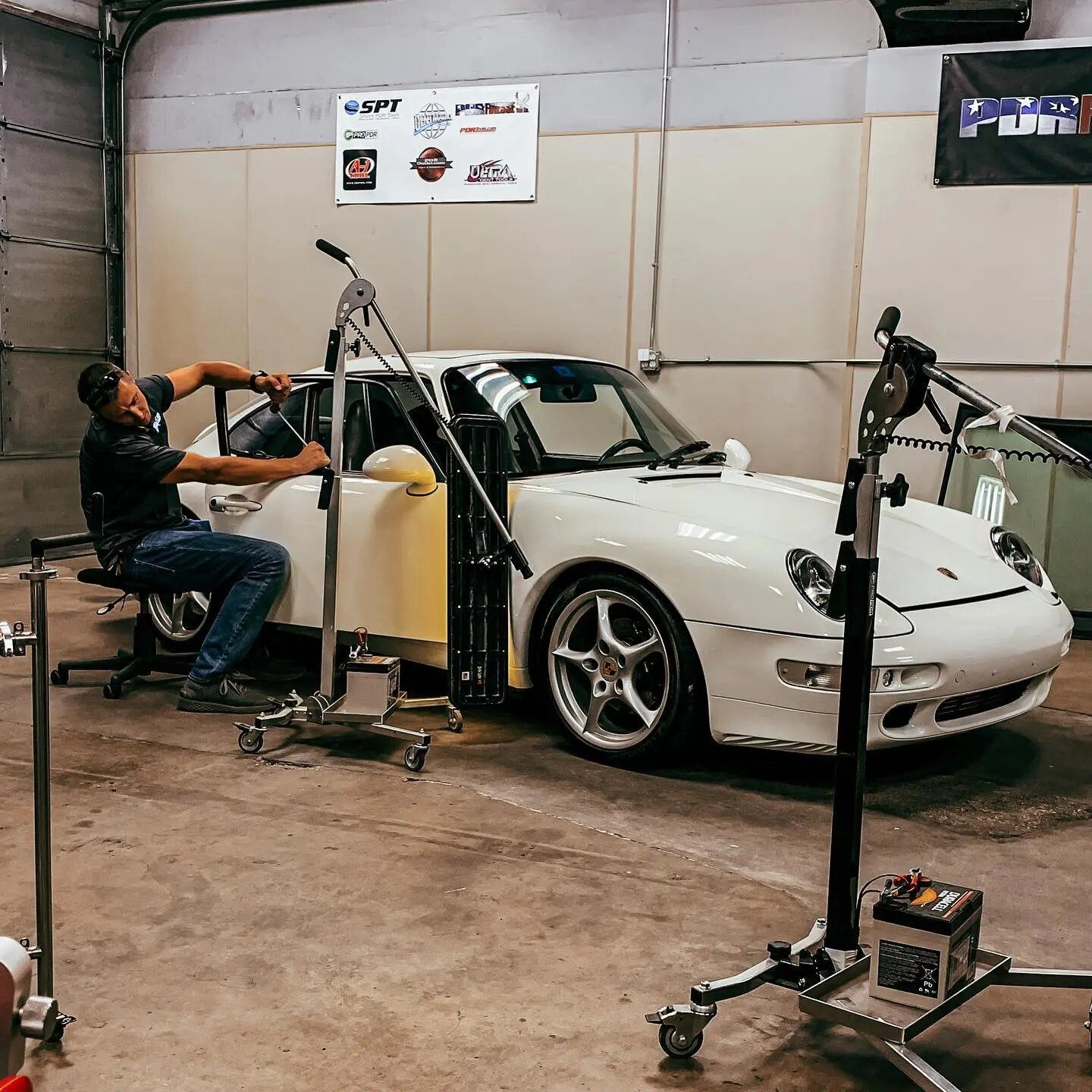
BMW owners ask this question more often than owners of almost any other brand, and for a good reason: modern BMWs are not built from one material. A single car can carry aluminum closures, conventional mild steel, high-strength steel and press-hardened boron steel in the structure, and on some models composite or carbon-reinforced sections as well. Which material sits under a particular dent changes what paintless dent repair can do with it — and sometimes changes whether PDR is the right method at all.
The short version is that most BMW dents that arrive at a shop are on outer skin panels, and most of those are repairable without paint. The nuance is in the exceptions, and in knowing which panel you are actually looking at before anyone puts a tool behind it.
Why the material under the paint matters
Paintless dent repair works by persuading displaced metal back to its original shape. Every metal has a different appetite for being persuaded.
- Mild steel has good shape memory. It wants to return to where it was, and a technician is largely releasing tension rather than fighting the panel. This is the easiest case and it covers a lot of hail damage.
- High-strength and advanced high-strength steel is thinner for the same rigidity. It resists deformation, which is why it dents less readily in the first place — but once deformed it also resists correction, so the same dent takes more passes, more patience and more precise tool placement.
- Aluminum behaves differently again. It work-hardens as it is moved, holds less shape memory than steel, and has a narrower window before the metal stops cooperating. It is entirely repairable in skilled hands, but it takes longer and the technique is not interchangeable with steel work. We go deeper into that in our guide on what makes aluminum dent repair a specialty.
- Press-hardened boron steel appears in structural members, not outer skins. It is not a PDR material and is not something a dent technician should be working on — if damage reaches it, that is a structural conversation, not a cosmetic one.
Which BMW panels are aluminum and which are steel depends entirely on the model, the model year and the build. Manufacturer procedures vary by model year and configuration, and no honest shop should tell you over the phone what your hood is made of. A magnet check, a paint-thickness gauge and the manufacturer's own documentation settle it in a few minutes at the shop.
What is normally repairable without paint
On a typical BMW that comes in with hail damage or a parking-lot ding, the following are usually good PDR candidates:
- Round or oval hail dents on the roof, hood, trunk lid and horizontal surfaces, with the paint intact.
- Door dings on the flat middle section of a door skin, away from the edge and away from the body line.
- Shallow dents on quarter panels where there is an access route from inside the wheel well or through the trunk.
- Fender damage where the inner liner can be dropped to reach the back of the panel.
The paint condition is the gating factor as much as the metal. A dent with a cracked or chipped finish is no longer a pure PDR job, because the repair has to address the coating as well as the shape. Repairability depends on paint condition, metal stretch, panel access and prior repairs — and on a car that has already had bodywork somewhere in its life, the earlier repair often decides the answer.
What makes a BMW dent harder
Four situations regularly move a BMW dent out of straightforward territory:
- Sharp body lines and character creases. A dent that crosses a crease has locked the metal in two directions at once. It is often still repairable, but it takes far longer and the honest assessment sometimes comes back as a partial improvement rather than a disappearance. Our guide on deep creases and large dents explains where the limits sit.
- Panel edges and reinforced areas. Within an inch or two of a hem flange or a hidden reinforcement, the metal is doubled or bonded and simply will not move the way the middle of a panel does.
- Sensors, harnesses and airbag components behind the trim. Reaching some dents means removing interior door trim or headliner sections. That work has to follow the manufacturer's documented procedure — protecting wiring harnesses, keeping clear of side-curtain airbag components, and reinstalling clips and fasteners as designed rather than improvising. Where a camera, radar or ultrasonic sensor has been disturbed, the vehicle may require calibration afterward, and that is determined by the manufacturer's procedure for that specific vehicle, not by a rule of thumb. NHTSA publishes general vehicle safety information worth reading if you are unfamiliar with how these systems work.
- Stretched metal. A very deep dent, or one somebody has already tried to pull, may have permanently increased the surface area of the panel. Stretched metal cannot be shrunk back with a PDR rod. This is the most common reason a dent that "looks easy" gets a paint recommendation.
How an assessment actually runs
At our Plano shop the sequence on a BMW is the same as on anything else, just with more checking at the front end. Panels are read under LED line boards so the true shape of each dent shows in the reflection — outdoor light hides a large share of hail damage, especially on dark metallic finishes. Paint thickness gets measured across the panel, which does two things: it tells us whether the finish is factory or a previous respray, and it flags filler under the surface from an older repair. Then access is mapped panel by panel — what trim comes off, what stays, and where the tool enters.
Only after that does a method get chosen: rods from behind, glue pulling from the front where there is no rear access, or the recommendation that a panel needs refinishing or replacement. Panels sometimes genuinely do need paint, and saying so is part of doing the job properly — we do what is best for the vehicle rather than forcing every dent through one method. We do not drill access holes; a new opening in a warranted panel is an avoidable corrosion path.
When the work is finished, the job is signed off by whoever runs quality control, and that sign-off is visible in your customer portal along with live updates while the car is with us.
Steel panel vs aluminum panel: what changes for you
| Factor | Steel outer panel | Aluminum outer panel |
|---|---|---|
| Shape memory | Good — metal wants to return | Lower — metal must be worked back deliberately |
| Time per dent | Baseline | Typically longer, sometimes substantially |
| Technique | Standard PDR rods and tips | Different tooling and pressure, often with controlled heat |
| Tolerance for rework | Higher | Lower — the metal work-hardens as it is moved |
| Typical outcome on hail | Very high repair rate with intact paint | High repair rate, but more dents fall outside the limit |
| Cost implication | Standard PDR pricing | Higher labor content for the same dent count |
On an insurance hail claim this difference is usually handled inside the estimate rather than out of your pocket. On a customer-pay ding, expect an aluminum panel to price above the same dent in steel, because it genuinely takes longer.
Common mistakes BMW owners make
- Assuming the whole car is aluminum. Most BMWs mix materials. The hood may be one thing and the doors another on the same vehicle.
- Letting a mobile operator work an aluminum panel in a parking lot. Aluminum is unforgiving of a rushed pull, and after a storm temporary crews move through DFW neighborhoods promising same-day results. Our guide on spotting storm-chaser operations covers the pattern.
- Trying a suction puller or heat gun first. The DIY approach stretches metal and turns a repairable dent into a repaint. The reasons are in our guide on why DIY dent methods fail.
- Accepting "guaranteed 100% removal" on any panel. Nobody can promise that before reading the panel under proper lighting.
- Skipping the paint-thickness check. If a previous owner had bodywork done, that history changes what is realistic today — and you would rather know before the work starts.
What to do next
Send photographs of the damage — one straight on, one at a low angle so the reflection shows the shape, and one wide shot for context. That is usually enough for a verbal assessment in about half an hour. For anything on a body line, near a panel edge, or on a panel you suspect is aluminum, bring the car in so it can be read under PDR lighting before anyone commits to a method or a price.
You will get a straight answer, including the answer that a panel needs paint if that is what the metal says. Our repairs carry a written lifetime warranty for as long as you own the vehicle — it is not transferable, and we say so plainly. See finished work in our before and after gallery, or read more about our dent repair service in Plano, where storm damage and single dents are assessed the same way.
Frequently asked questions
How do I know whether my BMW's panel is aluminum or steel?
A magnet and a paint-thickness gauge answer it in minutes at the shop, cross-checked against the manufacturer's documentation for that vehicle. Which panels are aluminum varies by model, model year and configuration, so nobody should tell you over the phone.
Does PDR on a BMW void any warranty?
Paintless dent repair does not remove or disturb factory paint, which is why it is generally regarded as the least invasive option. If your vehicle is under a factory or extended warranty, ask your dealer how they treat cosmetic repairs, since manufacturer policies vary by model year and configuration.
Will removing door trim to reach a dent affect the airbags or sensors?
It should not, when the work follows the manufacturer's documented procedure — protecting wiring harnesses, keeping clear of side-curtain airbag components, and reinstalling fasteners as designed. If a camera, radar or ultrasonic sensor is disturbed, the vehicle may need calibration afterward. That is determined by the manufacturer's procedure for your specific vehicle.
Is a hail-damaged BMW more likely to be totaled than another car?
Not automatically. Total loss depends on the repair estimate relative to the vehicle's actual cash value, and a higher-value BMW has more headroom before that threshold is reached. Aluminum panels do raise the labor content of the estimate, which pushes in the other direction.
Can a dealer tell later that a BMW panel had PDR?
Paintless dent repair leaves the factory finish in place, so a paint-thickness gauge reads as original. A well-executed repair is not visible in normal inspection. A panel that was refinished or replaced instead is a different matter and can be visible to an appraiser.
Does a BMW hail repair take longer than an average car?
It can, when aluminum panels are involved, because the same dent count carries more labor hours. A typical full-vehicle hail repair runs about 5–10 business days in the shop — a range, not a guarantee, and heavier vehicles or heavier damage can sit at the longer end.
Sources and methodology
- Vehicle safety information — National Highway Traffic Safety Administration.
Repair, cost and timing statements that are not tied to a listed source come from DentPicks' own quoting and repair history at the Plano, TX shop. They are typical ranges and shop-floor observations, not industry statistics or promises — your vehicle, its condition, your policy language and your insurer determine your specific outcome.
Want to know what your BMW panel actually needs?
Send photos for a quick verbal assessment, or bring the car to the Plano shop so the panels can be read under PDR lighting. You will get a straight answer, including when a panel needs paint.