

The short answer
Hail deforms body panels; it does not reach the battery pack, drive units or wiring. The panels take the same assessment as any pickup, with aluminum carrying more hours per dent and bed sides often lacking tool access. What is genuinely electric-specific is handling: documented lift points, flatbed transport, a charge plan for a vehicle sitting in a shop for days, and checking whether disturbed sensors or glass need calibration. Procedures vary by model year and configuration.
 Written by the DentPicks Editorial Team
Technically reviewed by Vytas Kucinskas, Founder & Master PDR Technician
Written by the DentPicks Editorial Team
Technically reviewed by Vytas Kucinskas, Founder & Master PDR Technician
Published: Aug 19, 2026 · Last reviewed: Aug 19, 2026 · 10 min read
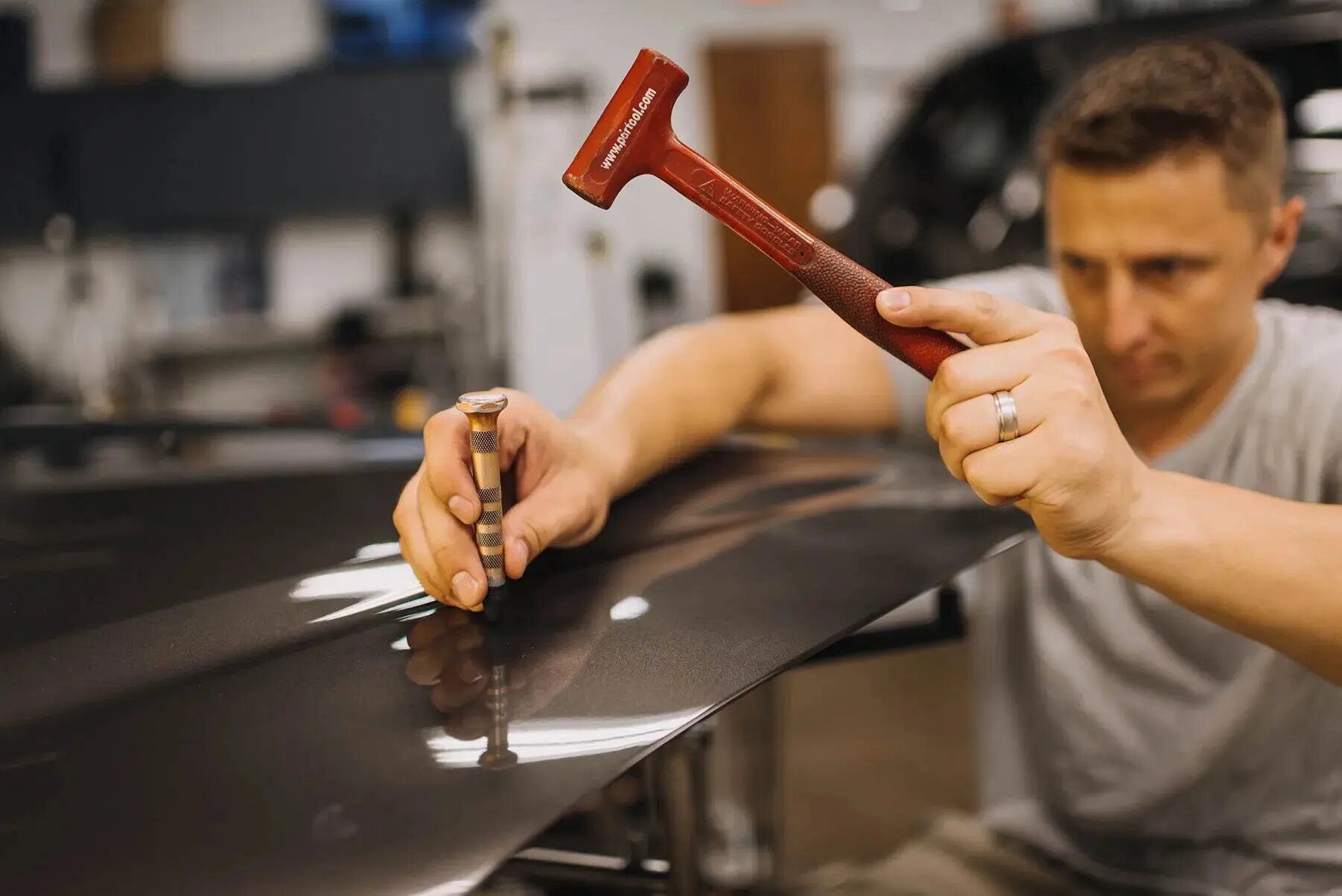
An electric pickup gives a hailstorm the same enormous flat target as any crew cab, and then adds a set of handling questions that a gas truck never raised: where the vehicle can be lifted, how it gets to the shop, what happens to its state of charge while it sits for a week, and which of its sensors need attention afterwards.
None of that makes hail repair on an F-150 Lightning exotic. It makes it a job with more boxes to tick, and the difference between a shop that ticks them and one that improvises tends to show up in the details rather than in the dents.
What hail actually touches
Hailstones deform the outer skin of body panels. They do not reach the battery pack, the drive units, the high-voltage cabling or the frame. On the overwhelming majority of hail-damaged vehicles, electric or otherwise, the damage is confined to the panels and the glass.
What is worth checking on any vehicle after a storm is the set of things that protect you rather than the things that look bad: glass, lamps, mirrors, seals and any driver-assistance warning that appeared afterwards. On an electric truck, add the charge port door and its seal to that walk-around — it is a hinged opening on a body panel, and a lifted or damaged seal is a water path into a place you do not want water. Our guide on what to do immediately after hail damage covers the photo set worth taking on the day.
Which panels take the punishment
The exposed flat surfaces do most of the collecting: the cab roof, the hood, the bed sides and the tailgate. On electric pickups with a front trunk, the hood is a lid over a storage compartment rather than a cover over an engine bay, which changes what sits behind the panel and how a technician reaches it. Configurations differ, so what is behind your specific hood is confirmed on the vehicle.
Bed sides remain the hardest common case on any pickup. Double-wall construction frequently leaves no path to the back of the outer skin, and where there is genuinely no tool access the alternatives are surface-side glue pulling or a refinish route. Repairability depends on paint condition, metal stretch, panel access and prior repairs, and panels sometimes do need replacement and refinishing — we do what is best for the vehicle rather than what keeps the job in one category.
Material matters too. Aluminum body panels have less spring-back than steel, work-harden as they are worked, and crack more readily at sharp folds, so the same dent count carries more hours. Which panels on your truck are aluminum varies by model year and configuration and is confirmed panel by panel. Our guide on aluminum dent repair explains what that changes at the tool.
Handling: the part that is genuinely different
This is where an electric truck departs from its gas equivalent, and none of it is about the dents.
- Lift points. An underfloor battery pack changes where a vehicle may safely be supported. Documented lift points exist for a reason, and putting a lift arm in the wrong place on an EV is a serious mistake rather than a cosmetic one.
- Recovery and transport. Electric vehicles are generally moved on a flatbed rather than towed with driven wheels on the road. If your truck needs collecting rather than driving in, that is worth establishing before anyone dispatches a truck.
- Weight. Electric pickups are heavy, which affects lift capacity, transport and where the vehicle can be parked inside a facility.
- State of charge. A full-vehicle hail repair typically runs about 5–10 business days in the shop. A vehicle sitting that long needs a plan for charge management, not a shrug — ask what it is before you hand the keys over.
- De-energizing requirements. Some documented procedures specify a de-energized state before particular operations. Whether yours does is a documentation question rather than a judgment call, and it is answered by looking it up for your model year.
Our broader guide on dent repair on electric vehicles covers the same ground across EVs generally. Manufacturer procedures vary by model year and configuration.
Sensors, cameras and calibration
A late-model truck carries cameras, radar units, parking sensors and trailer-assist hardware around the vehicle, and a windshield frequently mounts the forward-facing camera for lane keeping and automatic emergency braking. Hail can damage the glass those cameras look through even when it leaves the sensor itself untouched.
Two consequences. First, a cracked or chipped windshield near a camera mount is a safety item rather than a cosmetic one, and it is worth handling before the dent work is scheduled. Second, if a sensor, its mounting or the glass it sits behind is disturbed at any point, whether calibration is required is checked against the manufacturer's documentation before the vehicle is released.
Reaching the back of a cab roof skin generally means dropping the headliner, and roof rails on a great many vehicles house curtain airbag components. That work belongs in a shop with the procedure in front of the technician — not in a parking lot with a crew that arrived after the storm.
What drives the estimate
| Factor | Why it moves the number |
|---|---|
| Dent count and depth | The primary driver on any hail job; big flat panels collect more impacts |
| Panel material | Aluminum carries more hours per dent than steel |
| Panel access | Bed sides and reinforced areas may rule out working from behind |
| Broken paint | Cracked or chipped coating over a dent moves that panel to a refinish route |
| Trim and sensor removal | Adds labor, and may add a calibration step |
| Glass damage | Separate from dent work, and may itself trigger a calibration requirement |
| Prior repairs | Filler or an earlier respray can rule out paintless repair in that area |
Claim considerations on a high-value electric truck
Hail falls under the comprehensive portion of a Texas auto policy, and in Texas you choose the shop — a carrier may suggest a facility, but the decision is yours. Because each panel costs more to address on a vehicle like this, an accurate dent count matters more than usual. Outdoor light hides a large share of hail dents, so an estimate written in a driveway is worth revisiting under proper lighting; where the readings differ, the mechanism is a documented supplement rather than an argument. The customer files the claim; DentPicks helps and walks alongside you through photos, adjuster meetings, supplements and paperwork.
The total-loss question also arrives sooner on expensive vehicles, because the comparison is between the repair figure and the vehicle's actual cash value. A high per-panel repair cost can push that comparison faster than owners expect — our guide on when hail damage becomes a total loss in Texas explains how the arithmetic works here.
On rates: a Texas comprehensive hail claim itself is not surcharged, but pricing algorithms factor in collision claims, tickets, violations and overall repair costs, and premiums rise without claims too. Coverage depends on the language of your policy, and your insurer or licensed agent can confirm your specific coverage. On insurance-approved hail claims we waive the deductible up to $1,000 and arrange complimentary pickup and a loaner across DFW. Austin is trailer pickup and delivery only — there is no shop there, and a rental would come through your own rental coverage.
How the job runs at the Plano shop
- Procedure looked up before anything is touched. Lift points, trim removal paths, protected components and calibration requirements come from the documentation for your model year.
- Panel materials confirmed one by one. Aluminum and steel are different jobs with different tooling and different hours.
- Every panel read under LED line boards. Roof, hood, doors, bed sides and tailgate — outdoor light hides dents, and a crew cab has a great deal of surface to hide them in.
- Depth readings in a grid, so prior filler or a previous respray is known before quoting rather than discovered mid-push.
- Verbal quote, usually from photos, in about 30 minutes, then revised in person once the panels have been properly read.
- Live updates while the truck is with us, with finished panels checked under the same lighting used to assess the damage and signed off by whoever runs quality control — visible in your customer portal.
Delivery includes a mini exterior detail, and repairs carry a written lifetime warranty for as long as you own the vehicle — not transferable.
Common mistakes
- Assuming the electrical system makes hail repair impossible. Paintless repair works the outer skin. The real EV-specific issues are lifting, transport, charge management and documented procedure.
- Accepting a firm price from photos alone. Photos cannot show panel access, paint depth or the true dent count on a truck this size.
- Letting a post-storm crew work the vehicle outdoors. Temporary operations move through DFW neighborhoods after every hail event, and a stretched aluminum panel is not undone.
- Leaving a windshield chip until after the dent work. Glass in a camera's line of sight is the safety item, and it can carry a calibration requirement of its own.
- Not asking about parts timing before agreeing to a panel replacement. On newer platforms the wait can outlast the repair.
- Waiting through a second storm before filing. Overlapping events make it harder to establish which damage belongs to which date.
What to do next
Photograph the truck, note the storm date, check the glass, lamps, seals and charge port door, and get the panels read under proper lighting before anyone commits to a route or a price. If the vehicle needs collecting rather than driving in, say so early so it is moved appropriately.
At DentPicks in Plano we look up the documented procedure for the model year before work starts, confirm panel materials, read every panel under PDR lighting, and tell you plainly which panels can keep their factory finish. See finished work in our before and after gallery, or read how our hail repair process runs from inspection to delivery.
Frequently asked questions
Can hail damage the battery pack on an electric truck?
Hailstones deform the outer skin of body panels and do not reach an underfloor battery pack, the drive units or the high-voltage cabling. The post-storm items worth checking are the ones that protect you: glass, lamps, mirrors, seals, the charge port door seal, and any new driver-assistance warning.
Does an electric truck need to be towed to the shop on a flatbed?
Electric vehicles are generally moved on a flatbed rather than towed with driven wheels on the road. If your truck is drivable there is normally no issue. If it needs collecting, establish that before anyone is dispatched so the right equipment arrives.
What happens to the charge while my truck sits in the shop for a week?
It should be managed, not ignored. Full-vehicle hail repair typically runs about 5 to 10 business days in the shop, which is long enough for state of charge to matter. Ask what the shop's plan is before you hand over the keys — a shop that has no answer has not thought about EVs.
Why do lift points matter more on an electric pickup?
An underfloor battery pack changes where the vehicle can safely be supported, so the manufacturer publishes specific lift points. Using the wrong ones is a structural mistake rather than a cosmetic one. The documented points are looked up for the model year rather than assumed from a gas equivalent.
Will hail damage on a Lightning trigger sensor recalibration?
Not by itself. Calibration becomes a question when a sensor, its mounting or the glass it sits behind is disturbed — for example if a hail-cracked windshield carrying the forward-facing camera is replaced. Whether it is required is checked against the manufacturer's documentation before the vehicle is released.
Is a heavily hail-damaged electric truck more likely to be totaled?
The comparison is between the repair figure and the vehicle's actual cash value, and a high per-panel repair cost can reach that comparison sooner than owners expect. It is not automatic — repair figures depend on dent counts, panel materials and access, all of which need an accurate read under proper lighting first.
Can hail dents on the frunk lid be repaired paintlessly?
Often, but what sits behind the panel decides it. On electric pickups with a front trunk, the hood is a lid over a storage compartment rather than a cover over an engine bay, so the access picture differs from a gas truck. Configurations vary, so it is confirmed on the vehicle.
Sources and methodology
- After hail or windstorms: consumer tips — Texas Department of Insurance.
- Vehicle safety information — National Highway Traffic Safety Administration.
Repair, cost and timing statements that are not tied to a listed source come from DentPicks' own quoting and repair history at the Plano, TX shop. They are typical ranges and shop-floor observations, not industry statistics or promises — your vehicle, its condition, your policy language and your insurer determine your specific outcome.
Hail damage on an F-150 Lightning?
Send photos or bring it to the Plano shop. We look up the documented procedure for your model year, read every panel under PDR lighting, and tell you what is repairable before anything is authorized.