

The short answer
The main differences are time, tooling and access. Ford moved the F-150 to a largely aluminum-alloy body beginning with the 2015 model year, and aluminum has less spring-back, work-hardens faster and cracks more readily at sharp creases, so each dent takes longer. Bed sides are often double-walled with little tool access, which limits paintless repair there. Confirm which panels are aluminum on your truck, and have every panel read under reflection lighting before authorizing a route.
 Written by the DentPicks Editorial Team
Technically reviewed by Vytas Kucinskas, Founder & Master PDR Technician
Written by the DentPicks Editorial Team
Technically reviewed by Vytas Kucinskas, Founder & Master PDR Technician
Published: Aug 19, 2026 · Last reviewed: Aug 19, 2026 · 10 min read
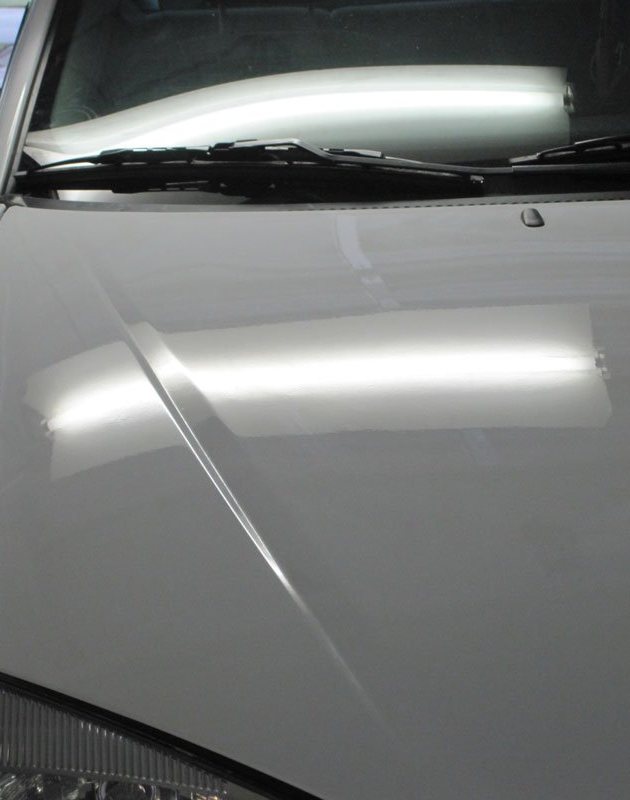
The F-150 is the most common vehicle on a North Texas job site and one of the most common in a hail claim, so the question of how its body reacts to a dent tool comes up constantly. The short answer is that the aluminum-bodied generations behave differently from the steel trucks that came before, and the difference shows up in working time, in tooling, and occasionally in whether a panel can keep its factory paint at all.
Ford moved the F-150 to a largely aluminum-alloy body beginning with the 2015 model year. Trucks from that point forward are predominantly aluminum-bodied; earlier ones are steel. Even within the aluminum generations, which specific panels are aluminum and which are not varies by model year and configuration, so a shop confirms it on your truck rather than assuming it from the year on the title.
Working out what you have
There is a rough field test any owner can do: a magnet will not stick to an aluminum body panel. Try it on a door skin, a fender and the bed side, away from any badge or trim. If it drops off cleanly, that panel is not steel.
This is a first-pass check, not a survey. Trim, liners and bonded areas can confuse it, and a mixed-material truck will give you different answers on different panels — which is precisely the point. A shop verifies material panel by panel before quoting because the metal decides the method and the hours.
How aluminum changes a paintless repair
Paintless dent repair works because sheet metal has some memory of the shape it was formed into. Steel has a lot of it. Aluminum has considerably less, and that single fact drives everything else.
- The metal stays where it is put. A push on steel is followed by a little cooperative movement. On aluminum, what you place is what you get, so the technician works in smaller, more deliberate increments.
- It work-hardens as it moves. Repeated working stiffens aluminum, so there is a limited budget of passes before the panel resists. Sequence matters as much as pressure.
- Controlled heat behaves differently. Warming is a normal part of the craft, but aluminum's usable window is narrower than steel's.
- Sharp creases carry crack risk. A hard fold from a ladder edge or a loaded pallet concentrates strain, and forcing it is how a repairable dent becomes a refinish job.
- Everything takes longer. The same dent size costs more hours on aluminum. On a hail-damaged truck with a big roof, hood and two long bed sides, that difference compounds fast.
Our guide on what makes an aluminum dent repair specialist different covers the underlying technique across brands.
Where trucks are harder than cars: access
Whether a dent can be worked from behind matters more than how big it looks, and a pickup presents access problems a sedan does not.
| Area | Typical access picture | What complicates it |
|---|---|---|
| Hood | Usually workable; inner structure limits some regions | Bracing under the skin, and creases near the leading edge |
| Cab roof | Often repairable, including heavy hail | Headliner removal, and any components routed in the roof structure |
| Doors | Generally the best access on the truck | Beltline area, intrusion beam, wiring and any airbag components in the path |
| Bed sides | The hardest common case | Double-wall construction with limited or no tool path; stake pockets and rails restrict reach further |
| Tailgate | Varies widely | Internal structure plus wiring, camera, latch and step hardware depending on configuration |
| Cab corners and rear panel | Restricted | Reinforcements and sealed areas leave little room behind the skin |
Where there is genuinely no path to the back of a panel, the alternatives are surface-side glue pulling or a refinish route. Panels sometimes do need replacement and refinishing, and the honest answer on a torn bed side is not a paintless one. Repairability depends on paint condition, metal stretch, panel access and prior repairs — our guide on deep creases and large dents covers the borderline cases.
Sensors, cameras and following the procedure
Late-model trucks carry cameras, radar units, parking sensors, trailer-assist hardware and wiring in places that a repair path may cross. That does not block a repair; it means the manufacturer's documented removal and installation procedure is followed for that specific vehicle, components are protected before trim comes out, and whether calibration is required once a sensor or its mounting is disturbed is checked against the documentation rather than assumed. Manufacturer procedures vary by model year and configuration.
The same applies to anything routed through the roof or the doors. Getting behind a cab roof skin generally means dropping the headliner, which is exactly the kind of work that belongs in a shop with the procedure in front of the technician rather than in a parking lot after a storm.
Cross-contamination matters more on a work truck
Steel particles left on aluminum can set up galvanic corrosion, which shows up much later as bubbling or staining under the finish. A shop that works both metals should keep tooling, abrasives and work areas separated.
Owners can create the same problem without a shop's help. Steel shavings from drilling or grinding in the bed, steel tool boxes bolted through aluminum without proper isolation, and steel fasteners in aluminum panels are all ways to introduce dissimilar-metal contact on a truck that works for a living. If you already have staining around an accessory mount, mention it at the inspection — it changes what a repair in that area involves.
Hail on a truck is a bigger job than hail on a car
The surface area is simply larger. A crew cab has a wide roof, a long hood, two doors per side, two bed sides and a tailgate — all of it flat, all of it facing up or outward, and much of it aluminum. A storm that leaves a sedan with a moderate dent count regularly leaves a truck with a considerably higher one, at more hours per dent.
Two practical consequences follow. First, an estimate written outdoors is worth revisiting: outdoor light hides a large share of hail dents, and on a panel this size an undercount is a meaningful sum. Second, timing. Full-vehicle hail repair typically runs about 5–10 business days in the shop, and an aluminum crew cab with a high dent count sits toward the longer end of that.
Trucks also live outdoors. A truck that sits at a job site or an unshaded lot through DFW hail season simply gets more exposure than a garage-kept car, and over a few seasons that shows up as accumulated damage from more than one storm — which is worth separating out before a claim is filed.
On the claim side
Hail is handled under the comprehensive part of a Texas auto policy, and in Texas you choose the shop — a carrier may suggest a facility, but the decision is yours. If the shop's dent count under proper lighting differs from an estimate written in daylight, the mechanism for correcting it is a supplement documented with photographs, not an argument. The customer files the claim; DentPicks helps and walks alongside you through photos, adjuster meetings, supplements and paperwork.
A Texas comprehensive hail claim itself is not surcharged, though pricing algorithms factor in collision claims, tickets, violations and overall repair costs, and premiums rise without claims too. Coverage depends on the language of your policy, and your insurer or licensed agent can confirm your specific coverage. On approved hail claims we waive the deductible up to $1,000 and arrange complimentary pickup and a loaner across DFW.
How the job runs at the Plano shop
- Material verified panel by panel. Aluminum and steel are different jobs with different tooling and different hours, and a mixed truck gets a mixed plan.
- Depth readings taken in a grid. Prior filler or a previous respray — common on a truck that has worked — changes what is possible and is better known before quoting.
- Every panel read under LED line boards, including bed sides and the tailgate, because outdoor light hides dents and a truck has a lot of surface to hide them in.
- Access tested before a route is promised. Bed sides in particular are confirmed rather than assumed.
- Verbal quote, usually from photos, in about 30 minutes, revised in person once the panels are properly read.
- Live updates through the job, with finished panels checked under the same lighting used to assess the damage and signed off by whoever runs quality control — visible in your customer portal.
Delivery includes a mini exterior detail, and repairs carry a written lifetime warranty for as long as you own the vehicle — not transferable.
Common mistakes on aluminum trucks
- Assuming a pre-2015 approach still applies. Technique, tooling and time all changed with the body material.
- Suction cups and pull-tab kits from the internet. Aluminum's low spring-back means a bad pull usually makes a low into a high plus a low. Our guide on why DIY dent kits do not work covers the failure modes.
- Mounting accessories with steel hardware straight through aluminum. Isolation matters on dissimilar metals.
- Letting a driveway crew work the truck after a storm. Temporary post-storm operations move through DFW every season, and stretched aluminum is not undone.
- Ignoring bed-side dents because "it's a work truck." Unrepaired hail damage is deconditioned at retail rates at trade-in, and on trucks the deduction is rarely small — see our guide on repairing dents before selling or trading in.
What to do next
Check a magnet on a couple of panels so you know roughly what you are dealing with, photograph the damage, and note whether the paint is broken anywhere. Then get the truck read under proper lighting before authorizing a route, particularly if bed sides or the tailgate are involved — those are the panels where access, not damage, decides the answer.
At DentPicks in Plano we confirm materials before quoting, keep aluminum tooling separated, and tell you plainly which panels can keep their factory finish and which cannot. See finished work in our before and after gallery, or read how our dent repair process runs from inspection to delivery.
Frequently asked questions
How can I tell whether my F-150 has an aluminum body?
A magnet will not stick to an aluminum panel. Try it on a door skin, a fender and a bed side, away from badges and trim. Model year is a strong indicator too, since the aluminum body arrived with the 2015 model year, but a magnet check on the actual panels is the practical test.
Why are truck bed sides so hard to repair paintlessly?
Most pickup beds use double-wall construction, so there is often no path to the back of the outer skin. Stake pockets and rails restrict what little reach exists. Where there is genuinely no tool path, the alternatives are surface-side glue pulling or a refinish route, and that is confirmed on the truck rather than assumed.
Do magnetic signs and tool trays work on an aluminum truck?
No. Magnets do not hold on aluminum body panels, which surprises owners moving from an older steel truck. It also means magnetic-mount accessories need a different attachment method, and steel fasteners through aluminum should be properly isolated to avoid dissimilar-metal corrosion.
Does hail cost more to repair on a truck than on a car?
Usually. A crew cab presents a wide roof, a long hood, four doors, two bed sides and a tailgate, so dent counts run higher, and on aluminum each dent carries more hours. Full-vehicle hail repair typically runs about 5 to 10 business days in the shop, with a heavily damaged truck toward the longer end.
Can a dent in the tailgate be repaired without paint?
It depends on where the dent sits and what is behind it. Tailgates carry internal structure plus wiring, camera, latch and step hardware depending on configuration, so access varies widely. Any removal follows the manufacturer's documented procedure, and procedures vary by model year and configuration.
Is it worth repairing hail on a work truck I plan to keep?
That is your call, but the value side is real: unrepaired hail damage is deconditioned at retail rates when a truck is traded or sold, and on pickups the deduction is rarely small. Dents with intact paint stay stable, while dents with cracked or missing paint are the ones that genuinely get worse.
Do steel shavings in the bed actually cause corrosion on aluminum?
Steel particles in contact with aluminum can set up a slow galvanic reaction that later shows as bubbling or staining under the finish. Drilling or grinding steel in the bed, and mounting steel hardware without isolation, are the common causes on working trucks. Mention any existing staining at the inspection.
Sources and methodology
- After hail or windstorms: consumer tips — Texas Department of Insurance.
Repair, cost and timing statements that are not tied to a listed source come from DentPicks' own quoting and repair history at the Plano, TX shop. They are typical ranges and shop-floor observations, not industry statistics or promises — your vehicle, its condition, your policy language and your insurer determine your specific outcome.
Hail or job-site dents on an F-150?
Bring the truck to the Plano shop, or send photos for a verbal estimate. We confirm which panels are aluminum, read every panel under PDR lighting, and tell you which ones can keep their paint.