

The short answer
Usually yes. Hail dents the narrow metal around a panoramic roof — the header, side rails and rear bow — and that metal is normally repairable by paintless methods when the paint is unbroken. The care goes into what sits underneath: the bonded seal, the opening flange the glass seats against, the drainage tubes and the shade mechanism. Broken roof glass is different and urgent. Cover it, get the vehicle under shelter, and treat it as the first line item.
 Written by the DentPicks Editorial Team
Technically reviewed by Vytas Kucinskas, Founder & Master PDR Technician
Written by the DentPicks Editorial Team
Technically reviewed by Vytas Kucinskas, Founder & Master PDR Technician
Published: Aug 19, 2026 · Last reviewed: Aug 19, 2026 · 11 min read
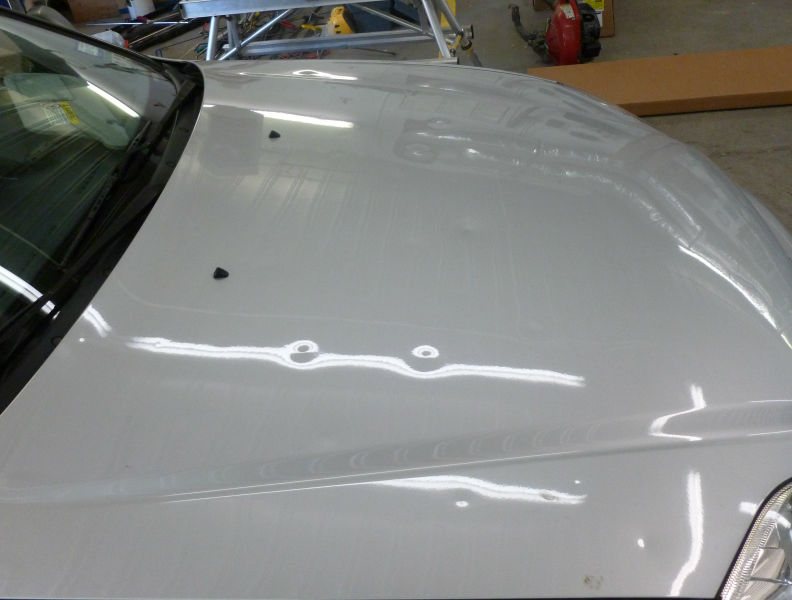
A panoramic roof changes what a hailstorm can actually do to the top of your car. On a conventional vehicle the roof is one continuous sheet of metal and the storm's job is simple. On a panoramic roof, most of that area is glass sitting in a frame, and what remains of the metal is a narrow perimeter — a front header, two side rails above the doors, sometimes a center bow, and a rear bow.
That single fact drives everything. The answer to whether hail damage around a panoramic roof can be repaired safely is usually yes, but the repair is a different job from a normal roof, the risks are different, and the checks afterward are different. Manufacturer procedures vary by model year and configuration, so this is how these assemblies are generally built, not a rule for your vehicle.
What is actually up there
A panoramic roof is a module, not a hole with glass in it. The glass panels — one fixed, one that slides, or a single large fixed pane depending on the design — are bonded or bolted into a frame assembly that is itself fastened to the body structure. Under it sit the shade mechanism and its motor, the headliner, lighting, and on many vehicles the curtain airbags running along the side rails.
Around the opening runs a drainage system: channels at the front and rear of the frame that catch water, feeding tubes that run down inside the pillars and exit under the vehicle. This is normal, by design, and it is the part most owners have never heard of until something goes wrong with it.
The remaining metal is unusual too. A conventional roof skin has a large open field in the middle — the easiest metal on the car to work. A panoramic roof's metal is almost all edge: the flanged lip that forms the opening on one side, the drip rail or side-rail fold on the other, with only a narrow strip of open field between them.
Glass and metal fail in completely different ways
Hail deforms metal in a graded way. A small stone leaves a shallow dent, a larger one leaves a deeper dent, and the panel keeps its integrity throughout. Glass has no equivalent middle ground. Automotive roof glass takes a great deal of impact and then, when it fails, fails completely — tempered glass breaking into granules, laminated glass cracking through.
This is why so many panoramic-roof vehicles come out of a serious hailstorm with a heavily dented hood, dented side rails, and glass that is completely fine. It is also why the ones where the glass did break are urgent in a way that dents never are.
The counterintuitive part: less metal, smaller roof estimate
Owners often assume a panoramic roof makes hail repair more expensive. On the roof line specifically, the opposite is frequently true. Paintless repair is priced largely by dent count and panel area, and a panoramic roof simply has less metal to dent. The same storm that would have filled a conventional roof skin with dents can only reach the narrow perimeter that remains.
What offsets it is difficulty per dent. Narrow, edge-dominated metal with a frame assembly directly beneath it is harder to reach and harder to finish than open field metal. So the roof line on the estimate is often smaller in count but higher in time per dent. Where the panoramic roof does add cost is when the glass, the frame or the seals were affected — those are not paintless items at all.
How the perimeter metal is actually repaired
Paintless repair works from behind wherever there is a route. Around a panoramic roof, that route is limited: the frame assembly, the drainage channels and the shade mechanism occupy much of the space directly under the metal, and lowering a headliner near curtain airbag hardware is a procedure-driven job rather than a quick trim pull.
In practice, dents on panoramic roof rails and headers are frequently glue-pull work: an adhesive tab bonded to the paint from outside, lifted in controlled increments, then the resulting high spot knocked back down and read against the reflection. It is a long-established technique and it works well within its limits — those limits being dent depth and how close the dent sits to a fold.
Where a route from behind does exist — often at the rear bow or in short sections of the side rail — a rod gives finer control and a better result. Which method suits which dent is decided by looking, not by rule.
On a panoramic roof, the metal is almost all edge. Edge metal is stiffer, less forgiving, and the least tolerant of an uncontrolled pull.
The risks worth being deliberate about
This is where "safely" in the question earns its place. The dents themselves are not the risk. These are:
- The bonded seal. Glass and frame are sealed to the body. Heat, prying or force applied carelessly near that seal can compromise it, and a compromised seal is a leak or a wind-noise complaint that shows up weeks later.
- The opening flange. The lip that forms the opening is what the glass and its weatherstrip seat against. Deform it and the panel no longer seats evenly — leading to wind noise, water intrusion, or a roof that binds when it opens.
- The drainage tubes. If a tube is pinched, disconnected or blocked during trim work, water that the channels catch has nowhere to go. It backs up and enters the headliner. This is a classic delayed failure.
- The shade and track mechanism. Trim work near the mechanism can leave the shade binding or the panel travelling unevenly.
- Curtain airbag hardware. Side rails carry airbag components on many builds. Disassembly follows manufacturer sequence, and that sequence varies by model year and configuration.
What has to be checked before the vehicle goes back
- Cycle the roof fully. Open, tilt, close, several times. Listen for binding, uneven travel or a changed sound at the end of travel.
- Cycle the shade. Full travel, both directions.
- Water test the drains. Water poured into the channels should exit under the vehicle at the expected points, not pool or disappear into the trim.
- Check the seal line and glass alignment. The panel should sit flush and even against its weatherstrip all the way around.
- Read the metal under line lighting. Narrow, edge-dominated panels need reflection lighting more than any other surface on the car — outdoor light on a roof rail hides almost everything.
- Road test for wind noise. At highway speed. A seal problem that is silent in the shop is not silent on the tollway.
At our Plano shop, panoramic-roof vehicles get that check sequence as a matter of course, and the finished vehicle is signed off by whoever runs quality control before hand-back — visible in your customer portal along with live updates while the vehicle is with us.
When paintless repair is not the answer
| What the storm did | Paintless candidate? | What it usually needs |
|---|---|---|
| Shallow dents on the side rail or rear bow, paint intact | Usually yes | Glue pull or rod work depending on access |
| Dent right on the opening flange | No | Body-shop assessment — the flange is a sealing surface |
| Cracked or shattered roof glass | Not applicable | Glass or module replacement; cover the opening immediately |
| Damaged weatherstrip or seal | No | Seal replacement, then a water and wind-noise test |
| Dents with chipped or cracked paint | No | Refinishing regardless of how well the metal returns |
| Frame or cassette deformation | No | Manufacturer-procedure repair or replacement |
| Roof that binds or leaks after the storm | Diagnose first | Mechanism and drainage assessment before any cosmetic work |
Getting it written into the claim properly
Roof glass, seals and drainage are the items most likely to be missed on a first estimate, because they are not visible from a walk-around and an adjuster is working through a lot of vehicles. If something is found during teardown that was not in the original estimate, that goes back to the carrier as a supplement — a normal part of the process, explained in our guide on how hail repair supplements work.
Glass may also sit under different terms than sheet metal on some policies. Coverage depends on the language of your policy, and your insurer or licensed agent can confirm your specific coverage. Get the roof photographed thoroughly before the inspection — our guides on what to do after hail damage and the adjuster inspection cover what to document.
Common mistakes
- Assuming intact glass means an undamaged roof. The rails and header still dented; they are just harder to see.
- Leaving broken roof glass uncovered "until the appointment." Every rain event after that adds water damage that was avoidable.
- Letting anyone glue-pull aggressively near the seal. The dent may come out. The seal and the flange are what you will be dealing with afterward.
- Skipping the water test. Drainage problems are silent until the first heavy North Texas storm after the repair.
- Ignoring new wind noise. It is the earliest signal that something around the opening no longer seats correctly, and it is easiest to correct straight away.
What to do next
If the glass is broken, cover it and get the vehicle under shelter today, then photograph everything and report the damage to your insurer. If the glass is intact, the roof is a scheduling problem rather than an emergency — but get the rails read under proper lighting rather than assumed to be fine.
Bring the vehicle to the Plano shop or send photos for a verbal quote, usually about 30 minutes. You will get a straight answer on which dents are paintless work, which need paint, and what the seal, drain and mechanism checks found. You can see finished panels in our before and after gallery, or read how our hail repair process runs from inspection to delivery. Full-vehicle hail repair typically takes about 5–10 business days in the shop.
Frequently asked questions
Can hail actually break a panoramic roof?
It can, though roof glass takes a lot before it fails. The difference from metal is that glass has no middle ground — it survives or it breaks through. If it broke, water intrusion into the headliner, pillars and electronics is the real cost, and covering the opening the same day matters more than the repair appointment.
Why is my roof line item smaller than I expected?
Because there is less metal to dent. Paintless repair is priced largely by dent count and panel area, and a panoramic roof replaces most of the roof skin with glass. The dents that remain are harder per dent — narrow edge metal with a frame beneath it — but there are fewer of them.
Can working on the roof cause a leak later?
It can if the work is careless. The three delayed-failure paths are a compromised bonded seal, a deformed opening flange that the glass no longer seats against evenly, and a drain tube pinched or disconnected during trim work. All three are silent in the shop, which is why a water test before hand-back matters.
What are the drain tubes and why do they matter?
Channels around the roof opening catch water by design and route it through tubes running down inside the pillars to exit under the vehicle. It is normal for water to be in there. If a tube is blocked or disconnected, that water backs up into the headliner instead — a common cause of an interior soaked well after a storm.
The roof opens with a new noise since the storm. Is that related?
Possibly. New binding, uneven travel or a changed sound at the end of travel points at the mechanism or the flange rather than the glass. Have it diagnosed before any cosmetic work — fixing dents on a roof that no longer seats correctly solves the wrong problem.
Is roof glass covered the same way as the dents?
Not always. Glass sits under different terms on some policies, and coverage depends on the language of your policy. Your insurer or licensed agent can confirm your specific coverage. Document the roof thoroughly before the inspection, since glass and seal items are the ones most often missed on a first estimate.
Do I need the headliner dropped for roof-rail dents?
Often not. Because the frame, drainage and shade mechanism occupy the space under that metal, rail dents are frequently glue-pull work from outside instead. Where a route from behind does exist, a rod gives finer control. The method is chosen by looking at the specific dent, not by rule.
Sources and methodology
- After hail or windstorms: consumer tips — Texas Department of Insurance.
- Automobile insurance guide — Texas Department of Insurance.
Repair, cost and timing statements that are not tied to a listed source come from DentPicks' own quoting and repair history at the Plano, TX shop. They are typical ranges and shop-floor observations, not industry statistics or promises — your vehicle, its condition, your policy language and your insurer determine your specific outcome.
Get the rails, seals and drains checked, not just the dents
Bring the vehicle to the Plano shop or send photos for a verbal quote. We read the perimeter metal under line lighting and water-test the drainage before anything goes back to you.