

The short answer
Keep six things: the itemized repair order showing which panels were repaired, refinished or replaced; your own before photos; the insurance estimate and any supplements; the claim number and storm date; the warranty document; and the quality-control sign-off from delivery. The itemized panel list and the before photos matter most, because a buyer, an appraiser or a future adjuster cannot reconstruct either one. Save them the day the car comes back.
 Written by the DentPicks Editorial Team
Technically reviewed by Vytas Kucinskas, Founder & Master PDR Technician
Written by the DentPicks Editorial Team
Technically reviewed by Vytas Kucinskas, Founder & Master PDR Technician
Published: Aug 19, 2026 · Last reviewed: Aug 19, 2026 · 9 min read
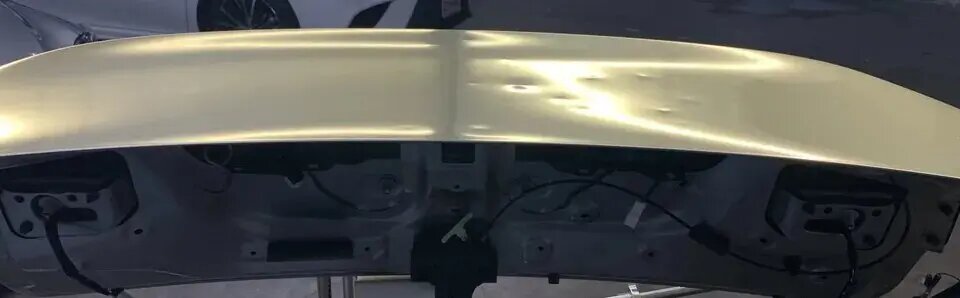
Most drivers keep the invoice from a repair for about as long as it takes to clear the glovebox. That is usually fine for an oil change. It is a genuine mistake after a dent or hail repair, because the paperwork from that job is the only thing that later proves three separate stories: what happened to the vehicle, what was done about it, and who stands behind the work.
Those three stories get asked about at three different moments — when you sell or trade the car, when you need warranty work years later, and when a second storm rolls through and an adjuster has to decide which dents are new. A folder built in ten minutes on delivery day answers all three.
Why the file matters more than people expect
A repair record does different work depending on who is reading it.
- A buyer or appraiser wants to know whether a panel was replaced or refinished, and whether the finish on the car is original. Documentation that says "paintless dent repair, original finish retained" is worth more to you than a shrug.
- A shop honoring a warranty needs to confirm the vehicle, the panels covered and the ownership. A lifetime warranty tied to your ownership is only useful if you can show the job was ours and the car is still yours.
- An adjuster on a later claim needs a line between old damage and new. Without one, the safe assumption is usually the one that costs you money.
None of this requires a filing system. It requires that you not throw away six specific things.
What to keep after a dent or hail repair
Keep these, in this order of importance:
- The final invoice or repair order, itemized by panel. The panel-by-panel breakdown is the part that matters — a single line reading "hail repair" tells a future reader nothing about which surfaces were touched or how.
- The method for each panel. Whether a panel was repaired by paintless dent repair, refinished, or replaced changes the answer to every question a buyer, an appraiser or an adjuster will ask. If your paperwork does not distinguish them, ask the shop to note it.
- Your own before photos. Wide shots of every panel plus close-ups of the worst areas, taken in daylight before the car went in. These are the ones people forget, and they are irreplaceable afterward.
- The insurance estimate and any supplements, if a claim was involved. A supplement is written when hidden or additional damage is found after the first estimate, and it is often the document that explains why the final figure differs from the first one. Our guide on how supplements work covers what they contain.
- The claim number, carrier and date of loss. Write the storm date down. It is the single field people cannot reconstruct two years later.
- The warranty document, plus whatever identifies the job on the shop's side — a repair order number, a portal login, an email confirmation.
How each record earns its place
| Document | Answers | Who asks for it |
|---|---|---|
| Itemized repair order | Which panels were touched and how | Buyer, appraiser, warranty shop |
| Before photos | What the damage actually was | Adjuster on a later claim, dealer at trade-in |
| Insurance estimate and supplements | What the carrier approved and why the number moved | You, in any billing dispute |
| Claim number and date of loss | Which storm this vehicle was in | Adjuster, carrier, future you |
| Warranty document | What is covered and for how long | The repairing shop |
| QC sign-off and delivery photos | What condition the car left in | Everyone, in the rare dispute |
What the warranty actually needs from you
DentPicks provides a written lifetime warranty on our paintless dent repair work, valid for as long as you own the vehicle. Two things follow from that sentence, and both are worth understanding before you need them.
First, it is not transferable. It covers you, the owner at the time of repair. When you sell the car, the coverage does not follow it to the next owner, so the warranty is not a selling point to hand a buyer — it is protection for you while the car is yours.
Second, it covers our workmanship on the panels we repaired. It is not a body-wide insurance policy. New damage from a later storm, a parking lot, or a different repairer's work is a new job, not a warranty claim. Neither is corrosion originating from paint that was already chipped or cracked before we started, or damage on panels that were replaced or refinished under a different scope. An honest warranty has edges, and knowing where they are saves an awkward conversation later.
What makes a warranty claim simple is identification. If you can produce the original repair order number, coverage is a two-minute lookup rather than an archaeology project.
Records, vehicle history and what actually gets reported
This is where people get the most confused, so it is worth being precise.
Paintless dent repair on its own does not create a collision record. There is no body work, no paint, no parts, and nothing is reported to a vehicle history service simply because a technician massaged metal back to shape. That is one of the practical reasons PDR is often preferable to conventional body work when a panel qualifies for it.
But two other things can appear, and they are separate from each other:
- A panel replacement can be reported. Sometimes an adjuster requires a panel to be replaced and refinished rather than repaired — badly stretched metal, damage on a panel edge, or a surface where the paint has failed. That is a parts-and-paint repair, and it can show up in vehicle history data.
- An insurance claim is its own data trail. Claim history is reported through insurance databases independently of any repair record. A comprehensive hail claim can appear even where the repair itself was pure PDR.
Keeping your paperwork is what lets you explain either one accurately. "Comprehensive hail claim, all panels repaired by PDR, original finish retained" reads very differently to a buyer than an unexplained entry, and you can only say it with confidence if you kept the itemized order.
What we hand over, and what stays in the portal
At our Plano shop, panels are read under LED reflection boards rather than in daylight, which is how dents that are invisible in a parking lot get found and documented in the first place. That inspection is where the panel list on your paperwork comes from.
Through the repair you get live updates rather than a silent week. At the end, the finished vehicle is signed off by whoever runs quality control, and that sign-off is visible in your customer portal alongside the job record — so the condition the car left in is documented, not just asserted. Download or screenshot that page on delivery day. Portals are convenient; your own copy is permanent.
Common mistakes
- No before photos. The most valuable document in the whole file is the one only you could have made, and only before the repair.
- Keeping the first estimate and not the final one. The first estimate is a starting position. The final repair order is what happened.
- Accepting a one-line invoice. "Hail repair — $X" proves you paid someone. It does not prove what was done to your car.
- Losing the storm date. Everything else can be recovered from the shop or the carrier. This one lives in your memory.
- Assuming the buyer will find nothing. Claim history is independent of repair records. Being able to explain it beats being surprised by it — see our guide on repairing dents before selling or trading in.
What to do next
Make one folder, digital or paper, named with the vehicle and the year. Put the six items in it on delivery day, not "soon." If your last repair is already behind you and the folder is thin, most of it can still be rebuilt: shops keep repair orders, carriers keep claim files, and your phone's photo library is organized by date.
If you are having work done with us, ask for the panel-by-panel breakdown before you pay — we would rather write it out than have you guess in three years. You can see finished work in our before and after gallery, or read how the process runs at our Plano dent repair shop.
Frequently asked questions
Which photos, estimates and invoices should I keep after repair?
Keep your own before photos (all four corners, each panel straight on, the roof from above, close-ups of any cracked paint, plus the odometer and VIN plate), the insurance estimate and every supplement, and the final itemized repair order — not the first estimate. If a claim was involved, write down the claim number and the date of loss alongside them.
How long should I keep hail repair paperwork?
For as long as you own the vehicle, and ideally a year past the sale. Warranty coverage on our work runs for as long as you own the car, and questions from a buyer or a later adjuster tend to arrive years after the repair rather than months.
Does the DentPicks warranty transfer to whoever buys my car?
No. The written lifetime warranty on our paintless dent repair work is valid for as long as you own the vehicle and is not transferable to a new owner. It is protection for you while the car is yours, not a feature to advertise in a listing.
Will a paintless dent repair show up on my vehicle history report?
Paintless dent repair on its own creates no collision record — no parts, no paint, nothing reported. Two separate things can still appear: a panel that an adjuster required to be replaced and refinished can be reported, and an insurance claim is its own data trail, reported independently of any repair.
I lost my repair order. Can I get another copy?
Usually yes. Repair shops keep job records, and your carrier keeps the claim file including the estimate and supplements. Ask for the itemized version rather than a summary. The one thing nobody can reissue is your before photos, which is why they are worth taking.
Do my records help if a second hailstorm hits the same car?
They help a lot. An adjuster looking at a vehicle has to separate new damage from old, and documentation showing which panels were repaired and when makes that a straightforward conversation. Without it, the ambiguity usually gets resolved in a direction that costs you money.
Should the repair order say how each panel was fixed?
Yes, and it is worth asking before you pay. "Paintless dent repair, original finish retained" and "panel replaced and refinished" mean very different things to a buyer, an appraiser and a future adjuster. A single line reading "hail repair" tells a later reader nothing.
Sources and methodology
- Automobile insurance guide — Texas Department of Insurance.
- After hail or windstorms: consumer tips — Texas Department of Insurance.
Repair, cost and timing statements that are not tied to a listed source come from DentPicks' own quoting and repair history at the Plano, TX shop. They are typical ranges and shop-floor observations, not industry statistics or promises — your vehicle, its condition, your policy language and your insurer determine your specific outcome.
Want the panel-by-panel breakdown on your repair order?
Ask us before you pay and we will write out what was done to each panel. It costs us nothing and saves you guessing three years from now.