

The short answer
Usually yes. Roof skins respond well to paintless dent repair, and a high dent count on its own is not a reason to replace the panel. Replacement becomes the right call when paint is widely cracked, when many impacts have stretched the metal, or when damage extends into the roof rails or side joints. Because a roof is welded and bonded into the body shell, replacing one is a major operation — get the panel read indoors under proper lighting before that decision is made.
 Written by the DentPicks Editorial Team
Technically reviewed by Vytas Kucinskas, Founder & Master PDR Technician
Written by the DentPicks Editorial Team
Technically reviewed by Vytas Kucinskas, Founder & Master PDR Technician
Published: Aug 19, 2026 · Last reviewed: Aug 19, 2026 · 10 min read
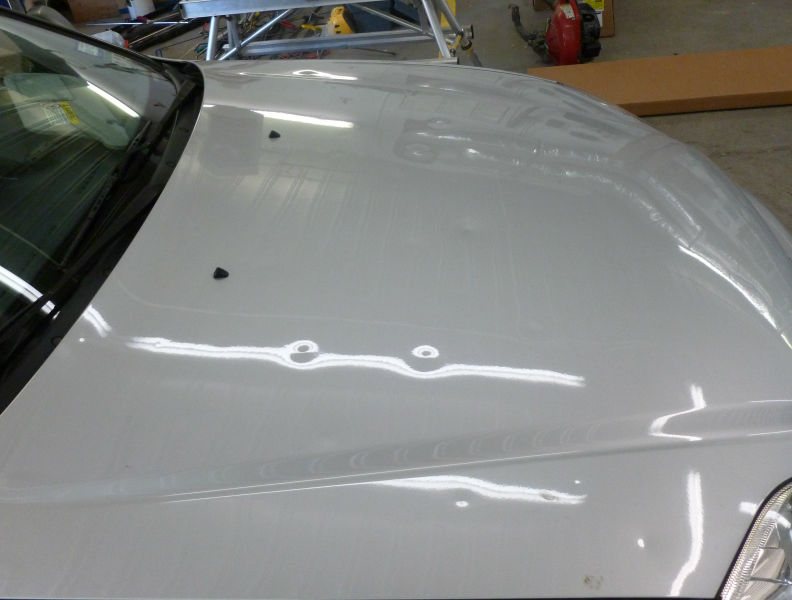
The roof takes the worst of a hailstorm. It is the largest horizontal surface on the vehicle, it has no shielding above it, and hail falls close to vertical, so almost every stone that crosses the car hits the roof square on. When customers open an estimate after a North Texas storm, the roof is usually the panel with the highest dent count — and occasionally the panel someone has written down as "replace."
In the large majority of hail cases that replacement is avoidable. Roof panels respond well to paintless repair, and swapping one is a far bigger operation than most people realize. But there are real cases where replacement is the right call, and pretending otherwise does not serve the vehicle.
What a roof panel actually is
A roof is a single large stamped sheet with very little crown — nearly flat compared with a fender or a quarter panel. That flatness is why it dents visibly: there is minimal curvature to stiffen it, so the metal has room to move when something lands on it.
Underneath, the panel is supported by roof bows running across the vehicle, usually bonded to the skin with structural adhesive rather than welded, and tied into the roof rails down each side. The rails themselves are closed, spot-welded sections and are part of the body structure. Along the sides, the roof skin is joined to the rail by welds, laser brazing or adhesive depending on the design, often hidden under a molding or a decorative strip.
Above the interior, a headliner board sits below all of this, along with the curtain airbags, wiring for lights and sensors, sun visor anchors, grab handles and, on many vehicles, a sunroof cassette that occupies a substantial share of the roof area and adds its own welded frame.
Why replacing a roof is a much bigger job than replacing a fender
A fender bolts on. A roof does not. Replacing a roof panel means separating it from the body shell — drilling or grinding spot welds, cutting bonded joints, sometimes sectioning at the rails — then fitting, aligning and rejoining a new panel, restoring corrosion protection and seam sealer, and refinishing into the pillars so the color blends. Inside, the headliner comes out, and anything mounted to it or near it, including curtain airbag components, has to be handled according to the manufacturer's procedure. Those procedures vary by model year and configuration, and they exist for good reasons.
Three consequences follow. It costs considerably more than paintless repair. It takes longer. And a panel replacement required by an adjuster can be reported on a vehicle history report, where paintless dent repair itself creates no record at all. That last point matters if you plan to sell or trade the car — see our guide on repairing dents before selling or trading in.
A roof is welded and bonded into the body shell. Replacing one is structural work with a paint job attached — not a parts swap.
What actually decides repair versus replacement
Dent count is rarely the deciding factor on its own. A roof with two hundred shallow dents is often a straightforward, if long, paintless job. What tips a roof toward replacement is a combination of these:
- Cracked or chipped paint in the dents. Paintless repair cannot restore a broken finish. Scattered chips can be addressed on their own; widespread cracking across the panel changes the whole conversation.
- Stretched metal. Very large or very sharp impacts thin the steel locally. Stretched metal does not return by pushing, and a roof with many stretched craters will not read flat under a light line no matter how much time goes into it.
- Damage concentrated over the bows and the sunroof frame. Where the skin is bonded or double-layered, impacts are sharper and access is limited, so these are the hardest dents on the panel.
- Distortion of the roof rails or joints. If the damage extends past the skin into the rail or the joint at the side, that is structural and outside the paintless discussion entirely.
- Prior repair history. A roof that has been filled or refinished before behaves unpredictably under pressure.
Repairability depends on paint condition, metal stretch, panel access and prior repairs. On a roof, all four of those tend to appear at once, which is why an in-person read under proper lighting matters more here than on any other panel.
How a roof is actually repaired
There are two access strategies, and most roofs use a mix of both.
- From behind, through the roof cavity. The headliner is lowered — often partially rather than fully — so rods can reach the underside of the skin between the bows. This gives the most precise control and the best finish quality on the open areas of the panel.
- From the outside, by glue pulling. Tabs are bonded to the paint and lifted, with knockdown taps controlling the high spots. This is how dents sitting directly over a bonded bow or the sunroof frame are addressed, because there is no cavity behind them.
Roofs are also the panel where lighting is least optional. Outdoor light hides a large share of roof dents because you are looking at a nearly flat surface from below its plane. At our Plano shop roof panels are read under LED line boards positioned above and across the panel, and the technician walks the full length of the reflection rather than working dent by dent. A roof that looks finished from the driver's door can still show a shallow wave from the tailgate.
Roof outcomes at a glance
| Roof condition | Likely path | What to expect |
|---|---|---|
| Many shallow dents, paint intact | Paintless repair | Long but routine; original paint stays on the car |
| Mixed shallow and sharp dents over the bows | Paintless, mixed methods | Rod work between bows, glue pulling over them |
| A few deep craters with stretched metal | Paintless plus possible refinish of those areas | Metal reshaped first so minimal filler is used |
| Widespread cracked or flaking paint | Refinish or replacement | The finish, not the metal, drives the decision |
| Damage into the roof rail or side joint | Body shop | Structural assessment before anything cosmetic |
| Sunroof glass broken or frame damaged | Address separately and first | Water intrusion outranks dents every time |
If your estimate already says "replace roof"
It happens. An adjuster working quickly in a parking lot, under sunlight that flattens the surface, may write a roof for replacement when a technician reading it under a light board would call it repairable — or, occasionally, the reverse. An initial estimate is a starting document, not a verdict.
The practical route is a proper inspection, documentation of what the panel actually shows, and a supplement if the findings differ from the original write-up. You file your own claim; a shop's job is to help and walk alongside you — photographs, meeting the adjuster, preparing the supplement paperwork, and explaining the reasoning. Our guide on how supplements work covers that process, and if you have been told your car may be totaled, hail damage and total loss in Texas explains how that threshold is reached. In Texas you also generally choose your own repair facility rather than being assigned one. Coverage depends on the language of your policy, and your insurer or licensed agent can confirm your specific coverage.
Common mistakes with hail-damaged roofs
- Judging the roof from the ground. Most people never actually see their own roof. Stand on a step or look from a curb at a distance with a low sun angle before assuming it is fine.
- Assuming a high dent count means replacement. Count is the least important variable. Depth, sharpness and paint condition decide.
- Letting a driveway crew work the roof. Roof access done badly means a torn headliner, disturbed airbag components or a broken trim clip you find months later. Our notes on storm-chaser operations apply doubly to roofs.
- Ignoring the sunroof drains. After a hailstorm, blocked or damaged drains put water into the headliner and carpets. Water damage costs far more than dents.
- Accepting replacement without asking why. Ask which of the five factors above drove the call. A specific answer is a good sign.
What to do next
Photograph the roof from a height if you can — a step stool, a truck bed, an upstairs window — with the sun low so the shadows show. Note whether any dent has broken paint. Then have it read indoors under proper lighting before anyone decides between repair and replacement.
At DentPicks in Plano we inspect hail-damaged roofs free of charge under PDR lighting and tell you honestly which category yours falls into, including the cases where refinishing or replacement is genuinely the better outcome for the vehicle. Paintless work carries a written lifetime warranty for as long as you own the vehicle, every panel is signed off by whoever runs quality control and visible in your customer portal, and on insurance-approved hail claims we waive the deductible up to $1,000 and arrange complimentary pickup across DFW. Finished roofs are in our before and after gallery.
Frequently asked questions
Does repairing a hail-damaged roof require removing the headliner?
Often partially, not always fully. Lowering the headliner opens the roof cavity so rods can reach the underside of the skin between the bows, which gives the best finish quality. Dents sitting directly over a bonded bow have no cavity behind them and are worked from the outside by glue pulling instead.
Will a replaced roof show up on a vehicle history report?
It can. Paintless dent repair itself creates no record, but a panel replacement required by an adjuster can be reported. That is one practical reason to have a roof properly assessed before agreeing to replacement, particularly if you plan to sell or trade the vehicle.
My estimate says replace the roof. Can that change?
Sometimes. An initial estimate written outdoors in flat sunlight can read a roof differently from a technician reading it under a light board. The route is a proper inspection, documentation, and a supplement if the findings differ. You file the claim; we help and walk alongside you through photos, adjuster meetings and paperwork. Coverage depends on the language of your policy.
Does a sunroof make roof hail repair harder?
Yes, in two ways. The cassette and its welded frame occupy a large share of the roof and create double-layer areas with no rear access, and the remaining open skin is narrower to work in. Broken sunroof glass or damaged drains should also be dealt with first — water intrusion outranks dents.
How long does a hail-damaged roof take?
The roof is usually the panel that sets the schedule, because it carries the most dents and needs access preparation and reassembly. A full-vehicle hail repair typically runs about 5–10 business days in the shop. That is a typical range rather than a guarantee.
Can I see roof damage myself?
Most owners never look at their own roof. Get above it if you safely can — a step stool, a truck bed, an upstairs window — with the sun low so shadows show. Even then, expect an indoor reading under reflection lighting to find dents that daylight hides on a nearly flat panel.
Do curtain airbags affect roof repair?
They affect how the interior is handled. Curtain airbag components run along the roof rails behind the headliner, and manufacturer procedures for working near them vary by model year and configuration. That is a solid reason not to let a driveway operation open up a roof.
Sources and methodology
- After hail or windstorms: consumer tips — Texas Department of Insurance.
- Automobile insurance guide — Texas Department of Insurance.
Repair, cost and timing statements that are not tied to a listed source come from DentPicks' own quoting and repair history at the Plano, TX shop. They are typical ranges and shop-floor observations, not industry statistics or promises — your vehicle, its condition, your policy language and your insurer determine your specific outcome.
Been told your roof needs replacing?
Bring it to the Plano shop for a free reading under PDR lighting. We will show you what the panel actually shows and help you document it if the estimate needs revisiting.