

The short answer
Yes, in most cases. Many roof hail dents are glue pulled entirely from the outside, and others are reached through openings the vehicle already has — the sunroof aperture, dome light, grab handle or visor mounts. Deeper damage may need the headliner lowered at one edge, which is normal work when clips, drains and curtain airbag wiring are handled properly. Ask which method your roof needs before the repair starts.
 Written by the DentPicks Editorial Team
Technically reviewed by Vytas Kucinskas, Founder & Master PDR Technician
Written by the DentPicks Editorial Team
Technically reviewed by Vytas Kucinskas, Founder & Master PDR Technician
Published: Aug 19, 2026 · Last reviewed: Aug 19, 2026 · 9 min read
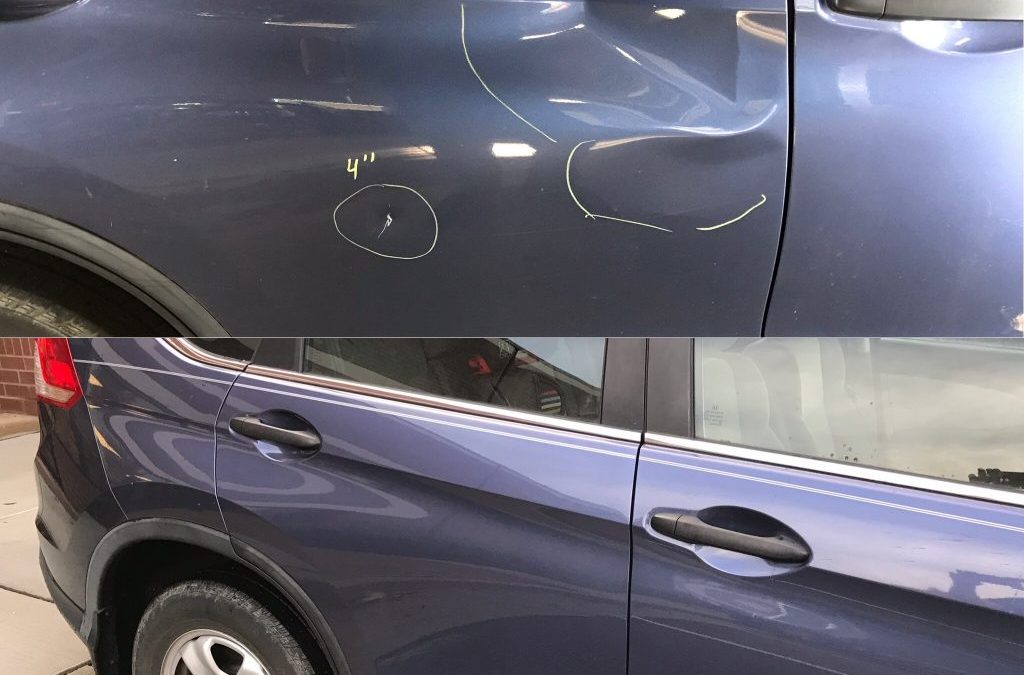
The roof takes more hail hits than any other panel, and it is also the panel customers worry about most. The concern is reasonable: on almost every modern car the roof skin has a headliner pressed up underneath it, and behind that headliner sit curtain airbags, wiring, antenna leads, dome lights and sunroof drains. If a technician has to get behind the metal to push those dents out, something has to move.
The short version is that roof hail damage is routinely repaired without damaging the headliner — but "without damaging" is not the same as "without touching." Some roofs are repaired entirely from the outside. Others need the headliner lowered at the rear edge or dropped completely. Which one your car needs is decided by the roof's construction, not by preference.
How a roof is actually reached
A roof skin is a thin panel bonded and welded to a frame of cross bows and side rails. Between those bows there are open bays; over them there is structure. That layout, plus whatever is mounted to the underside, decides the access route.
1. Glue pulling from the outside
Most modern roof hail work starts here. A tab is glued to the outside of the dent with hot-melt adhesive, the dent is drawn up with a slide hammer or a lifter, and the crown is then relaxed with a tap-down and hammer until the reflection runs straight. Nothing behind the panel is touched at all. On a car with a bonded roof, a full panoramic glass roof, or airbags running the length of the rail, this is often the only sensible method — and it is capable work, not a shortcut.
2. Rod access through existing openings
Where the shop wants a rod on the back of the metal, the first choice is always an opening the manufacturer already provided: the sunroof aperture, a dome light or console housing, a grab handle mount, a sun visor bracket, or the gap at the rear window header once trim is released. This gives real tool control on the bays it can reach, with the headliner still in the car.
3. Lowering the headliner
On badly hit roofs, the headliner is lowered — usually at one end rather than removed. Pillar trim, grab handles, visors and sometimes the rear seat belt trim come off, and the board is eased down a few inches so rods can reach the forward or rear bays. This is normal, documented work. The risk is not that it cannot be done; it is that a rushed technician creases the headliner board, breaks brittle plastic clips or scuffs the fabric on a seat rail.
4. Drilled access
Some shops drill small access holes in the roof bows or the header. Done to the vehicle maker's allowance and sealed properly afterward, this is a recognized method. Done casually, it is a corrosion path and something a future buyer's inspector can find. We would rather glue pull a stubborn bay than drill a structure we do not have documented permission to open, and if drilling is the only route, that should be a conversation with you first, not a surprise on the invoice.
What actually threatens a headliner
Headliner damage on a hail job almost never comes from the dent removal itself. It comes from the handling around it.
- Old, brittle clips. Ten-year-old Texas plastic is not the same material it was when it left the factory. Heat-cycled clips snap instead of releasing.
- Creasing the board. A headliner is molded fiberboard with fabric bonded to it. Bend it past its shape once and the crease is permanent.
- Dirty hands and tool grease. A fabric ceiling shows every mark, and headliner fabric does not clean well.
- Sunroof drain tubes. Pull a drain off its nipple while dropping the board and the car leaks the next time it rains — often weeks later, with no obvious cause.
- Refitting under tension. A board put back with a missing clip sags in the middle of a July afternoon.
Curtain airbags change the sequence, not the answer
On nearly every vehicle sold in the last twenty years, an inflatable curtain sits folded along the roof rail behind the headliner edge, with its own wiring and connectors. That does not make roof PDR unsafe — it makes it a job with a required order. Power gets isolated and given the manufacturer's stand-down time before rail-adjacent trim comes off, connectors are unplugged rather than tugged, the module and its harness are kept clear of tools, and everything is reseated and verified before the vehicle moves. Manufacturer procedures vary by model year and configuration, which is exactly why the sequence is looked up rather than remembered. The same discipline applies inside doors — we cover that in our guide on how paintless dent repair works.
When the roof is not a PDR job
Being honest about this is part of the trade. A roof goes past paintless repair when:
- The paint is broken. Cracked or chipped finish in the dent means refinishing, not PDR. Pushing the metal will not restore coating.
- The metal is stretched. Very sharp, deep hail strikes on a thin roof skin can stretch the panel so that pushing it up leaves an oil-canning waviness that never fully settles.
- The hit count is extreme. Hundreds of overlapping dents across a thin roof can reach a point where the panel reads acceptably from six feet but never truly flat, and replacement is the better vehicle outcome.
- Structure is deformed. Damage that has moved a bow or a rail, not just the skin, is body-shop work.
Roof replacement is a bonded-and-welded refinish job and, unlike PDR, it is the kind of repair an adjuster can require and a vehicle history report can carry. We do what is best for the vehicle rather than defending one method, and where that is push-to-paint or replacement, we say so at the inspection. Our comparison of PDR against traditional body shop repair lays out where the line usually falls, and deep creases and large dents covers the stretch question in more depth.
What good roof work looks like at hand-back
| Check | Good | Poor |
|---|---|---|
| Reflection across the roof | Lines run straight end to end | Lines ripple or pinch over old dent centers |
| Dent centers | Flat, no bright spot | High spots that flare the light |
| Headliner edge | Sits tight to all trim | Gaps, sag, or a visible crease line |
| Trim and clips | Flush, no rattle over bumps | Loose grab handle, missing clip cap |
| Dash after start-up | No airbag or restraint warning | Any new restraint-system light |
| Sunroof | Opens, closes and seals normally | Binding, wind noise, or a later leak |
In the Plano shop the roof is read under LED line boards rather than daylight, because a parking lot hides roughly the sort of shallow damage that reflection lighting makes obvious in a second. The finished roof is signed off by whoever runs quality control before the vehicle moves to delivery, and that sign-off is visible in your customer portal alongside the live updates during the repair.
Common mistakes customers make
- Judging the roof from the ground. Most people never see their own roof properly. Ask to see it on a lift or with a step, under the shop's lighting.
- Assuming a mobile unit can do a full roof. A driveway setup rarely has the lighting or the space to drop a headliner safely.
- Not reporting a rattle. A trim clip noticed in the first week is a five-minute fix. Six months later it is a puzzle.
- Ignoring a wet headliner. Damp fabric after a repair points at a drain tube, not at the dents.
What to do next
Have the roof inspected under proper lighting before anyone quotes it, and ask which access method the shop intends to use and why. If the answer is glue pull only, ask how the deeper dents over the bows will be finished. If the answer is dropping the headliner, ask about airbag handling and clip replacement.
We inspect hail-damaged roofs free of charge at the Plano shop and give you a straight answer on whether it is a PDR roof, a paint roof or a replacement roof. Quotes are usually verbal, from photos, in about 30 minutes. On insurance-approved hail claims we waive the deductible up to $1,000 and arrange complimentary pickup across DFW, and a full-vehicle repair typically runs about 5–10 business days in the shop. You can see finished panels in our before and after gallery or read how dent repair in Plano runs from inspection to hand-back.
Frequently asked questions
Does the headliner have to come out completely for roof hail repair?
Rarely. Most roofs are finished from the outside or through existing openings, and where rod access is needed the board is usually eased down at one end rather than removed. Full removal is reserved for heavily hit roofs where several bays need tool access.
Can a car with a panoramic glass roof still get PDR?
The metal around the glass can be repaired normally — the header, the rails and the rear section. The glass itself cannot be dent repaired; hail-cracked panoramic glass is a replacement. Panoramic cars also give less roof metal to work with, so a quote is best made in person.
Will roof PDR set off or damage the curtain airbags?
Not when the sequence is followed. Power is isolated with the manufacturer's stand-down time before rail-adjacent trim comes off, connectors are unplugged rather than pulled, and the system is verified before delivery. Manufacturer procedures vary by model year and configuration, so the procedure is looked up per vehicle.
Is drilling access holes in the roof normal?
Some manufacturers allow it in specific locations, and properly sealed drilled access is a recognized method. It should never be a surprise. Ask before authorizing work whether any holes will be made, where, and how they will be sealed against corrosion.
Why does my roof look fine outside but the shop found dozens of dents?
Daylight scatters. Shallow hail dents only reveal themselves when a straight light line reflects across the panel and bends. Roofs are read under LED line boards for exactly this reason, which is why the found dent count often surprises people.
When is a hail-damaged roof replaced instead of repaired?
When paint is cracked in the dents, when the metal is stretched enough that the panel will not settle flat, when hit density is extreme on a thin skin, or when a bow or rail has moved. Replacement is a refinish job and, unlike PDR, can appear on a vehicle history report.
My headliner sags after a hail repair — is that related?
It can be. A board refitted with a broken or missing clip, or creased while being lowered, will show up as sag or a gap at the trim edge, often after the first hot week. Report it to the shop — it is a warranty conversation, not a new repair.
Sources and methodology
- After hail or windstorms: consumer tips — Texas Department of Insurance.
Repair, cost and timing statements that are not tied to a listed source come from DentPicks' own quoting and repair history at the Plano, TX shop. They are typical ranges and shop-floor observations, not industry statistics or promises — your vehicle, its condition, your policy language and your insurer determine your specific outcome.
Want your roof read properly before anyone quotes it?
Bring the car to the Plano shop or send photos. We read the roof under PDR lighting, tell you whether it is a paintless job, a paint job or a replacement, and explain exactly which access method it needs.