

The short answer
Cosmetic hail damage stops at the outer panels: the frame, suspension, brakes and drivetrain are untouched and the car drives normally. Damage beyond cosmetic usually means broken glass, cracked lamp lenses, lifted seals, a compromised sunroof or affected sensors — not a bent structure, which hail rarely causes. A third category matters too: cosmetic dents that still need conventional repair because paint cracked or metal stretched.
 Written by the DentPicks Editorial Team
Technically reviewed by Vytas Kucinskas, Founder & Master PDR Technician
Written by the DentPicks Editorial Team
Technically reviewed by Vytas Kucinskas, Founder & Master PDR Technician
Published: Aug 19, 2026 · Last reviewed: Aug 19, 2026 · 9 min read
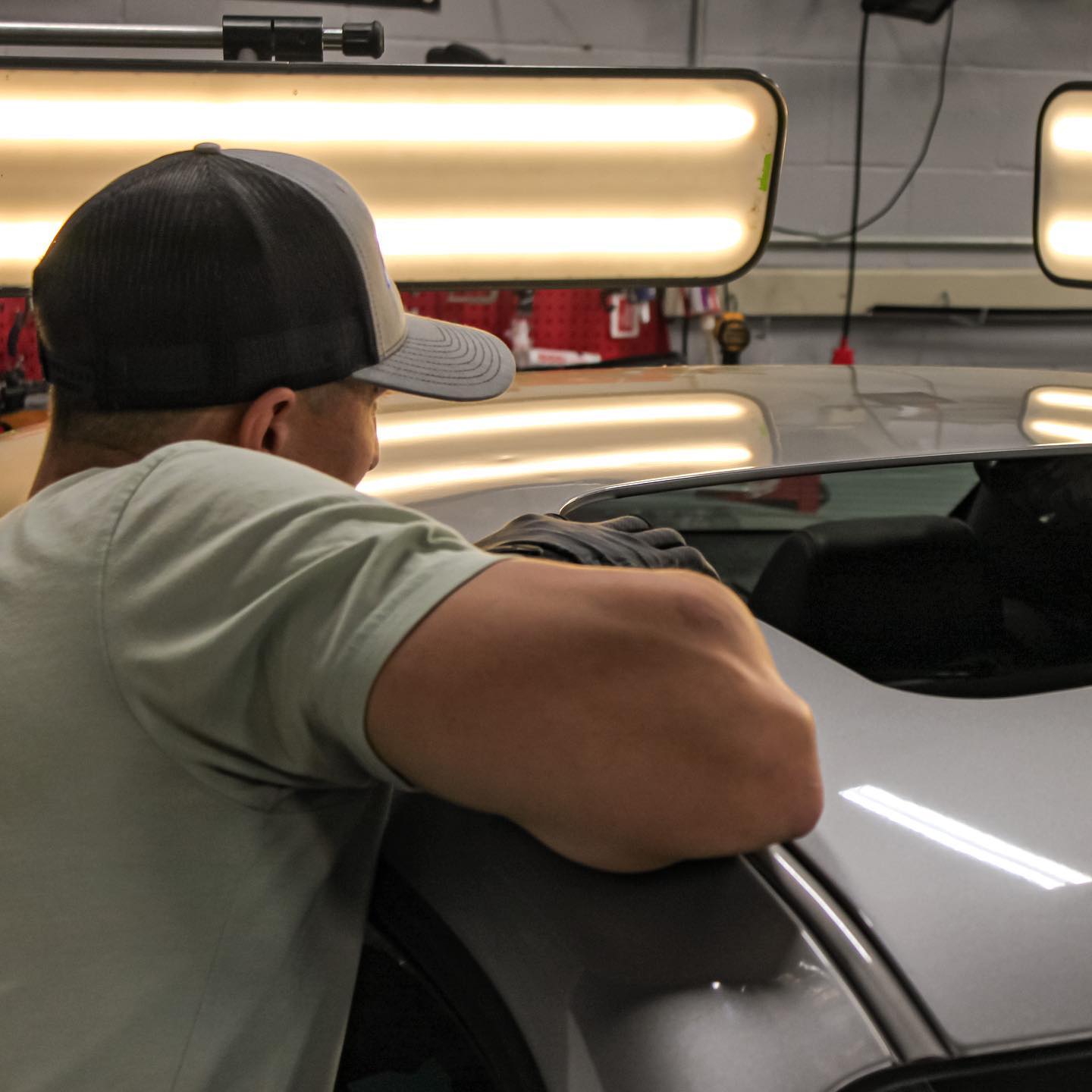
"Cosmetic" is the word most drivers hear after a hailstorm, usually from someone glancing at the car for ten seconds. It is the right word most of the time — but it gets used as a synonym for "nothing to worry about," and that is where people get into trouble. Cosmetic damage still costs money, still shows up at trade-in, and still has to be repaired properly. And a small share of hail damage genuinely is not cosmetic.
The distinction matters for three practical reasons: it decides how the vehicle gets repaired, it decides how your insurer treats the claim, and it decides whether anything goes on the vehicle's record.
What cosmetic hail damage actually means
Cosmetic damage is damage confined to the outer skin of the vehicle. Hailstones deform the exterior panel — the roof, hood, deck lid, doors, fenders, quarter panels — without reaching anything that carries load, holds the car together, or makes it work. The frame, unibody structure, suspension, brakes and drivetrain are untouched. The car drives exactly as it did before the storm.
In a cosmetic hail event the paint film usually stays intact too. The metal underneath has been pushed, but the coating has stretched with it rather than cracking. That is the condition paintless dent repair exists for: the technician works the metal back from behind, the factory finish comes with it, and nothing is filled or refinished.
None of that makes cosmetic damage trivial. A roof, hood and deck lid full of dents is a substantial repair, an appraiser will decondition an unrepaired car at retail rates, and Texas heat cycling works at any place the paint did crack. Our guide on what Texas heat does to unrepaired dents covers that side of it.
What would make hail damage structural
Structural damage means something that contributes to the vehicle's strength, geometry or safety performance has been affected. Hail almost never does this to the body structure, because the energy arrives as many small impacts spread across the outer skin rather than as one concentrated load into a rail or pillar. Storm severity varies enormously, and NOAA's Storm Prediction Center and the NWS Fort Worth office are the authorities on what any given DFW event actually produced.
What does happen, and what people often mean when they say a car has more than cosmetic damage, falls into a few categories:
- Broken glass. Windshield, rear glass, sunroof or side windows. This is a safety item, and on many vehicles the forward-facing camera for lane keeping and automatic emergency braking is mounted to the windshield.
- Damaged lighting. Cracked headlamp or tail lamp lenses let water into the housing and are a night-driving problem immediately.
- Compromised seals. Lifted weatherstripping, damaged roof-rail mounting points or a sunroof that no longer seats. Water entering a cabin does more expensive damage than the dents ever will.
- Sensor and camera disruption. Anything mounted in or behind damaged glass or trim can be affected. Manufacturer procedures vary by model year and configuration.
- Stretched or torn metal. Heavy, sharp impacts can stretch a panel beyond what the metal will return, or crack the paint film over the dent. That is a repair-method question rather than a structural one, but it moves the panel out of straightforward PDR.
The middle ground everyone forgets
Between "cosmetic" and "structural" sits the category that actually drives most repair decisions: cosmetic damage that cannot be fixed cosmetically. A dent can be entirely confined to the skin and still need conventional repair and refinishing — or a new panel.
This is worth understanding before anyone tells you PDR is always the answer. Panels sometimes do need replacement and refinishing, and we do what is best for the vehicle rather than forcing every job through one method. Our guides on deep creases and large dents and PDR versus a traditional body shop go through where the boundary sits.
How the difference is established
Not from the parking lot. Shallow hail dents are invisible in daylight because sunlight is diffuse — it scatters across the panel and fills the dent instead of revealing it. Whether damage is cosmetic, and whether it is repairable cosmetically, both depend on detail you cannot see outdoors.
At our Plano shop the vehicle comes inside and every panel is read under LED line boards. The technician watches a straight reflected line bend where the metal is displaced, then reads each dent for depth, sharpness and paint condition. Vertical panels get read from several angles because a dent that hides at eye level appears from a crouch. Roof rails, sunroof surround, weatherstripping, lamps and glass are walked separately from the sheet metal — that is the part of the inspection that finds anything genuinely non-cosmetic.
One note on order of operations, offered as a DentPicks shop-floor observation rather than an industry rule: on hail vehicles we assess glass and seals before we count dents, because a leak found on day one is a different conversation than a leak found after the car has sat outside for a month.
Cosmetic or not: what changes
| Cosmetic hail damage | Damage beyond cosmetic | |
|---|---|---|
| Typical repair | Paintless dent repair, factory finish retained | Conventional repair and refinishing, glass or lamp replacement, sometimes panel replacement |
| Safe to drive? | Normally yes | Depends on what is damaged — glass, lamps and seals are the real safety items |
| Vehicle history record | PDR itself creates no record | An adjuster-required panel replacement can be reported |
| Time in the shop | Full-vehicle hail repair typically about 5–10 business days | Longer where refinishing, parts or calibration are involved |
| Insurance handling | Comprehensive claim; coverage depends on the language of your policy | Same claim, but a bigger estimate that may push a high-mileage or older vehicle toward a total-loss evaluation |
That last row is the one people are usually really asking about. When the estimate climbs relative to what the vehicle is worth, the carrier may evaluate it as a total loss — our guide on hail damage and total loss in Texas explains how that decision is made.
Common mistakes and red flags
- Hearing "it's only cosmetic" and doing nothing. Cosmetic still costs you at trade-in, and unrepaired damage with cracked paint gets worse.
- Hearing "this is structural" from someone who has not put the car under lighting. Hail rarely reaches structure. Ask what specifically they found.
- Anyone promising every panel can be done paintlessly before reading the metal. That promise is made before the facts are known, and it usually gets walked back mid-repair.
- Ignoring the sunroof and roof rails. They sit on the most-impacted surface and they are the water paths.
- Driveway repairs after a storm. A bad pull stretches metal and turns a PDR panel into a refinish. See our guide on storm-chaser operations.
What to do next
Assume the metal damage is cosmetic until someone has actually looked, and check the things that are not metal first: glass, lamps, mirrors, seals and the sunroof. Photograph the vehicle, note the storm date, and notify your insurer promptly — the Texas Department of Insurance recommends prompt notice after hail or windstorm events, and most policies require it. Your insurer or licensed agent can confirm your specific coverage.
Then get the panels read properly. At DentPicks in Plano the inspection is free, quotes are usually verbal from photos in about 30 minutes, and we will tell you plainly which panels are PDR work and which are not. Finished work is signed off by whoever runs quality control and visible in your customer portal, and carries a written lifetime warranty for as long as you own the vehicle. You can see the results in our before and after gallery or read how our hail repair process works end to end.
Frequently asked questions
Can hail damage bend a car's frame?
It is very unlikely. Hail arrives as many small impacts spread across the outer skin rather than one concentrated load into a rail or pillar, so the energy stays in the panel. If someone tells you a hailstorm bent your structure, ask exactly what they measured and where.
Does cosmetic hail damage show up on a vehicle history report?
Paintless dent repair itself creates no record. What can be reported is an adjuster-required panel replacement, because that goes through the claim and parts process. If avoiding a record matters to you, ask which panels are planned for replacement before work starts.
Is a dented roof structurally weaker?
The roof skin is not what carries roof load — the pillars and the structure beneath do that, and hail does not reach them. The items worth checking on a dented roof are the sunroof glass and seal, the roof-rail mounting points and the weatherstripping around the opening.
Why would a cosmetic dent still need paint?
Because the paint cracked, the metal stretched past what it will return, the dent sits on a body line or panel edge, or there is no access from behind. Repairability depends on paint condition, metal stretch, panel access and prior repairs — which is why the read happens under lighting before anyone promises a method.
Can cosmetic hail damage total my car?
It can. Totalling is an economic decision, not a structural one: when the estimate climbs relative to the vehicle's value, the carrier may evaluate it as a total loss even though every dent is cosmetic. That is most common on older or high-mileage vehicles.
Should I repair cosmetic hail damage if I plan to sell soon?
Usually yes. Appraisers decondition unrepaired hail damage at retail rates, so the deduction at trade-in often exceeds what the repair would have cost through a comprehensive claim. Your insurer or licensed agent can confirm your specific coverage.
How do I know which category my damage falls into?
Have the panels read under proper lighting and have the non-metal items walked separately — glass, lamps, mirrors, roof rails, sunroof surround and weatherstripping. Daylight hides shallow dents and tells you nothing about paint condition inside them.
Sources and methodology
- Severe weather storm reports — NOAA Storm Prediction Center.
- NWS Fort Worth forecast office — National Weather Service.
- After hail or windstorms: consumer tips — Texas Department of Insurance.
Repair, cost and timing statements that are not tied to a listed source come from DentPicks' own quoting and repair history at the Plano, TX shop. They are typical ranges and shop-floor observations, not industry statistics or promises — your vehicle, its condition, your policy language and your insurer determine your specific outcome.
Find out what your hail damage actually is
Send photos or bring the car to Plano. We read every panel under the line boards and tell you honestly which damage is cosmetic, which is not, and which panels need more than PDR.