

The short answer
Yes, all three. Hail dents rail tops, cracks rail end caps, can disturb the sealed mounting points where rails pass through the roof, breaks sunroof glass, dents the sunroof surround and drip channel, and lifts or displaces weatherstripping. These items sit outside the panel-by-panel dent count, so they get missed unless someone walks them separately. Check the headliner and carpets for damp before settling a claim.
 Written by the DentPicks Editorial Team
Technically reviewed by Vytas Kucinskas, Founder & Master PDR Technician
Written by the DentPicks Editorial Team
Technically reviewed by Vytas Kucinskas, Founder & Master PDR Technician
Published: Aug 19, 2026 · Last reviewed: Aug 19, 2026 · 9 min read
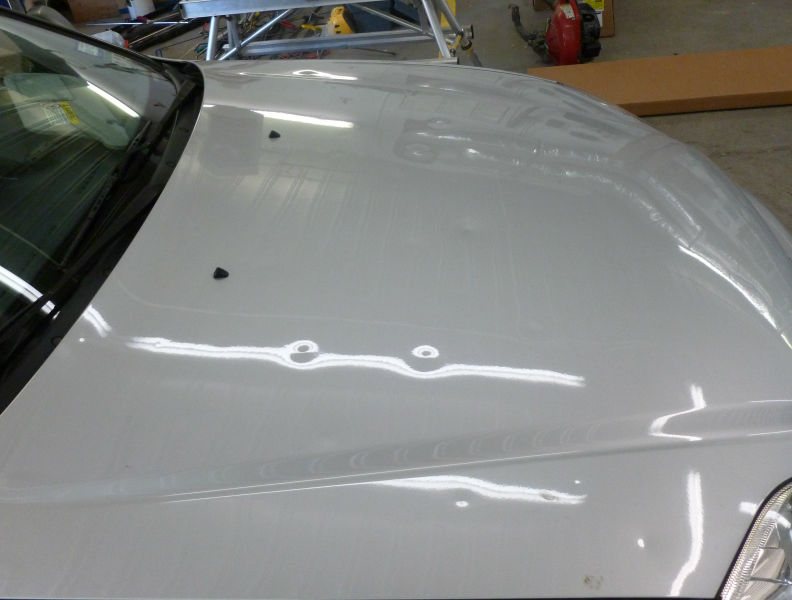
Hail claims get built around panels — roof, hood, deck lid, doors, fenders, quarters. That is where the dents are and that is where the estimate comes from. What routinely gets skipped is everything sitting on top of those panels: roof rails and their mounting points, the sunroof glass and its surround, and the rubber weatherstripping that keeps the cabin dry.
This matters because those items live on the most-impacted surface of the vehicle and because the damage they take is the kind that gets worse. A dent with intact paint is stable. A seal that no longer seats is a slow water leak, and water inside a cabin costs more to put right than any amount of dented sheet metal.
Yes — and here is what actually gets hit
Hail can damage all three, though in different ways and with different consequences.
Roof rails and crossbars
Roof rails are usually aluminum or a composite over an aluminum core, and they sit proud of the roof where nothing shields them. Common storm outcomes are dented or flattened rail tops, cracked or split plastic end caps, scuffed or chipped rail finish, and — less obviously — disturbed mounting points where the rail bolts through the roof.
That last one is the item worth attention. Rail mounting points pass through the roof skin and are sealed. A hard impact directly on or beside a mount can distort the local metal enough to break that seal, and the leak shows up as a damp headliner rather than as anything visible from outside. Aftermarket rack feet clamped to factory rails add another set of points to check.
Sunroof glass and the sunroof surround
Sunroof glass is tempered and it does break in severe storms, usually all at once into the cabin. Panoramic roofs present a much larger glass area and consequently a larger target.
The less dramatic and more common outcome is damage around the glass rather than to it: dents in the sheet-metal surround, a distorted drip channel, or a track and seal that no longer let the panel close flush. A sunroof that seats slightly differently after a storm is worth investigating, because sunroof drainage relies on channels and drain tubes that only work when everything sits where it was designed to sit.
Weatherstripping and trim seals
Rubber absorbs impact rather than denting, so weatherstripping itself is rarely destroyed by hail. What happens instead is that the seal gets lifted, displaced, or pinched — or the metal channel it clips into gets dented, so the rubber no longer sits square. Windshield and rear glass moldings, door top seals on frameless-window cars, and the seal around the roof opening are the usual candidates. Debris driven by storm wind can also nick or tear a seal edge.
Why these get missed on the first estimate
Three reasons, and all three are avoidable.
- They are not sheet metal, so they are not on the panel count. A hail estimate is built panel by panel from dent counts and size bands. Rails, seals and glass surrounds sit outside that structure and have to be added deliberately.
- The damage is often not visible from standing height. Rail tops, the sunroof surround and the drip channel are all above eye level on most SUVs and trucks.
- Leak symptoms lag the storm. A seal that no longer seats may not produce a wet headliner until the next heavy rain, by which point the claim may already be settled.
A checklist you can run yourself
- Get above the roof. Stand on a step or curb. Look along the rails at a low angle so the light rakes across them, not straight down.
- Press each rail end cap. Cracks in the plastic show as a flex or a click that was not there before.
- Run a hand along every seal. Roof opening, door tops, windshield and rear glass moldings. Anything that lifts, rattles, sits proud or has moved out of its channel is a water path.
- Cycle the sunroof. Open and close it fully. Listen for new noise, watch whether it seats flush, and check that the shade still tracks.
- Feel the headliner. Press along the roof opening and the A-pillars. Damp fabric after a storm means water is already getting in.
- Check the carpets and the spare well. Water that enters at the roof drains down and pools low.
- Photograph everything you find, from above and close in, before anyone estimates the vehicle.
How each item usually gets repaired
| What was damaged | Typical approach | Notes |
|---|---|---|
| Dented roof skin around the rails | Paintless dent repair where access allows | Rails may need removal for access, which is normal and should be in the estimate |
| Dented aluminum rail body | Often replacement rather than repair | Aluminum work differs from steel — see our aluminum guide |
| Cracked rail end caps | Replacement of the cap | Small part, easy to overlook, easy to add to a supplement |
| Disturbed rail mounting point | Metal correction plus resealing | The leak risk item; worth confirming in writing |
| Broken sunroof glass | Glass replacement | Check the track and surround at the same time |
| Dented sunroof surround / drip channel | PDR where access allows, otherwise conventional repair | Access from behind is limited here; repairability depends on paint condition, metal stretch, panel access and prior repairs |
| Lifted or displaced weatherstripping | Reseat, or replace the seal | Fix the dented channel first or the new seal sits wrong too |
Where the rail body itself is aluminum, repair options narrow — our guide on aluminum dent repair explains why the metal behaves differently. Manufacturer procedures vary by model year and configuration, so the assessment has to happen on your vehicle rather than by rule of thumb.
Getting it into the claim
If these items were not in the original estimate, that is what a supplement is for. Supplements are routine on hail claims — the first estimate is written quickly, and damage found once panels are accessed gets added. Our guide to how hail repair supplements work walks through the process, and the adjuster inspection guide covers how to raise these items on the day.
Two things make a supplement straightforward: photographs taken under proper lighting at the time of inspection, and a written damage record that listed the item as a separate line rather than folding it into a panel. The Texas Department of Insurance publishes consumer guidance on handling auto claims after hail and windstorms, and coverage depends on the language of your policy — your insurer or licensed agent can confirm what yours includes.
Common mistakes and red flags
- Settling the claim before the next heavy rain. Leaks announce themselves late. Get seals inspected properly rather than waiting for evidence.
- Accepting an estimate with no line items above the sheet metal. If rails, sunroof surround and seals are not mentioned, they were not looked at.
- Letting anyone remove roof rails without noting the seals. Rails come off for panel access regularly; the mounting seals have to go back correctly.
- Running the car through a brush wash after a storm. Lifted trim and loose seals are exactly what a brush catches.
- Driveway repair offers after a DFW storm. Nobody assesses a sunroof drain in a parking lot. See our guide on storm-chaser operations.
What to do next
Run the checklist above today, while the storm date is still fresh, and photograph anything you find before an estimate is written. If the headliner or carpet is damp, treat that as the priority item — it outranks the dents. Our guide on what to do after hail damage covers the rest of the first-week sequence.
Then have the whole vehicle read properly, roof furniture included. At DentPicks in Plano inspections are free, quotes are usually verbal from photos in about 30 minutes, and rails, sunroof and seals are inspected as their own pass rather than assumed. Finished work is signed off by whoever runs quality control and visible in your customer portal, with a written lifetime warranty for as long as you own the vehicle. See the standard of finish in our before and after gallery, or read how our hail repair process runs.
Frequently asked questions
How do I know if hail broke a roof seal?
Usually you do not see it — you feel it. Press the headliner along the roof opening and A-pillars, and check the carpets and spare well after the next heavy rain. Damp fabric after a storm means water is getting in, and the entry point is often well away from where the water shows up.
Do roof rails have to come off for hail repair?
Often yes, to reach the roof skin from behind. That is normal and should appear in the estimate, along with resealing the mounting points. Ask that removal and resealing are written down rather than assumed.
Can a dented roof rail be repaired or does it need replacing?
It depends on the material and the shape of the damage. Many rails are aluminum or composite over aluminum, which limits repair options, so replacement is common. Manufacturer procedures vary by model year and configuration, so the call is made on your vehicle rather than by rule.
My sunroof closes but sounds different since the storm. Is that a problem?
Worth investigating. A panel that no longer seats the same way can mean a dented surround, a distorted drip channel or a displaced seal. Sunroof drainage depends on channels and drain tubes working as designed, so a small change in fit can become a leak.
Can I add roof rails and seals to a claim that is already estimated?
That is what a supplement is for, and supplements are routine on hail claims. It goes much more smoothly when the items were photographed under proper lighting and written as separate lines in the damage record rather than folded into a panel.
Does hail damage rubber weatherstripping itself?
Rarely. Rubber absorbs impact instead of denting. What usually happens is the seal gets lifted, pinched or pushed out of its channel, or the metal channel it clips into is dented so the seal no longer sits square. Fixing the channel comes before fitting a new seal.
Is a wet headliner covered under a hail claim?
Water damage resulting from a covered hail event is often handled under the same comprehensive claim, but coverage depends on the language of your policy. Report it promptly and document when you found it — your insurer or licensed agent can confirm your specific coverage.
Sources and methodology
- After hail or windstorms: consumer tips — Texas Department of Insurance.
- Automobile insurance guide — Texas Department of Insurance.
Repair, cost and timing statements that are not tied to a listed source come from DentPicks' own quoting and repair history at the Plano, TX shop. They are typical ranges and shop-floor observations, not industry statistics or promises — your vehicle, its condition, your policy language and your insurer determine your specific outcome.
Have the roof furniture checked, not just the panels
Bring the car to Plano and we will walk the rails, sunroof surround, drip channels and seals as their own inspection pass — and write down anything we find so it can go into your claim.