The short answer
Yes, in most cases. Clean, dry paint reflects light cleanly, and shallow hail dents only show up as distortions in a reflection. Use a hand or touchless wash, dry it fully, and skip wax or spray sealant, which soften the contrast. Do not pressure-wash if paint is chipped, trim is lifted or glass is cracked, and avoid brush tunnels entirely. If there is no time, come dirty rather than delaying.
 Written by the DentPicks Editorial Team
Technically reviewed by Vytas Kucinskas, Founder & Master PDR Technician
Written by the DentPicks Editorial Team
Technically reviewed by Vytas Kucinskas, Founder & Master PDR Technician
Published: Aug 19, 2026 · Last reviewed: Aug 19, 2026 · 9 min read
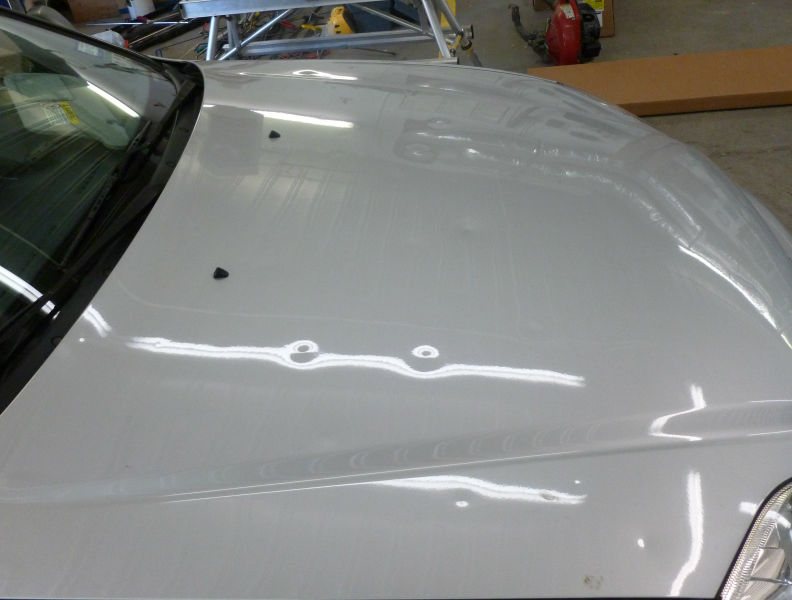
Yes, in almost every case — and it makes a bigger difference to the outcome than most owners expect. A hail inspection is a reading of reflections, and dirt is the enemy of a clean reflection. A dusty panel scatters light, road film mutes it, and dried water spots throw shadows that look enough like small dents to muddy the read.
There are a few situations where you should skip the wash, or wash differently, and one very common mistake that can genuinely make your inspection worse. Both are worth five minutes of your time before you drive over.
Why a clean panel reads better
Hail dents are shallow, smooth depressions. Nobody sees the dent itself; they see the way it bends a reflected line. Technicians create that reflection with LED line boards or matrix lighting and sweep it across the panel, watching for places where the straight lines stop being straight.
Anything sitting on top of the paint interferes with that. Dust diffuses the reflected edge so shallow dents lose contrast. Road film dulls the surface. Bug residue and tar specks create their own small distortions. Hard-water spots — very common after a storm followed by a hot afternoon — leave circular mineral rings that read as texture. None of this makes an inspection impossible; it just costs accuracy at exactly the shallow end of the damage range, which is where dents are missed.
The same logic applies to the photos you send. If you want a useful ballpark quote from pictures, wash the car first. Photographs of a dirty roof are the single most common reason a remote estimate has to be revised later.
What a wash does not do
Two worries come up regularly, and neither holds:
- Washing does not reduce your claim. Clean paint does not hide hail damage — it reveals it. Every estimator on both sides of a claim would rather look at a clean car.
- Washing does not destroy evidence. Hail damage is deformation in metal, not residue on the surface. Nothing about a normal wash removes it. What genuinely matters for your claim is documentation and the storm date, which our guide on what to do after hail damage covers.
When to skip the wash, or change it
In those cases, wash by hand with a hose at normal pressure, or skip the wash and let the shop see the car as it is. A vehicle with broken paint and loose trim is still perfectly inspectable dirty; it is not still perfectly sealed after a pressure washer.
The other one to avoid outright is an automatic tunnel wash with rotating brushes or cloth strips. Those apply real mechanical force to panels and trim. On a car with lifted moldings, a cracked mirror housing or a loose roof rail, that force can turn a small problem into a large one — and brush marks on damaged clearcoat do not help anyone's read of the paint.
The right kind of wash before an inspection
- Hand wash or touchless. Two buckets and a clean mitt, or a touchless automatic bay. No brushes.
- Normal water pressure. Rinse rather than blast, especially around trim, seals, glass edges and any dent where the paint is open.
- Get the horizontal panels properly clean. Roof, hood, trunk or tailgate. These carry most hail damage and are the panels people skimp on.
- Dry it fully. This is the step that gets skipped, and it matters. Air-drying in North Texas leaves mineral spots that read as surface texture. Use a clean microfiber or a blower.
- Do not apply wax, sealant, glaze or spray detailer. Fillers and glosses can visually soften shallow dents and make an accurate read harder. Clean and bare is what you want.
- Leave tire and trim dressings off too. Slick overspray on adjacent panels is one more thing between the light and the paint.
- Time it close. The evening before or the morning of. A wash three days and two dust storms ago is not a clean car.
Wash options compared
| Option | Before a hail inspection? | Why |
|---|---|---|
| Hand wash, hose pressure, dried properly | Best choice | Clean reflective surface, no mechanical force, no water driven past seals |
| Touchless automatic bay | Good | No brushes; just dry the car afterwards rather than driving off wet |
| Self-serve pressure wand | Only if paint and trim are intact | Fine on sealed dents; risky at broken paint edges and lifted moldings |
| Brush or cloth tunnel wash | Avoid | Mechanical force on damaged trim, seals and clearcoat |
| Wash plus wax or spray sealant | Avoid before inspection | Gloss and fillers reduce contrast on shallow dents |
| No wash at all | Workable, not ideal | Inspection still happens; shallow damage is simply harder to read |
The rest of the prep, which matters as much
A clean exterior is one part. The things that actually shorten your appointment are these:
- Clear the roof. Remove cargo boxes, bike racks, magnetic signs and anything strapped on. Those cover the panel that takes the most damage.
- Empty the trunk or bed. Trunk lids and tailgates get inspected and often need access from behind.
- Take valuables and clutter out of the cabin. Roof repairs frequently require dropping the headliner, so interior access is real.
- Bring your claim number and policy details if you have filed. If an adjuster is meeting you at the shop, our guide on how the adjuster inspection works explains what that appointment covers.
- Note the storm date. Not the day you noticed the damage — the day the hail fell.
- Flag pre-existing damage yourself. Old dings, a previous repair, a panel that has been painted. Saying so up front keeps the storm damage cleanly separated in the estimate.
For what happens after the repair is scheduled, our guide on PDR appointment preparation and aftercare covers the full sequence.
Washing before you take your own photos
Most owners photograph the car twice: once for their insurer, and once for a shop that is quoting remotely. Both sets benefit from a clean vehicle, and the technique is the same in each case.
Wash and dry first, then shoot in the right light. Overcast daylight or the hour after sunrise works far better than harsh midday sun, which turns panels into glare sheets. Get your eye and the camera low, so you are looking across each panel rather than down at it, and let a hard-edged reflection — a building line, a fence, a garage door frame — fall across the paint. Photograph every panel wide, then take close-ups of representative dents, and include a shot of the roof taken from a step stool or the open doorway if you can do it safely.
One warning specific to storm season: after a major DFW hailstorm, crews go door to door offering free washes, free inspections and on-the-spot repairs. A free wash is not the problem; what follows it can be. Our guide on spotting storm-chaser operations covers the signs worth knowing before you hand anyone your keys or your claim number.
Common mistakes
- Waxing the car to make it look presentable. Understandable, counterproductive. You are adding gloss over exactly the shallow damage that needs contrast.
- Running it through a brush tunnel with lifted trim. The most expensive five dollars in hail season.
- Pressure-washing chipped dents. You can lift more coating off an already-open spot in seconds.
- Washing and then leaving it to air dry in the sun. Mineral spotting undoes most of the benefit.
- Delaying the inspection because you have not had time to wash. A dirty inspection beats a delayed one every time. Come as you are.
What to do next
If your paint, glass, trim and seals came through the storm intact, give the car a gentle hand or touchless wash the day before, dry it properly, skip the wax, and clear the roof and trunk. If anything is chipped, cracked or lifted, rinse gently or leave it — the inspection works either way and the vehicle stays sealed.
At DentPicks the inspection itself is free, and panels are read indoors under LED line lighting rather than in a parking lot, which is why surface cleanliness makes a visible difference. If you would rather start remotely, send washed, well-lit photos and most quotes come back verbally in about 30 minutes. You can see how the whole job runs on our hail repair page, and every finished vehicle is re-read under the same lighting and signed off by whoever runs quality control, visible in your customer portal.
Frequently asked questions
Will washing my car hurt my hail claim?
No. Hail damage is deformation in the metal, not residue on the surface, and nothing in a normal wash removes it. Clean paint reveals more damage, not less. What matters to a claim is prompt notice, a documented storm date and good photographs.
Should I wax or polish the car before the inspection?
No. Waxes, glazes and spray detailers add gloss and can visually fill shallow depressions, which is exactly the wrong thing when a technician is trying to read subtle distortions. Save any of that for after the repair is finished.
Is an automatic car wash safe after hail damage?
A touchless bay is fine. A tunnel with rotating brushes or cloth strips is not, because it applies real mechanical force to trim, moldings, mirror housings and roof rails that a storm may already have loosened. Damaged clearcoat also marks more easily under brushes.
Should I clean the inside of the car too?
Worth doing. Roof repairs often require dropping the headliner, and trunk or tailgate work needs access from behind, so an empty trunk and an uncluttered cabin genuinely speed the job. Remove roof cargo boxes, bike racks and magnetic signs as well — they sit on the most damaged panel.
What if it rains again before my appointment?
Rain itself is fine; it is what dries on the paint that hurts. Mineral spotting from hard water leaves rings that read as surface texture. If the car gets wet the night before, a quick rinse and a proper dry in the morning restores the surface.
Can I just send photos instead of bringing the car in?
For a ballpark, yes — most quotes are verbal, from photos, in about 30 minutes. Wash and dry the car first and shoot at a low angle in soft light. Photos will not settle exact dent counts, panel access or whether paint is broken inside the dents; those need a read under proper lighting.
Sources and methodology
- After hail or windstorms: consumer tips — Texas Department of Insurance.
Repair, cost and timing statements that are not tied to a listed source come from DentPicks' own quoting and repair history at the Plano, TX shop. They are typical ranges and shop-floor observations, not industry statistics or promises — your vehicle, its condition, your policy language and your insurer determine your specific outcome.
Book the inspection, washed or not
Hail inspections in Plano are free and read under LED line lighting. A clean car helps, but a dirty one still gets an honest scope — do not delay over it.