

The short answer
The roof, hood and decklid or tailgate take the most hail damage because they face the sky and are large, thin, mostly unsupported panels. Wind-driven hail adds upper door skins, fenders, quarter panels, mirrors and glass. Glass, lamp lenses, trim and weatherstripping matter more than dent count, because those are the safety and water-intrusion items. Check them before you count anything, then have the panels read under proper lighting.
 Written by the DentPicks Editorial Team
Technically reviewed by Vytas Kucinskas, Founder & Master PDR Technician
Written by the DentPicks Editorial Team
Technically reviewed by Vytas Kucinskas, Founder & Master PDR Technician
Published: Aug 19, 2026 · Last reviewed: Aug 19, 2026 · 9 min read
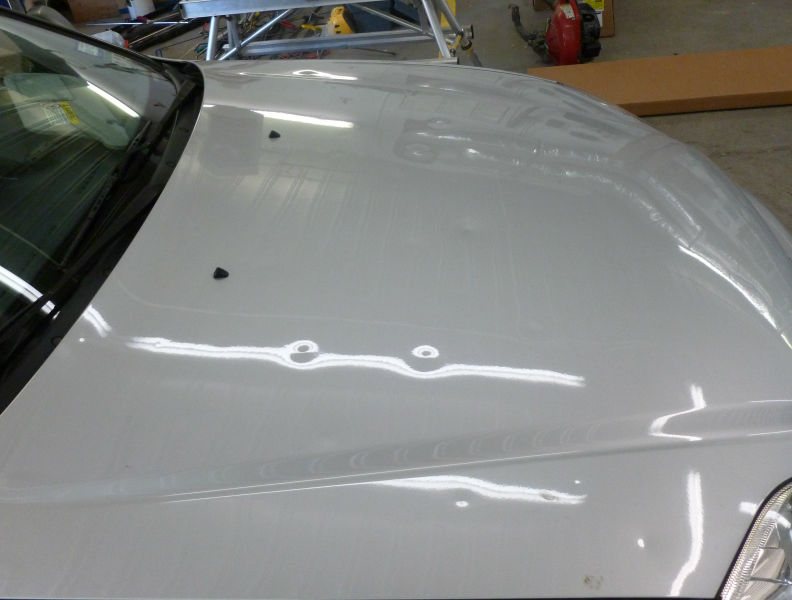
Hail falls, so the parts that face the sky take the worst of it: the roof, the hood and the decklid or tailgate. That much is obvious. What is less obvious is that these three panels are also the hardest for an owner to inspect, the most expensive to get wrong, and — in the case of the roof — the one most people never look at at all.
Wind changes the picture. A storm with strong outflow drives hail sideways, and suddenly doors, fenders, quarter panels, mirrors and glass are in the firing line too. That is why the panel list on a hail estimate is often longer than owners expect, and why two cars in the same storm can carry damage on completely different parts.
The vulnerability order
| Part | Why it is exposed | What tends to go wrong |
|---|---|---|
| Roof | Largest flat, sky-facing, mostly unsupported span | Highest dent count on almost every hail car; owners rarely see it from ground level |
| Hood | Large span, often aluminum, faces up and forward | Heavy denting; aluminum holds dents more stubbornly than steel |
| Decklid / tailgate | Flat, sky-facing, thin gauge | Dense dent fields; badges and spoilers complicate access from behind |
| Upper door skins and quarter panels | Exposed once hail is wind-driven | Angled, elongated dents; doubles the panel count on an estimate |
| Glass — windshield, sunroof, rear | Brittle, and the windshield sits at an angle facing the storm | Chips that run into cracks; a genuine safety item, not cosmetic |
| Lamp lenses | Plastic, sealed housings | Hairline fractures that break the seal; condensation appears days later |
| Mirrors | Protrude, and often carry cameras or blind-spot hardware | Cracked housings, broken glass, disturbed sensors |
| Trim, moldings and weatherstripping | Thin plastic and rubber, mounted at panel edges | Lifting, cracking and detachment — water paths into the cabin |
| Sensor and camera housings | Grille, windshield mount, rear hatch, mirrors | Impact or panel distortion can affect aim; recalibration may be required |
The roof is the panel that matters most
On nearly every hail-damaged vehicle we read in the shop, the roof carries the highest dent count. It is the largest single sky-facing surface, it is usually the thinnest gauge on the car, and much of it is an unsupported span that dishes easily.
It is also the panel almost nobody inspects. From the ground you see a foreshortened sliver of it, and the reflection you are looking at is sky, which washes out exactly the distortion you are trying to detect. Standing on a curb or a step and sighting across the roof at a shallow angle in low sun is the single most useful thing an owner can do after a storm.
The roof is also where the repair method gets decided. Paintless dent repair needs access to the back side of the panel, and the roof has a headliner, bonded reinforcement bows, sometimes a sunroof cassette, sometimes antenna and camera hardware. Whether that access exists — and what has to come out to get it — is a real part of the estimate, not a formality.
Glass is the safety item
Dented metal is a scheduling problem. Damaged glass is not. A windshield chip that looks trivial in the driveway runs into a full crack with the first cold morning or the first pothole, and on many modern vehicles the forward-facing camera for lane keeping and automatic emergency braking is mounted to the windshield. Damage in that area, or a windshield replacement, can affect a driver-assistance system you rely on in traffic. Whether recalibration is required, and how it is performed, varies by model year and configuration.
Sunroofs deserve a separate mention. Sunroof glass is comparatively exposed, and a dented roof skin can distort the surrounding drain path. A vehicle that sat through a storm and has a damp headliner is telling you something more expensive than dents.
Materials change the answer
Vulnerability is not purely geometric. What the panel is made of matters as much as where it sits.
- Aluminum is widely used for hoods and, on some vehicles, for entire bodies. It work-hardens as it deforms, holds a dent more stubbornly, and has less spring-back than steel, which changes the repair approach and the time involved. Our guide on aluminum dent repair covers what that means in practice.
- High-strength steels in modern bodies resist denting better but are also less forgiving to reshape.
- Composite and plastic panels on some tailgates, fenders and bumper covers behave differently again — they may not dent at all, or may crack rather than deform.
- Adhesive-bonded and foam-backed structures, increasingly common on roofs and hoods, restrict access to the back of the panel and can force a different method.
Manufacturer procedures vary by model year and configuration, which is why materials questions are answered on the specific vehicle rather than from a model name.
Why you cannot judge this in a parking lot
A hail dent is shallow, wide and soft-edged. It casts no shadow line and changes no color, so your eye detects it only through the distortion it puts in a reflection. Outdoor light is diffuse and gives a panel almost nothing to reflect, which means a large share of the dents on your car are genuinely invisible on your driveway.
In the shop the vehicle is cleaned enough to read cleanly and pulled under LED line boards — parallel bright lines projected across the surface at a shallow angle. Every deformation bends a line. That is when a panel-by-panel count becomes possible: hood, roof, decklid or tailgate, each fender, each door, each quarter, recorded with dent count and size band.
The panels most likely to be damaged are the same panels you are least able to inspect. That is not a coincidence — both facts come from them facing the sky.
This is the practical difference between a photo quote and an in-person inspection. Photos are enough to tell you whether you have a real hail event and roughly what scale of claim it is, and that verbal figure usually comes back in about 30 minutes. The written estimate follows the in-person read, because a photograph of a roof reflecting sky is close to useless for counting.
The storm record and the vehicle are separate questions
The NOAA Storm Prediction Center severe weather reports and the NWS Fort Worth/Dallas office establish that a hail-producing storm crossed an area on a date, and roughly what stone sizes were reported. That is useful for a date of loss. Radar-derived hail swath maps go further and model probable hail size across a grid — but they are estimates, and they do not know whether your car was garaged, sheltered on one side or facing into the wind. Which of your panels are damaged is established by inspecting the panels.
A walk-around order that finds the important things first
- Glass first. Windshield, sunroof, rear, sides. Sight across at an angle; chips hide when you look straight on.
- Lamps and mirrors. Cycle every light with someone watching. Look for hairline cracks and internal condensation.
- Trim and seals. Run a hand along roof rails, A-pillar trim, door moldings and window seals. Anything lifted or rattling is a water path.
- Interior. Feel the headliner and carpets for damp.
- Roof. Get elevated and sight across it in low sun. This is where the dent count lives.
- Hood, decklid, then verticals. Same low-angle sighting, panel by panel.
- Dash. Start the car and read for new warnings or driver-assistance faults.
Common mistakes
- Skipping the roof. It is the highest-count panel on most hail cars and the one owners consistently miss.
- Treating glass as cosmetic. It is the one genuine safety item in most hailstorms.
- Ignoring lifted trim. Water in a cabin costs far more than the dents around it.
- Assuming vertical panels are clean. Wind-driven hail routinely damages doors and quarters, and missing them means a short estimate.
- Letting a driveway crew work the roof. A bad pull on a thin, bonded roof panel stretches metal and can force a repaint — see our guide on spotting storm-chaser operations.
What to do next
Check glass, lamps, mirrors and seals first, because that is where the safety and water-intrusion problems live. Then look at the roof properly, from an angle, in low light. Photograph every panel, note the storm date against the NOAA and NWS Fort Worth records, and report to your insurer promptly. Then get the vehicle read under proper lighting so nothing is missed on the panels you cannot see.
At DentPicks in Plano the inspection is free, the panel read happens under PDR lighting, and the finished vehicle is signed off by whoever runs quality control — visible in your customer portal. Full-vehicle hail repairs typically take about 5–10 business days in the shop. See how the process runs on our hail repair page, or read our guide on what to do immediately after hail damage.
Frequently asked questions
Which panel usually has the most hail dents?
The roof, on nearly every hail-damaged vehicle we read. It is the largest sky-facing surface, usually the thinnest gauge on the car, and much of it is unsupported span. It is also the panel owners inspect least, because from ground level you only see a foreshortened sliver reflecting sky.
Can hail damage a car's sensors or cameras?
It can. Forward cameras mount to the windshield, radar sits behind grilles and badges, and mirrors often carry blind-spot hardware. Impact or panel distortion can affect aim, and recalibration may be required after glass or panel work. Manufacturer procedures vary by model year and configuration.
Do hailstorms damage bumpers?
Less often than metal panels. Bumper covers are flexible plastic that absorbs impacts without holding a dent, though large or jagged hail can crack or scuff them, and any sensors mounted behind them are worth checking.
Is a dented roof a structural problem?
In almost all cases, no. The roof skin is a cosmetic panel; the pillars carry roof loads. The exceptions worth checking are sunroof glass, roof-rail mounting points and the weatherstripping around openings, where a leak does more damage than the dents.
Why does my estimate include doors when hail falls from above?
Because storm outflow winds drive hail sideways, often at 40 to 60 mph. Angled hail hits upper door skins, fenders and quarter panels, and those dents tend to be elongated in the direction the wind was blowing. Wind-driven storms roughly double the panel count on an estimate.
Are aluminum panels more vulnerable to hail than steel?
Not necessarily more vulnerable, but different to repair. Aluminum work-hardens as it deforms, holds a dent more stubbornly and has less spring-back, so the same dent takes a different approach and more time. Many hoods are aluminum, and some vehicles use it for the whole body.
What should I check first after a hailstorm?
Glass, lamps, mirrors, trim and weatherstripping, in that order, plus a hand on the headliner and carpets. Those are the safety and water-intrusion items. Dents are a scheduling problem; a cracked windshield near a camera mount or a lifted seal letting water in is not.
Sources and methodology
- Severe weather storm reports — NOAA Storm Prediction Center.
- NWS Fort Worth/Dallas forecast office — National Weather Service.
- Vehicle safety information — National Highway Traffic Safety Administration.
Repair, cost and timing statements that are not tied to a listed source come from DentPicks' own quoting and repair history at the Plano, TX shop. They are typical ranges and shop-floor observations, not industry statistics or promises — your vehicle, its condition, your policy language and your insurer determine your specific outcome.
Cannot see your own roof properly?
That is the panel that usually carries the most damage. Bring the car to Plano for a free read under PDR lighting, or send photos for a verbal figure in about 30 minutes.