

The short answer
Yes. Paintless dent repair is performed from behind the panel, so nothing touches the coated surface and the coating comes back untouched. The exceptions are front-side techniques: glue pulling, the solvent used to clean adhesive, localized heat and any polishing pass will disturb the coating where they are applied. Tell the shop the car is coated before the estimate so those methods are planned rather than improvised.
 Written by the DentPicks Editorial Team
Technically reviewed by Vytas Kucinskas, Founder & Master PDR Technician
Written by the DentPicks Editorial Team
Technically reviewed by Vytas Kucinskas, Founder & Master PDR Technician
Published: Aug 19, 2026 · Last reviewed: Aug 19, 2026 · 8 min read
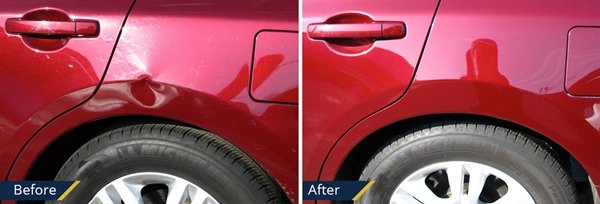
People who have paid for a ceramic coating tend to be protective of it, and reasonably so. It is a real investment, it took a full day of prep to apply, and the first instinct when a dent appears is to assume that any repair will undo it. In the case of paintless dent repair, that instinct is mostly wrong — but not entirely, and the exceptions are worth knowing before the car goes in.
The short version: the part of the repair that fixes the dent happens on the side of the panel your coating is not on. The part that can affect a coating is everything that touches the outer surface — adhesive, solvent, heat and polish.
What a ceramic coating actually is
A ceramic coating is a liquid, typically silica-based, that cures into a hard, glossy, water-shedding film sitting on top of the factory clear coat. It is a layer above the paint, not a change to the paint. It adds gloss and makes the surface easier to clean; it is not armor, and it does not stop a hailstone from moving metal.
Two properties matter for dent repair. First, it is thin and it lives on the outside, which means anything abrasive applied to the surface will remove it locally. Second, it is deliberately low-energy and slippery — that is the whole point of the water beading — and slippery surfaces are exactly what adhesives struggle to grip.
Why paintless repair and ceramic coatings are basically compatible
Classic paintless dent repair is done from behind the panel. A technician reaches through an access point, places a tool tip on the back of the deformation and relieves the metal in small, controlled movements while reading the reflection off the front surface under a line board. Nothing touches the outside of the panel during that work except light.
A coating is untouched by that process. It also, incidentally, helps: a coated panel throws a very clean reflection, and reading a dent is entirely a matter of reading reflections. Our explanation of how paintless dent repair works covers why the reflection is the whole diagnostic instrument.
So for a door ding on an accessible panel with the paint intact, a ceramic coating changes essentially nothing about the repair or the result.
Where the coating is genuinely at risk
The risk sits in four specific techniques, all of which involve the outer surface:
- Glue pulling. When a panel has no rear access — many hoods with sound deadening, some roof structures, bonded areas — technicians attach tabs to the outside with hot-melt adhesive and pull from the front. On a coated surface, the glue has less to grip, so pulls can release early or require more aggressive adhesive.
- Adhesive removal. Releasing and cleaning up hot-melt residue involves solvent. Isopropyl-based cleaners are routine in bodywork and are also the standard way detailers strip a coating before reapplication. That is not a coincidence.
- Heat. Warmth is used to help release glue tabs and, on some work, to relax the panel. Coatings have thermal limits, and localized heat concentrated in one spot is not the same as a hot afternoon in a Plano car park.
- Polishing. Any finishing pass to level a slight crown or clean up glue haze is, by definition, abrasive. Wherever a machine polisher runs, the coating in that area is gone.
How a coated vehicle should be handled
- Flagged at intake. The coating goes on the job notes with the rest of the vehicle's condition, so it is not discovered by the technician holding a glue gun.
- Rear access preferred wherever it exists. If the panel can be worked from behind, that is the route — no adhesive, no solvent, no polish.
- Glue pulling planned, not improvised. Where the front is the only way in, the affected area is agreed with you in advance, and you are told plainly that the coating in that footprint may need reapplying.
- Cleanup kept local. Solvent stays on the tab footprint rather than being wiped across half a panel.
- No reflex polishing. Delivery on a coated car means a mini exterior detail without abrasive correction, unless you have asked for it.
- Sign-off you can see. Finished work is signed off by whoever runs quality control and visible in your customer portal, alongside live updates while the car is with us — including a note of any area where the surface was worked from the front.
What to expect by damage type
| Situation | Effect on the coating |
|---|---|
| Door ding, rear access available, paint intact | None — the work happens behind the panel |
| Hail across accessible panels, paint intact | Usually none, though a coated surface is worked more slowly because reflections are sharper |
| Dent needing glue pulls on the outer surface | Coating in the tab footprint likely disturbed; plan on spot reapplication there |
| Repair finished with a polishing pass | Coating removed wherever the pad ran; that area needs recoating |
| Paint chipped or cracked inside the dent | Refinishing means the coating over that area is gone regardless — coating is applied to paint, not to primer |
| Panel replaced or refinished | New surface, no coating; reapplication is a separate job after the paint has cured |
Coating warranties and reapplication
Many professional coatings come with terms from the installer that involve periodic inspections or approved maintenance products. Those terms differ from product to product and installer to installer, and no repair shop can tell you what yours says. Read the paperwork, or call the installer, before a repair that will touch the surface.
Reapplication itself is usually a small job when it is a small area. A coating can normally be applied to a spot rather than the whole car, though a fresh patch of coating next to a two-year-old one can read slightly differently in direct sun until it weathers in. If a full panel has been refinished, coating that panel is done after the paint has properly cured, which is a timing question for the painter rather than the detailer.
Common mistakes on coated cars
- Not mentioning the coating. By far the most common. Techniques get chosen at the panel, and nobody can plan around something they were not told.
- Assuming the coating protected the metal. It did not. Coatings resist chemical etching and make washing easier; they do not resist impact. Hail dents a coated panel exactly as readily as an uncoated one.
- Asking for a full polish at delivery. On a coated car that request removes the thing you paid for. If the car is coated, a wash and a mini exterior detail is the correct finish.
- Recoating the same day as a refinish. Fresh paint needs to cure first. Rushing this is how a coating fails early.
- Letting a driveway operation glue-pull a coated hood. Aggressive adhesive plus uncontrolled solvent on a coated surface is a bad combination, and it is a common shortcut after a storm.
What to do next
If the paint is intact and the dent is on a panel with rear access, a ceramic coating is a non-issue — the car comes back with the same coating it arrived with. If the damage sits somewhere that will need front-side work, you want that discussed and priced before the job starts, along with a clear picture of how much surface area is involved.
Bring the car to the Plano shop or send photos and we will usually give a verbal quote in about 30 minutes; tell us it is coated in the same message. For a full hail vehicle the same principle scales up — see how our hail repair process runs, or read our notes on preparing for a PDR appointment and aftercare, which cover washing and care in the days around a repair. You can also look at finished panels in our before and after gallery or ask us directly through the contact page.
Frequently asked questions
Does a ceramic coating protect against hail dents?
No. Coatings resist chemical etching, staining and light marring, and they make the car easier to wash. They add no meaningful impact resistance. A coated panel dents in hail exactly as readily as an uncoated one.
Will glue pulling ruin my coating?
It disturbs the coating within the tab footprint, partly from the adhesive itself and mostly from the solvent used to clean the residue. It is a localized area, not the whole panel, and it can normally be recoated as a spot. Ask which panels will need front-side work before the job starts.
Should I have the car coated before or after dent repair?
After, if the repair is imminent. Coating a panel that is about to be worked from the front means paying twice. If the repair is entirely behind-the-panel work, the order does not matter.
Can a coating be reapplied to just one area?
Usually yes. Spot reapplication is routine for small areas. A fresh patch can look marginally different from surrounding coating that has weathered for a year or two, especially in direct sun, until it evens out.
Does dent repair void a ceramic coating warranty?
That depends entirely on the terms your installer wrote, which vary by product and by installer. No repair shop can tell you what yours says. Read the paperwork or call the installer before work that will touch the coated surface.
Will the shop polish my car at delivery?
Not on a coated vehicle unless you ask. Polishing is abrasive and removes coating wherever the pad runs. Delivery on a coated car should be a wash and a mini exterior detail with no abrasive correction.
What happens to the coating if a panel has to be refinished?
Coating is applied over paint, so refinishing removes it in that area regardless of the dent work. Recoating happens after the new paint has properly cured, which is a timing question for the painter rather than something to rush.
Sources and methodology
Repair, cost and timing statements that are not tied to a listed source come from DentPicks' own quoting and repair history at the Plano, TX shop. They are typical ranges and shop-floor observations, not industry statistics or promises — your vehicle, its condition, your policy language and your insurer determine your specific outcome.
Coated car with a dent in it?
Send photos and mention the coating in the same message. We will tell you whether the repair can be done entirely from behind the panel, and if not, exactly how much surface area is involved.