

The short answer
Often yes, and it is usually the best option for preserving originality, because nothing is sanded, filled or repainted. The limits are real though: aged single-stage or lacquer finishes are brittle, older steel is thicker and less forgiving, and previous filler or lost access can rule PDR out. On a collector car the honest target is often substantial improvement with the original paint intact rather than perfect dent removal.
 Written by the DentPicks Editorial Team
Technically reviewed by Vytas Kucinskas, Founder & Master PDR Technician
Written by the DentPicks Editorial Team
Technically reviewed by Vytas Kucinskas, Founder & Master PDR Technician
Published: Aug 19, 2026 · Last reviewed: Aug 19, 2026 · 7 min read
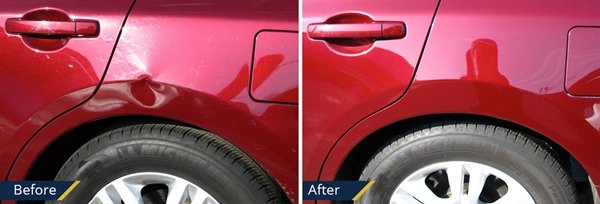
Collector-car owners tend to arrive at this question sideways: a hailstorm caught the car outside, a garage door came down on a fender, or a show trailer left a crease in a door. The instinct is to protect originality at all costs, and that instinct is correct — original paint is a large part of what an unrestored classic is worth. The question is whether paintless dent repair helps that goal or threatens it.
The short version: on the right car, PDR is the most originality-preserving repair available. On the wrong car, it is the fastest way to crack sixty-year-old lacquer. Telling the two apart is the entire job.
Why PDR is attractive on a collector vehicle
Paintless dent repair reshapes metal from behind the panel while the finish stays put. Nothing is sanded, filled or sprayed. For a vehicle whose value depends on documented original paint, that is a categorically different proposition from a refinish — a repaint is a permanent change to the car's history, and a good one still shows up in a paint-depth reading.
There is a second advantage that matters more on old cars than new ones: PDR does not add weight or material. No filler means nothing to shrink, crack or telegraph a decade later under the desert sun or a Texas summer — a failure mode we describe in our guide on what heat does to filler-based repairs.
Where old cars behave differently from modern ones
Modern panels are thin, springy and coated in flexible two-stage paint that tolerates being pushed. Older vehicles are the opposite in almost every respect, and each difference changes the repair plan.
- Thicker, softer steel. Pre-1980s panels are often noticeably heavier gauge. They hold shape stubbornly, need more deliberate pressure and are less forgiving of a rushed push.
- Brittle finishes. Single-stage enamel and older lacquer lose flexibility as they age. Paint that has been baking in the sun for decades can craze when the metal beneath it moves, even when the same move would be routine on a modern clearcoat.
- Previous repairs hiding underneath. Many classics have had a life before you. Old filler, lead work or a decades-old repaint changes what happens when the metal is pushed, which is why we look at panel history and material before touching anything.
- Access that no longer exists. Bracing, sound-deadening pads, tar sheets and one-piece inner structures can leave a dent with no path to its back side.
- Irreplaceable trim. On a modern car, a broken clip is a parts-counter problem. On a 1967 coupe, it can be a months-long hunt — so trim removal has to be planned, not improvised.
How a classic should be assessed
- Read the panel under controlled lighting. LED line boards show the true shape of the damage and reveal previous bodywork that daylight hides.
- Check the finish, not just the dent. Age, gloss, crazing at edges, and whether the paint is original or a older respray all change the risk calculation.
- Measure where it matters. Paint-thickness readings tell us whether we are working on factory coating or on somebody else's repair.
- Map the access. What comes off, what does not, and whether the back of the dent can be reached without disturbing irreplaceable trim.
- Agree the target honestly. Full removal, substantial improvement, or hands-off — decided with the owner before work starts, not discovered afterwards.
When PDR is the right call — and when it is not
| Situation | Usual recommendation |
|---|---|
| Hail dents, original paint sound, panel accessible | Good PDR candidate — the classic case for preserving originality |
| Shallow door ding on a driver-quality classic | Good candidate; expect improvement targets rather than perfection on aged finishes |
| Paint already crazed, flaking or lifting near the dent | Paintless work risks accelerating it — discuss refinishing or leaving it alone |
| Sharp crease with cracked paint | Beyond PDR alone; metalwork plus refinishing, or accept the character mark |
| Panel with old filler or lead over the damage | PDR will not move filler — plan a conventional repair |
| No access behind the panel | Glue pulling may help slightly; otherwise conventional repair |
| Concours car with documented original paint | Only with a conservative target and the owner's explicit agreement on risk |
Common mistakes with collector cars
- Chasing perfection on aged paint. The last ten percent of a dent is where the finish is most likely to complain. A conservative result that keeps the original surface is usually worth more than a flawless panel with a hairline crack.
- Letting a storm crew "have a go." After a hail event, temporary operations work fast by design. That is exactly wrong for a classic; see our guide on spotting storm-chaser operations.
- DIY suction and heat. Old finishes are the least tolerant of the tricks that already fail on modern cars — the reasons are in our guide on why DIY dent methods do not work.
- Skipping documentation. On a car whose value depends on provenance, photograph the damage and keep the invoice describing exactly what was and was not done.
- Assuming an insurance estimate understands the car. Hail estimates written for a daily driver may not reflect what an older vehicle needs. If a claim is involved, our adjuster inspection guide explains how the estimate gets built.
What to do next
Bring the car in, or send clear photos of the panel and the paint around it. At the Plano shop we read the panel under LED lighting, check the finish and the paint history, and tell you plainly whether the dent should be worked, improved or left alone. Every finished repair is signed off by whoever runs quality control before the car goes back — a record you can see in your customer portal — and comes with a written lifetime warranty for as long as you own the vehicle.
If the answer is "this one needs paint," you will hear that too. See finished work in our before and after gallery, or read more about our paintless dent repair service.
Frequently asked questions
Will paintless dent repair crack old paint?
It can, if the finish is already brittle. Decades-old lacquer and single-stage enamel lose flexibility, so metal that moves under them may craze the surface. That is why an aged panel is assessed for gloss, crazing and paint thickness before any pressure goes on it, and why conservative targets are normal on collector cars.
Does repairing a dent hurt my classic's value?
A repair that keeps the original paint generally protects value; a repaint on an otherwise original car is a permanent change to its history that buyers and judges notice. That is the core argument for trying paintless repair first when the finish allows it.
Can you repair hail damage on an older vehicle?
Frequently, yes — hail dents with unbroken paint are the classic PDR case. The practical questions are whether the finish is sound enough to move, whether the panels can be reached from behind, and whether previous bodywork is hiding under the damage.
What if the panel already has filler or lead work?
Paintless repair moves metal, not filler, so a panel with old filler or lead over the damaged area will not respond normally. Once we see it in the paint-thickness readings, the honest recommendation is conventional repair for that area.
Will you remove trim from my classic?
Only when it is needed and only with a plan. Clips and mouldings on older vehicles can be difficult or impossible to replace, so access is mapped before anything comes off — and if the risk to trim outweighs the benefit of the repair, we say so.
Do you guarantee the dent will come out completely?
No, and no honest shop should on an aged finish. We agree a target with you before starting — full removal, substantial improvement, or hands-off — and we would rather leave a small shadow than crack sixty-year-old paint chasing perfection.
Sources and methodology
Repair, cost and timing statements that are not tied to a listed source come from DentPicks' own quoting and repair history at the Plano, TX shop. They are typical ranges and shop-floor observations, not industry statistics or promises — your vehicle, its condition, your policy language and your insurer determine your specific outcome.
Dent on a car you would rather never repaint?
Bring it by the Plano shop or send photos of the panel and the paint around it. We will tell you honestly whether the finish can take the work — and what result is realistic.