

The short answer
Only when the paint broke. A hail dent with unbroken paint is sealed by the factory coating system and stays stable for years, which is why paintless dent repair still works on old damage. A dent with a chip, a crack or exposed metal is a genuine corrosion entry point. Wash the car, look at each dent under angled light, and treat open paint as the part worth addressing sooner.
 Written by the DentPicks Editorial Team
Technically reviewed by Vytas Kucinskas, Founder & Master PDR Technician
Written by the DentPicks Editorial Team
Technically reviewed by Vytas Kucinskas, Founder & Master PDR Technician
Published: Aug 19, 2026 · Last reviewed: Aug 19, 2026 · 9 min read
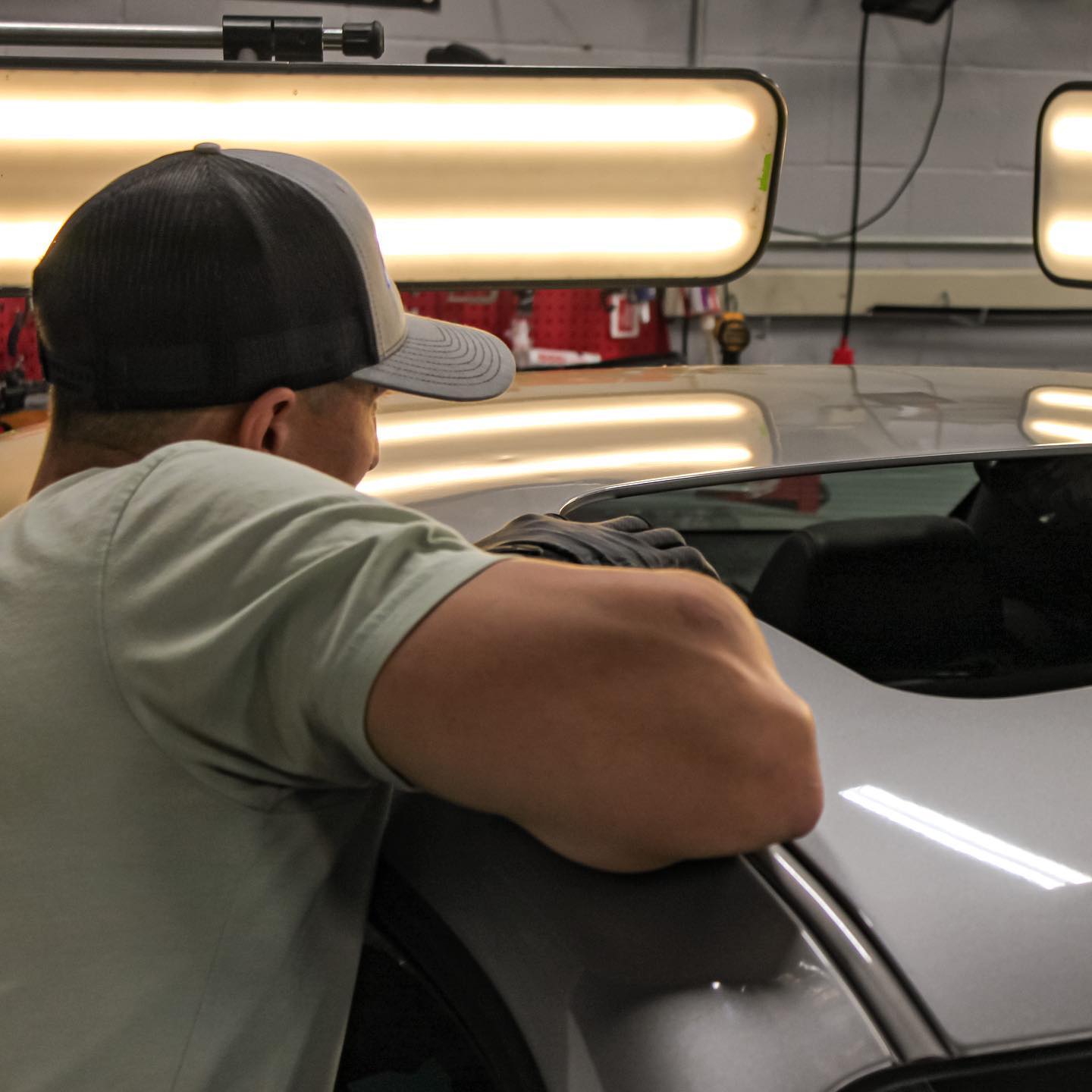
It can, but far less often than people expect, and only under one specific condition. The distinction that matters is not how deep the dent is or how many there are. It is whether the paint broke.
A hail dent with unbroken paint is sealed. The steel underneath has been pushed out of shape, but it is still fully covered by the factory coating system and still isolated from air and moisture. A dent with a chip, a crack or a spider in the clearcoat is a different object entirely: it is an opening in that coating, and openings are where corrosion begins. Everything useful about rust and hail damage follows from that one difference.
What is actually protecting your panel
Modern vehicle bodies are not bare steel with color on top. A typical panel carries several layers working together:
- Galvanized or zinc-treated steel on most body panels, where the zinc corrodes sacrificially before the steel does.
- Electrocoat primer applied by dipping the whole body shell, which reaches seams and edges that spray cannot.
- Primer surfacer, then basecoat for color, then clearcoat for gloss and UV protection.
- Seam sealers and cavity wax in joints and inside closed sections.
Rust needs three things at once: exposed iron, oxygen and moisture. That layered system removes the first one. As long as it stays continuous, a deformation in the panel does not give corrosion anywhere to start.
Why an intact-paint dent stays stable
Automotive paint is flexible. When a hailstone deforms a panel, the coating stretches with the metal rather than shattering off it. Under magnification the finish over an intact hail dent is continuous — thinner at the deepest point, but unbroken.
This is exactly why paintless dent repair works on hail damage that is months or even years old. The metal has memory, the coating is intact, and the panel can be worked back to shape without touching the finish. A car that sat with sealed hail dents through several Texas summers is normally still a straightforward PDR job.
When hail does break paint
Broken paint from hail is the minority outcome, but it is not rare. It shows up most in these situations:
- Sharp, high-energy impacts. Large stones with irregular edges can punch rather than press, cracking the clearcoat at the point of contact.
- Impacts on a body line, edge or crease. The coating cannot stretch as freely where the metal is already sharply formed, so it splits.
- Older, weathered clearcoat. Years of Texas UV exposure make clear brittle. A dent that would flex on a three-year-old car can craze on a fifteen-year-old one.
- Panels with previous repairs. Refinished panels and areas over body filler do not behave like factory paint. Filler has no elasticity, so a hail strike over old filler is much more likely to crack or chip the surface — our guide on Texas heat and filler-based repairs covers how that ages.
- Existing stone chips and scratches. Hail landing on or near an already-open chip enlarges it.
- Plastic trim, roof rails and drip edges. Small painted surfaces at edges chip more readily than open panel faces.
How to tell whether your dents are open
You can check this yourself in about ten minutes, and it is worth doing before you decide how urgent your repair is.
- Wash and dry the panel. Dirt fills chips and hides them completely.
- Look at each dent under bright, angled light. A sealed dent shows a smooth, continuous shine right through the depression. A broken one shows a dull spot, a dark speck, a white ring, or fine crazing lines.
- Use magnification if you are unsure. A phone camera on maximum zoom, or reading glasses, reveals hairline cracks the naked eye misses.
- Try the fingernail test carefully. Drag a nail lightly across the dent. A sealed dent feels glassy and continuous. If the nail catches an edge, the coating is broken.
- Check the edges and high spots. Roof rails, hood front edges, drip rails and the crown of body lines break first.
- Look for brown staining. A faint rust bloom around a chip means corrosion has already started and the clock is running.
Risk by damage type
| What you have | Real rust risk | What to do |
|---|---|---|
| Dents, paint fully intact | Very low — the panel is sealed | Repair on your own schedule; PDR stays viable |
| Clearcoat crazing over dents, color layer intact | Low but rising — UV and moisture will work at the cracks | Have it assessed; do not leave for years |
| Chipped paint, primer visible | Moderate | Seal or repair; a touch-up is a stopgap, not a fix |
| Bare metal visible, or brown staining | High and active | Address promptly — this is the case where waiting genuinely costs money |
| Damage over previous body filler | Elevated, hard to judge from outside | Needs a professional look; filler hides what is underneath |
| Cracked glass, lifted trim, damaged seals | Different problem — water intrusion | Fix first; interior water damage outruns rust for cost |
What North Texas conditions add
DFW is not a road-salt corrosion belt, which genuinely helps. What it does have is intense heat cycling and Gulf humidity. Panels expand and contract every summer day, and that cycling works at the edges of any coating break — a chip that would sit quietly in a mild, dry climate widens faster here. Overnight humidity then supplies the moisture. Sealed dents are unaffected by any of this; open ones are not.
Aluminum panels behave differently. Aluminum does not rust the way steel does — it forms a self-limiting oxide layer instead. What it can suffer is corrosion where it meets dissimilar metals or where coatings are broken near fasteners, and it also does not spring back like steel, which affects the repair approach. Our guide on aluminum dent repair goes into what changes.
If you cannot repair right away
Sometimes the repair has to wait for a claim, a deployment, a paycheck or a schedule. If the paint is intact, waiting costs you nothing structurally. If some dents are open, these are the sensible holding measures:
- Keep the vehicle clean and dry. Washing off contaminants matters more than any coating you can apply.
- Apply factory-matched touch-up paint to open chips. It is cosmetically imperfect and entirely worthwhile as a seal.
- Wax or seal the affected panels. It buys time; it does not close a chip.
- Park under cover where you can — not because hail dents worsen, but because a garage reduces UV and moisture exposure at the open spots.
- Photograph the damage now, with the storm date. Waiting complicates a claim even when it does not damage the car.
Myths worth dropping
- "Every hail dent will eventually rust." No. Sealed dents do not rust. That is the whole point of the coating system.
- "The rust starts from underneath the dent." The inner surface has e-coat and, in many areas, cavity protection. Corrosion in hail cars starts at coating breaks on the outside.
- "I'll just sand it and put filler in." Filler over an unaddressed corrosion point traps the problem and gives it somewhere warm to live. Our guide on PDR versus traditional body shop repair covers when each approach is genuinely right.
- "Rust risk means my car is losing value fast." Value loss from unrepaired hail is real, but it comes from appraisal deconditioning, not corrosion — see our guide on repairing dents before selling or trading in.
What to do next
Work out which category you are in before you decide how urgent this is. Wash the car, look at the dents under angled light, and check whether any of them are open. Sealed dents mean you can plan the repair around your claim and your calendar. Open dents, brown staining, or damage over previous filler mean you should get the vehicle looked at sooner.
At DentPicks in Plano we read hail panels under LED line lighting, which shows broken paint as clearly as it shows the dents, and we will tell you honestly whether you have a corrosion issue or just a cosmetic one. Inspections are free, most quotes are verbal from photos in about 30 minutes, and repairs carry a written lifetime warranty for as long as you own the vehicle. You can see how the work runs on our hail repair page.
Frequently asked questions
How long can I leave hail dents before rust becomes a problem?
If the paint is intact, there is no corrosion clock — the panel is sealed, and PDR remains viable years later. If paint is chipped or cracked, the clock started at the storm. Texas heat cycling and humidity work at the edges of a coating break, so open spots should be sealed or repaired rather than left through seasons.
Will touch-up paint stop rust in a hail dent?
It is a legitimate stopgap, not a repair. Cleaning the spot thoroughly and applying factory-matched touch-up seals the opening and slows corrosion. It will look imperfect inside a dent and it does not address any rust already under the edges, so treat it as buying time.
Can rust start on the inside of a panel from hail?
It is uncommon. The inner surface carries electrocoat primer applied by dipping the body shell, and many closed sections have cavity wax as well. Corrosion on hail-damaged vehicles overwhelmingly starts at breaks in the outer coating.
Do aluminum panels rust after hail damage?
Not in the way steel does. Aluminum forms a self-limiting oxide layer rather than flaking rust. It can corrode where coatings are broken next to dissimilar metals or fasteners, and it does not spring back like steel, so the repair approach differs. Repairability depends on paint condition, metal stretch, panel access and prior repairs.
Does a rust spot mean my hail claim will be denied?
Pre-existing corrosion is generally separated from new storm damage rather than voiding a claim, and estimators are used to distinguishing the two. Photograph the vehicle promptly so the storm damage is clearly documented. Coverage depends on the language of your policy.
Is a garage worth it for a car that is already hail damaged?
For sealed dents, it changes nothing about the metal. For dents with broken paint it genuinely helps, by cutting UV exposure and overnight moisture at the open spots. It also protects against the next storm, which is a better reason.
Can PDR fix a dent that has already started to rust?
PDR can reshape the metal, but it does not restore a broken finish. A dent with surface corrosion usually needs the coating addressed as well, which means refinishing that area. A shop should tell you plainly which of your dents are PDR work and which are not.
Sources and methodology
- After hail or windstorms: consumer tips — Texas Department of Insurance.
Repair, cost and timing statements that are not tied to a listed source come from DentPicks' own quoting and repair history at the Plano, TX shop. They are typical ranges and shop-floor observations, not industry statistics or promises — your vehicle, its condition, your policy language and your insurer determine your specific outcome.
Not sure if your dents broke the paint?
Bring the car to Plano or send close-up photos. We will tell you which dents are sealed and which are actually worth dealing with soon.