Every guide is grounded in real repair work at our Plano shop and technically reviewed by founder Vytas Kucinskas before it carries the reviewed label. Sources and review dates are shown on every page.
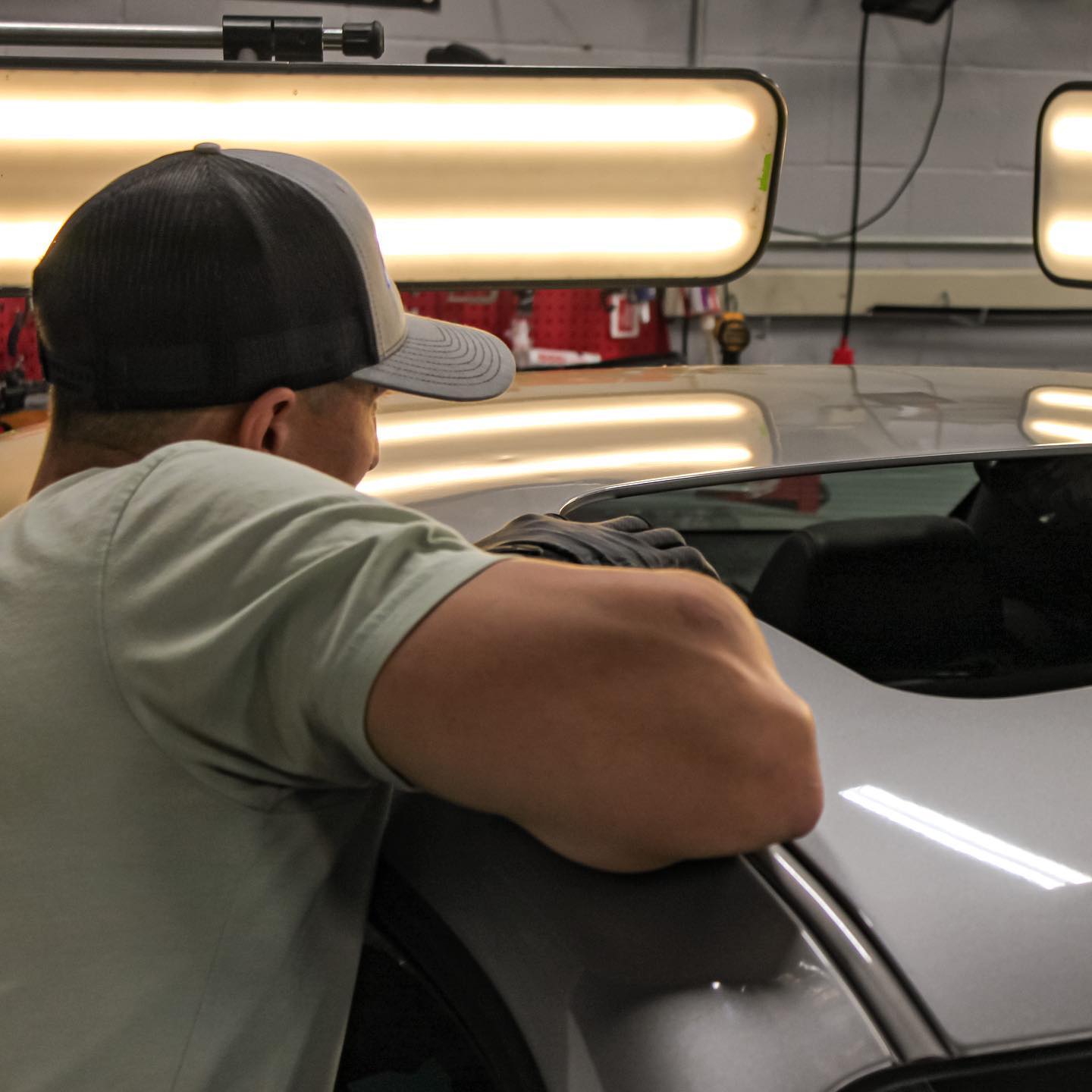
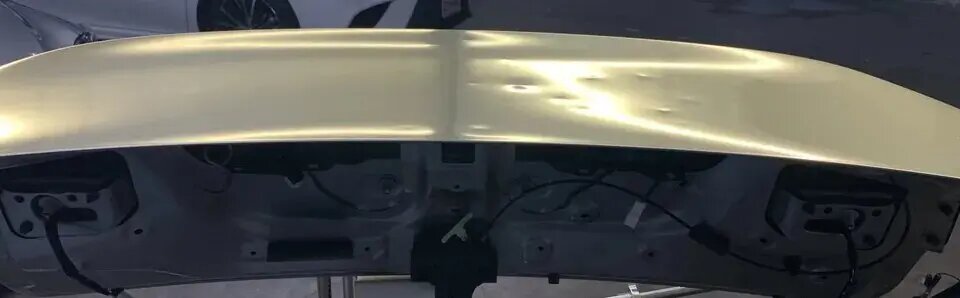
Hail around one inch across — quarter-sized — is where dents on vehicle sheet metal become common, and it is also the National Weather Service severe threshold.
Stretched metal means the impact thinned and elongated the panel, so the dented area now holds more material than it did from the factory.
Bring the vehicle reasonably clean, your claim number if you have filed, your insurance card or policy number, any estimate already written on the car, and all key fobs plus the wheel lock key.
Get a second opinion when the estimate was written outdoors or in under ten minutes, when it calls for replacing panels that still have intact factory paint, when it is far below every other number because the shop is absorbing your deductible…
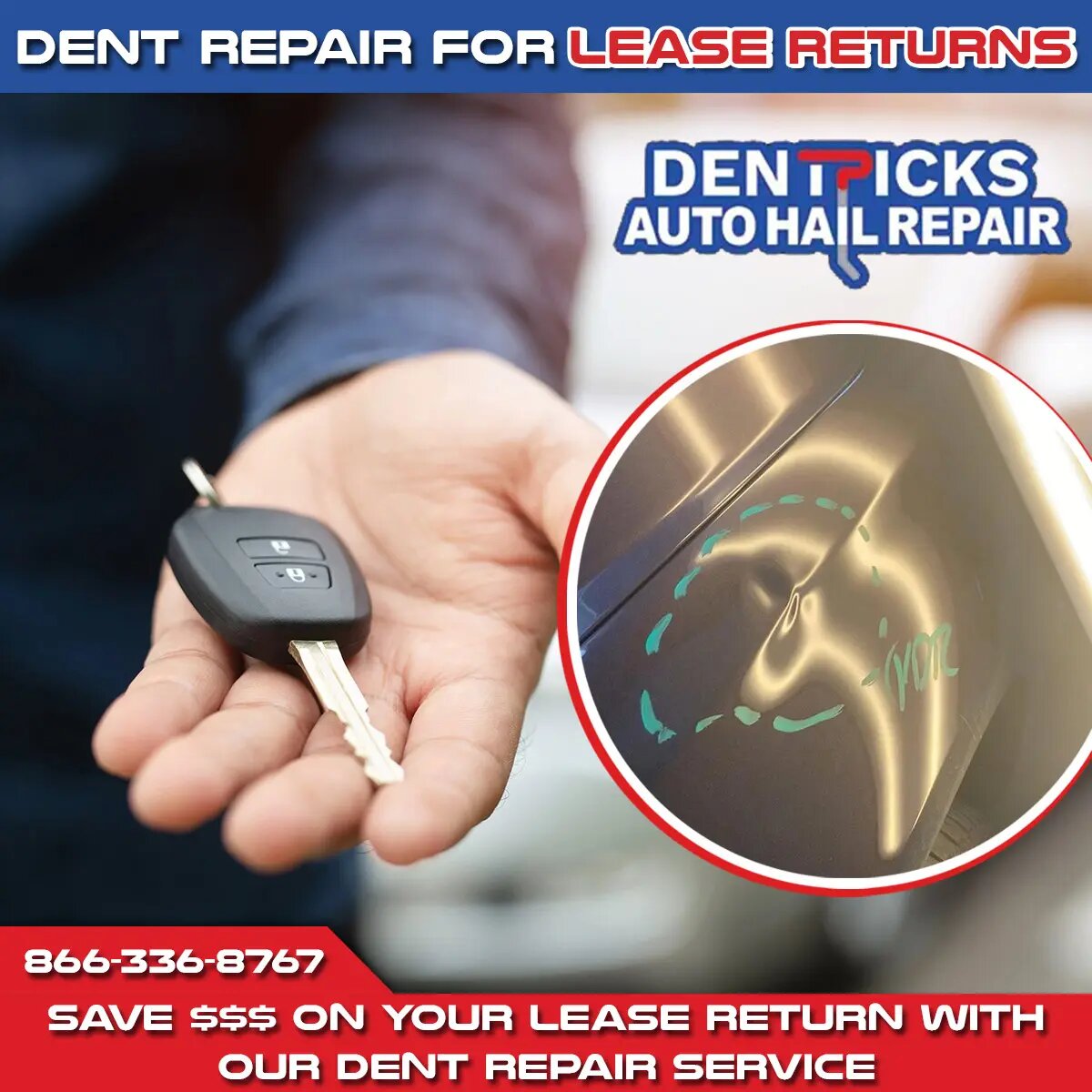
Repair anything larger than your lease's size threshold, creases crossing a body line, hood and roof dents, clusters of dings on one panel, and any dent with cracked paint.
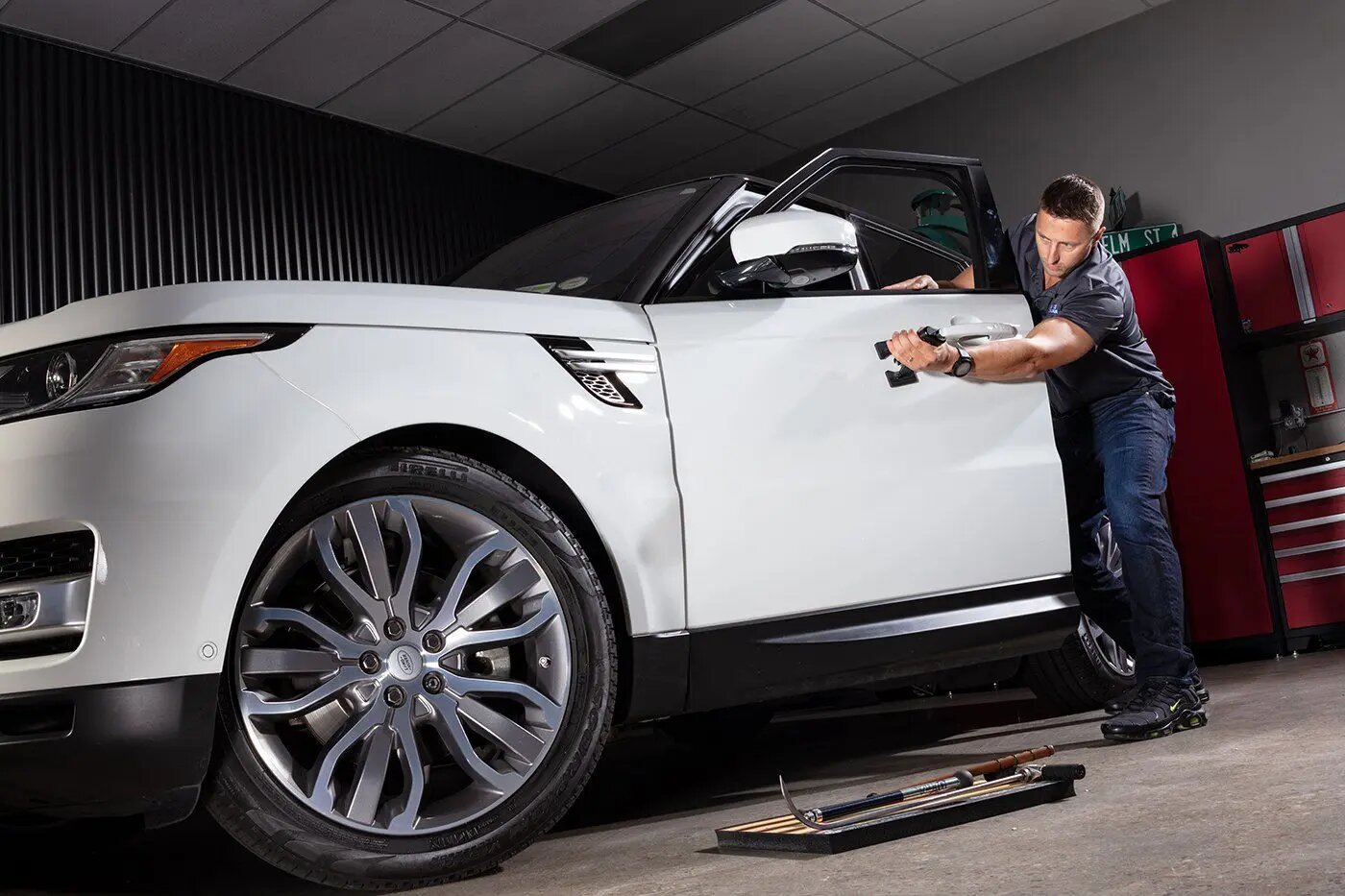
By deciding how far the door has to come apart, then following a set sequence. Many door dents are glue pulled from the outside with nothing internal touched.
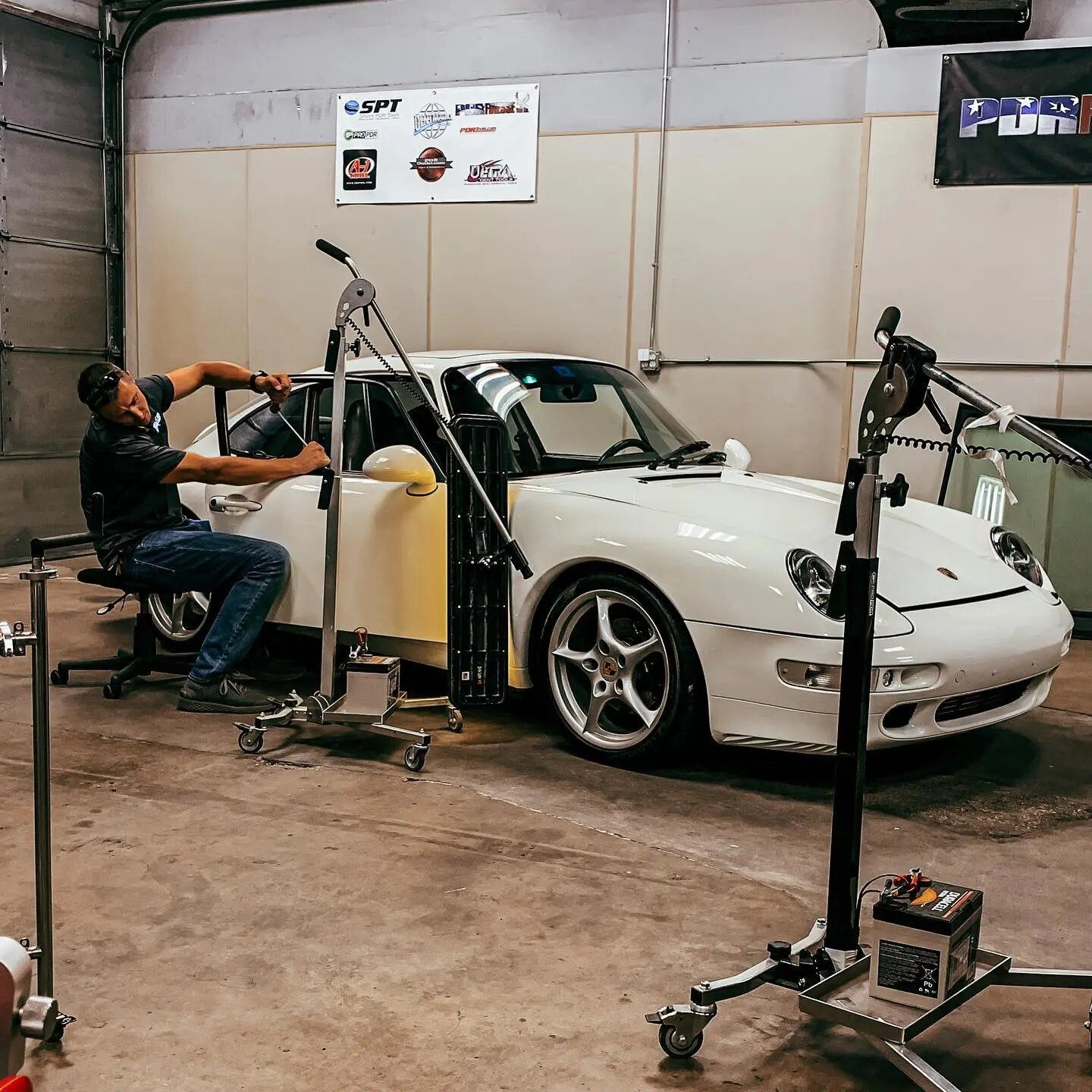
Usually yes. Most BMW dents sit on outer skin panels, and both aluminum and high-strength steel skins are repairable with paintless dent repair when the paint is intact and the back of the panel can be reached.
Often, yes. A dent on a body line can usually be repaired without repainting if the paint on the crest is uncracked and the crease still exists as an edge rather than being flattened out.
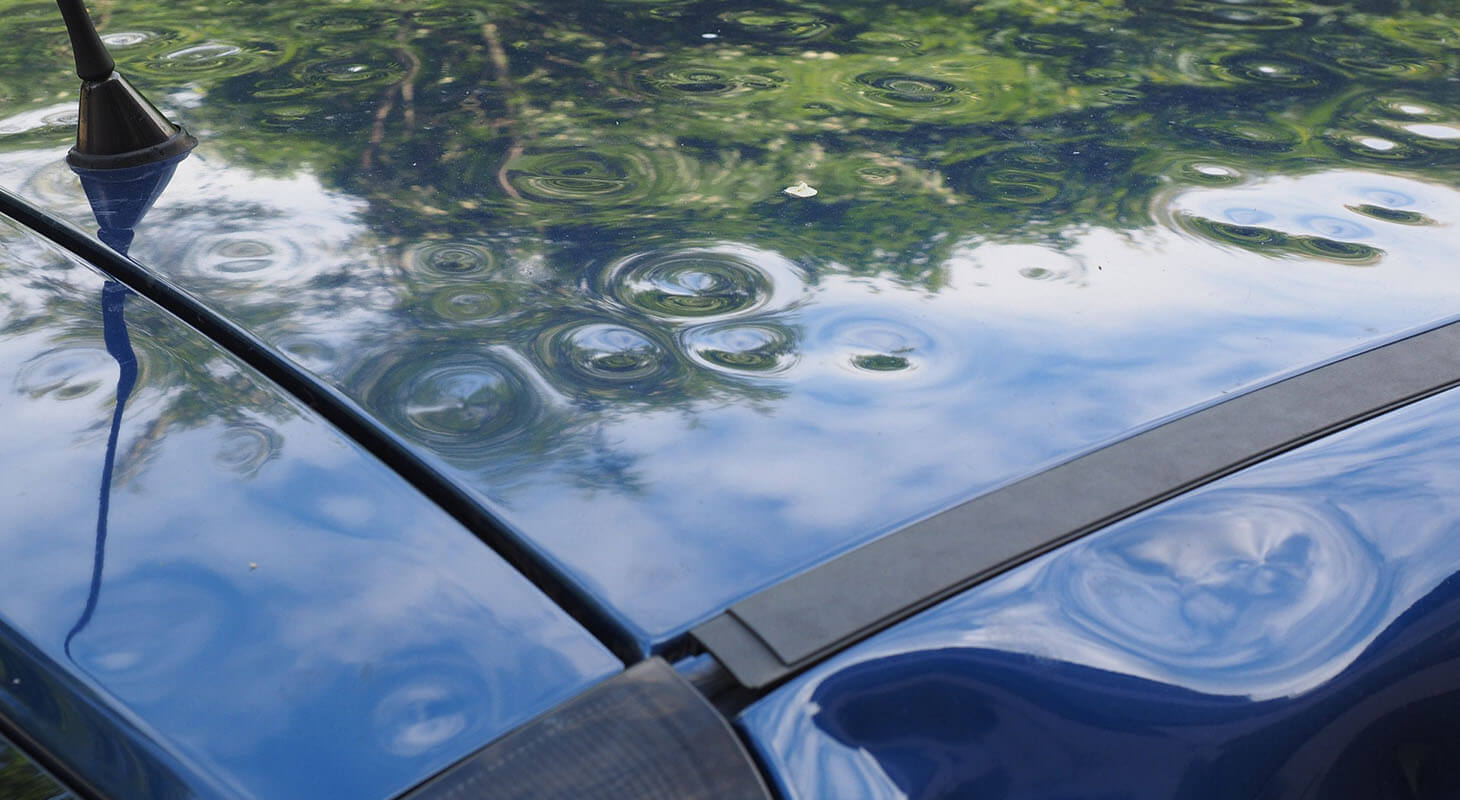
Largely yes. Dents in metal panels are paintless dent repair, bumper scuffs are plastic refinishing or paint correction, curbed alloys go to a wheel refinishing specialist, and glass goes to a glass shop.
Yes, in most cases. Hail on a Chevrolet, GMC or Ram truck usually lands on the cab roof, hood and bed rails, and paintless dent repair handles that damage when the paint is unbroken.
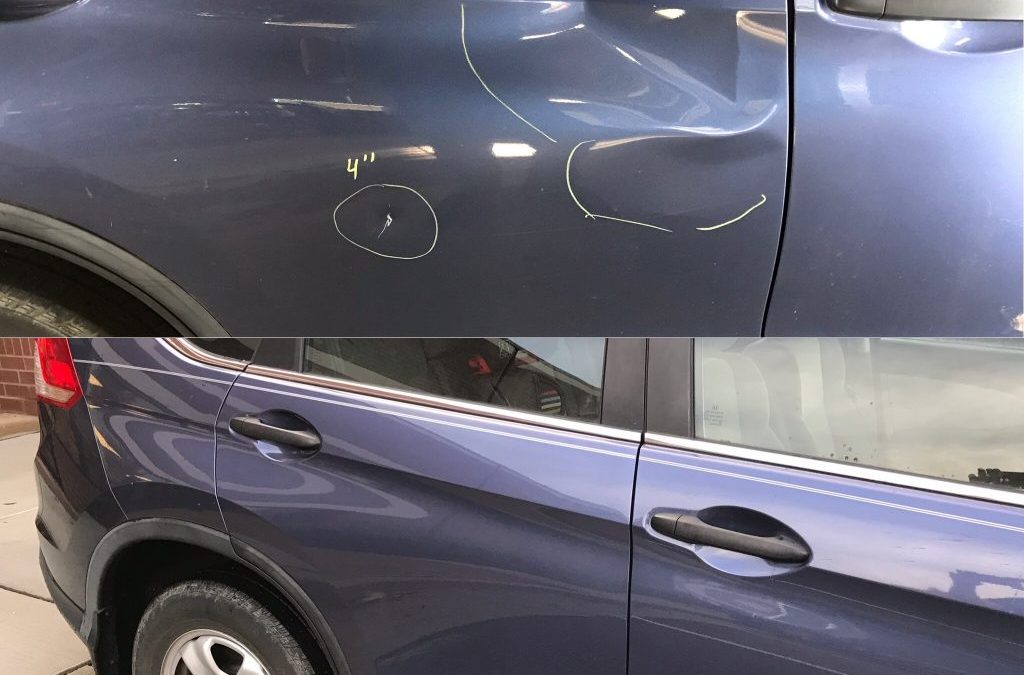
Technicians use gentle warmth because clearcoat stiffens as it cools and brittle finish is more likely to craze while the metal beneath it is moved. Warmth also makes glue-pull adhesion predictable and helps relax tension.
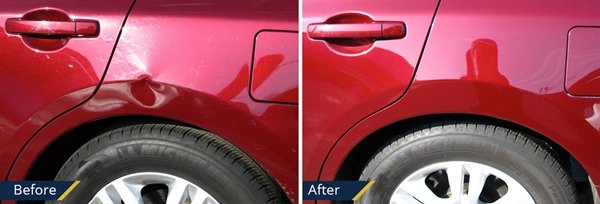
For paint-intact dents and dings, which is most lease-return damage, an independent PDR specialist is usually faster and cheaper — dealerships frequently subcontract that work anyway, and the returning dealership is also the party that may assess the car.
Send us photos of the damage or schedule an inspection at the Plano shop — we'll tell you honestly what your vehicle needs, what it should cost, and whether a claim makes sense.
Someone from the team will get back to you. If it is urgent, call (866) 336-8767 and you will reach the Plano shop.